
Compile
Puyo Puyo creators
Notable Games
Company History
, Ltd. was a Japanese video game development company founded in 1982 by Masamitsu "Moo" Niitani in Hiroshima, Japan. Compile grew from a small hobbyist operation into one of the most prolific and beloved developers of the 8-bit and 16-bit gaming eras. The company initially focused on developing games for Japanese home computers such as the MSX, producing a wide variety of titles across multiple genres.
Compile gained significant recognition for the Aleste series (known in the West under various names including Power Strike and MUSHA), a franchise of vertically scrolling shoot-'em-up games that were widely regarded as among the finest examples of the genre. The Aleste games were known for their intense gameplay, creative weapon systems, and impressive technical achievements. MUSHA (Metallic Uniframe Super Hybrid Armor, 1990) for the Sega Genesis is particularly revered as one of the greatest shoot-'em-ups ever made and is now one of the most valuable Genesis cartridges among collectors. the game dynamically adjusted its difficulty based on the player's performance using an "ALC" (Automatic Level of Challenge) algorithm, a remarkably sophisticated feature for its era.
Power Strike II (1993) for the Master System, Space Megaforce (1992) for the SNES, and GG Aleste (1992) for the Game Gear continued the series' excellence. However, Compile's most commercially significant creation was undoubtedly Puyo Puyo, a falling-block puzzle game that debuted in 1991, originally derived from a mini-game in Compile's RPG Madou Monogatari. Puyo Puyo combined colorful character design with accessible yet deeply strategic puzzle mechanics, creating a franchise that would become one of the most popular puzzle game series in Japan, rivaling even Tetris in cultural impact. The game's chain-based combo system, where players set up cascading sequences of blob eliminations, created a skill ceiling that made Puyo Puyo extraordinarily popular in competitive gaming.
Puyo Puyo 2 (1994) refined the formula with the "offset" mechanic and became an arcade sensation. The franchise's colorful characters, drawn from the Madou Monogatari universe with protagonist Arle Nadja and the mischievous Carbuncle, gave it appealing personality. one of the earliest examples of a games-as-service model. At its peak, Disc Station had over 100,000 subscribers.
Despite enormous success with Puyo Puyo, Compile faced severe financial difficulties in the late 1990s due to overexpansion and poor business decisions. In 1998, the company was forced to sell the Puyo Puyo intellectual property to Sega to settle debts. Compile continued on a reduced scale but ultimately went bankrupt in 2003.
Behind the Scenes
Compile's development culture was deeply shaped by the personality and vision of founder Masamitsu "Moo" Niitani, whose infectious enthusiasm and ambitious nature drove the company to remarkable creative heights while also contributing to its eventual downfall. Niitani was a passionate programmer and game designer who fostered a collaborative and experimental development environment. The company's Hiroshima location, far from the main centers of the Japanese gaming industry in Tokyo and Osaka, gave Compile a distinctive outsider identity. The development of the Aleste series showcased Compile's exceptional technical prowess.
The company's programmers were renowned for their ability to extract maximum performance from limited hardware, producing smooth, flicker-free scrolling with large sprite counts. MUSHA Aleste on the Genesis demonstrated this mastery while simultaneously delivering one of the console's most memorable soundtracks. Zanac's adaptive difficulty system used an algorithm that tracked player behavior across multiple variables to dynamically adjust enemy spawning patterns and aggressiveness, creating an experience that felt uniquely responsive to individual skill levels. The creation of Puyo Puyo was somewhat serendipitous, as the game began as a relatively minor mini-game within Madou Monogatari that unexpectedly exploded in popularity.
The puzzle mechanics were designed to be immediately intuitive while offering tremendous strategic depth through the chain system. The franchise's success in arcades, on home consoles, and on handheld platforms generated enormous revenue for Compile at its peak. Disc Station reflected Niitani's forward-thinking approach to game distribution, offering subscribers regular compilations of new games, demos, development tools, and content. This concept was remarkably prescient, anticipating subscription gaming services by decades.
The publication included experimental games that might never have reached commercial release otherwise, serving as both a creative laboratory and a fan engagement platform. overextended the company's finances. When the Japanese bubble economy's lingering effects combined with declining arcade revenues in the late 1990s, Compile found itself unable to service its debts. The forced sale of the Puyo Puyo franchise to Sega in 1998 for a sum far below its actual value was a devastating blow that stripped Compile of its primary revenue-generating franchise.
Niitani attempted to rebuild with new puzzle games, most notably Puyo Puyo's spiritual successor Pochi and Nyaa (2003), but the company could not recover. Compile filed for bankruptcy in 2003, and Niitani subsequently founded Compile Heart in 2006 as a subsidiary of Idea Factory. a bittersweet vindication of the franchise's enduring appeal. Compile's story serves as both a celebration of creative brilliance and a cautionary tale about the perils of overexpansion.

Dr. Robotnik's Mean Bean Machine
• 1993
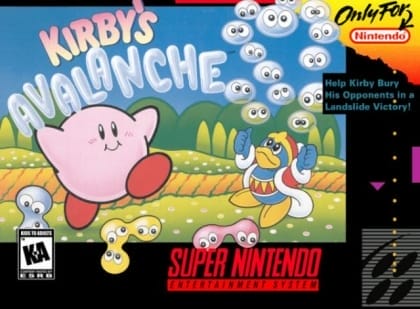
Kirby's Avalanche
• 1995

Puyo Puyo
• 1992
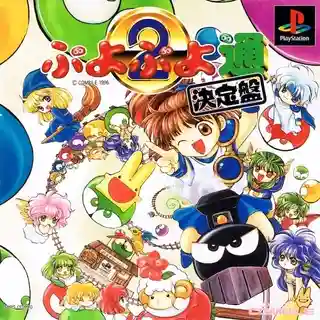
Puyo Puyo Tsuu: Definitive Edition
• 1997
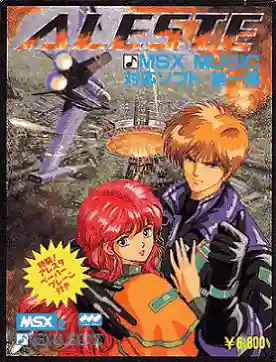
Aleste
• 1988

Puyo Puyo 2
• 1994

MUSHA - Metallic Uniframe Super Hybrid Armor
• 1990
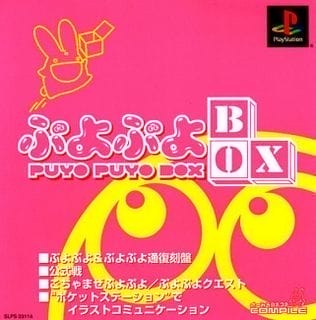
Puyo Puyo Box
• 2000

Puyo Puyo
• 1992

Puyo Puyo Sun 64
• 1997

Puyo Puyo Sun - Definitive Edition
• 1998
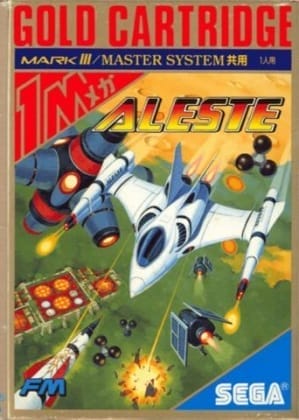
Aleste
• 1988
About Compile
Compile is a defunct game development company founded on January 1, 1982 and headquartered in .
Known for creating iconic titles such as Puyo Puyo, MUSHA Aleste, Zanac and more, Compile has left an indelible mark on the video game industry.