
id Software
Doom and Quake creators
Notable Games
Company History
id Software LLC was founded on February 1, 1991, in Shreveport, Louisiana, by John Carmack, John Romero, Tom Hall, and Adrian Carmack ("The Two Johns"). The studio became one of the most technically influential in video game history, essentially inventing and iterating the first-person shooter genre.
Before id Software's official formation, John Carmack and John Romero worked at Softdisk, where Carmack developed techniques enabling smooth side-scrolling on IBM PC hardware. This technical achievement led to Commander Keen (1990, published by Apogee), demonstrating that PC games could match Nintendo's fluidity.
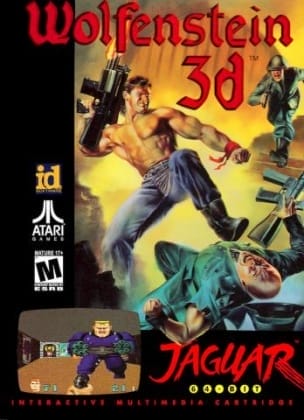
Wolfenstein 3D (1992) proved more revolutionary. Carmack's raycasting engine created convincing 3D environments on contemporary PC hardware, and Romero's level design emphasized fast-paced combat. The game established first-person shooter conventions.
Doom (1993) became a cultural phenomenon. The engine advanced beyond Wolfenstein with varied lighting, non-orthogonal walls, and height differences. The gameplay — fast, violent, relentless — defined the shooter genre. Network multiplayer (deathmatch) and modding support created communities that persist decades later. PC gaming's identity was partly shaped by Doom's success.
Quake (1996) introduced true 3D rendering and the id Tech engine series that would power numerous licensees' games. Subsequent titles including Quake II, Quake III Arena, Doom 3, and the 2016 Doom reboot continued the legacy. ZeniMax Media acquired id Software in 2009; Microsoft acquired ZeniMax in 2021, bringing id under Xbox Game Studios.
Behind the Scenes
John Carmack's programming genius drove id Software's technical innovations. His annual engine advances leapfrogged competition: the Doom engine, the Quake engine, id Tech iterations. Carmack studied cutting-edge graphics research, translating academic techniques into real-time game rendering.
The "Two Johns" partnership combined complementary talents. Carmack focused on technology with single-minded dedication. Romero brought game design sense and level design expertise that made the technology entertaining. Their diverging visions eventually led to Romero's departure after Quake.
id Software's shareware distribution through Apogee established viable business models for independent PC games. Free distribution of episodes demonstrated gameplay quality, converting players into purchasers. This approach predated modern free-to-play models.
The decision to license the Doom engine created a software development category. Companies paid to use id's technology rather than building their own. This licensing model generated substantial revenue while spreading id's technical approaches across the industry.
Doom's modding support fostered communities that lasted decades. The WAD file format allowed custom levels, total conversions, and gameplay modifications. Players became creators; communities shared and evaluated creations. This participatory culture influenced subsequent game design.
The 2016 Doom reboot demonstrated id's ability to revitalize franchises. Modern technology served classic design philosophy: fast movement, aggressive encounters, satisfying weapons. The game proved that id's foundational approaches remained relevant when executed with contemporary polish.



About id Software
id Software is an active game development company founded on February 1, 1991 and headquartered in .
Known for creating iconic titles such as Doom, Quake, Wolfenstein 3D and more, id Software has left an indelible mark on the video game industry.