
Vic Tokai
Action game developers
Notable Games
Company History
Vic Tokai Corporation is a Japanese company founded in 1986 as a subsidiary of Tokai Communications, a regional telecommunications provider based in Shizuoka Prefecture, Japan. The company was established to enter the burgeoning video game market during the height of the Famicom era in Japan. Vic Tokai quickly established itself as both a developer and publisher of video games, producing titles for Nintendo and Sega platforms throughout the late 1980s and 1990s. Unlike many of its contemporaries, Vic Tokai entered game development not from a background in toys, electronics, or entertainment, but from the telecommunications sector, giving the company a distinctive perspective on the industry.
The company's development teams, based primarily in Shizuoka rather than the gaming industry hubs of Tokyo or Osaka, cultivated a creative independence that resulted in some genuinely original game concepts. a sprawling action-platformer with a nonlinear world structure featuring an interconnected map of over 40 routes, RPG-like power-up acquisition, and a surprisingly complex narrative involving a secret agent named Bang who must prevent a doomsday bomb from destroying the Earth. Critics and players praised its blend of humor, challenge, and exploration, and it has since been recognized as one of the hidden gems of the NES library. Vic Tokai also published the Golgo 13 games on the NES, based on the long-running manga series about an enigmatic professional assassin.
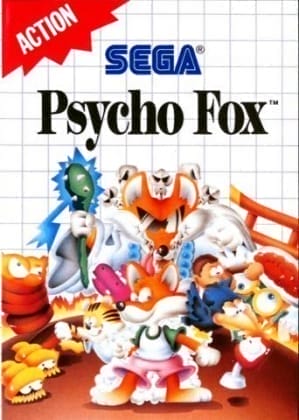
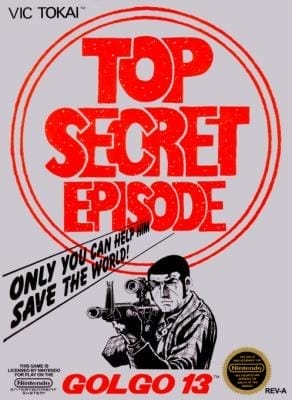
Golgo 13: Top Secret Episode (1988) and The Mafat Conspiracy (1990) were ambitious multimodal action games that combined side-scrolling platforming, first-person shooting galleries, maze exploration, and even flight combat sequences. While criticized for uneven difficulty and somewhat rough controls, the Golgo 13 games were notable for their cinematic ambitions and mature themes unusual for NES titles. On the Sega side, the company produced Psycho Fox (1989) for the Sega Master System, which featured innovative platforming mechanics including a character-switching system and throwing mechanics that influenced later platformers. Vic Tokai also gained recognition for Decap Attack (adapted from Magical Hat no Buttobi Turbo!
Daibouken) for the Sega Genesis, a quirky platformer featuring a headless mummy protagonist. Trouble Shooter (1991, known as Battle Mania in Japan), a side-scrolling shooter featuring female protagonists, earned cult status for its humor and tight gameplay. The Japan-only sequel, Battle Mania Daiginjou (1993), is considered one of the most sought-after Genesis cartridges in existence. Socket (1993, also known as Time Dominator) was an openly Sonic-inspired platformer.
Throughout the 1990s and into the 2000s, Vic Tokai gradually shifted its focus away from console game development, diversifying into mobile phone content, software development, and other technology-related business areas under the Tokai Communications group umbrella.
Behind the Scenes
Vic Tokai's development story reflects the unique circumstances of a telecommunications company subsidiary navigating the competitive landscape of the Japanese gaming industry during its most dynamic period. The company's Shizuoka location, far from the gaming industry hubs, fostered a creative independence that resulted in some genuinely original game concepts. The development of Clash at Demonhead exemplified this approach. Rather than producing a straightforward linear action game, the development team created an expansive, nonlinear adventure that drew from multiple genres.
The game's interconnected route system allowed players to approach challenges in different orders, acquire power-ups that opened previously inaccessible areas, and engage with a cast of eccentric characters including a superhero ally named Joe and a mysterious hermit who sold upgrades. The narrative incorporated humor, fourth-wall breaking, and genuine dramatic tension, creating a tone that felt distinctly Japanese while remaining accessible to Western players. The game's localization was handled with unusual care for the era, preserving the original's personality rather than stripping it for a generic Western release. Psycho Fox, developed for the Sega Master System, showcased creativity with its innovative character transformation system, where players could switch between different animal characters, each with unique abilities, by using magical items.
This mechanic predated similar systems in other games and demonstrated sophisticated game design thinking. The game's spiritual successors, including Magical Hat and later Decap Attack, refined and expanded upon this formula. Decap Attack stood out for its bizarre and memorable premise, with players controlling a mummy named Chuck D. Head who attacked enemies by launching his own skull as a projectile.
Vic Tokai's handling of the Golgo 13 license demonstrated both their ambition and the challenges of adapting mature Japanese properties for the Western market. The NES games attempted to capture the cinematic, globe-trotting espionage of the manga through a multimodal design that switched between gameplay styles. First-person sniping segments recreated Golgo 13's legendary marksmanship, side-scrolling sections depicted infiltration missions, and maze-like building interiors added exploration elements. The games pushed NES hardware to render pseudo-3D environments and atmospheric cutscenes, and their willingness to include mature themes reflected Vic Tokai's commitment to preserving the source material's tone.
Trouble Shooter (Battle Mania) became one of the company's most beloved titles by combining excellent side-scrolling shooter gameplay with a comedic anime-inspired narrative featuring two female protagonists, Madison and Crystal. The company's publishing operations also extended to licensing and distributing titles from other Japanese developers for Western markets, serving as a conduit for games that might otherwise never have reached international audiences. Vic Tokai's gradual exit from game development in the early 2000s reflected broader industry consolidation, as mid-tier publishers found it increasingly difficult to compete with rising production values and marketing expenditures.
About Vic Tokai
Vic Tokai is an active game development company founded on January 1, 1986 and headquartered in .
Known for creating iconic titles such as Clash at Demonhead, Psycho Fox, Decap Attack and more, Vic Tokai has left an indelible mark on the video game industry.