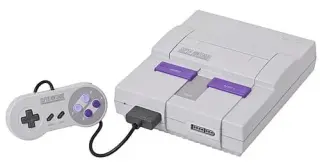
SNES
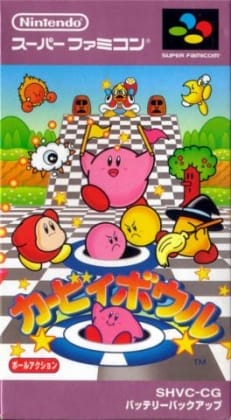
Kirby Bowl
Kirby protagonista en este juego de bolos donde la bola rosa rueda por pistas fantásticas llenas de enemigos. Con bolos temáticos de Kirby y power-ups especiales.
Fecha de lanzamiento
January 1, 1994
Desarrollador
HAL LaboratoryEditor
HAL Laboratory
Jugadores
1
Región
US
Tamaño de ROM
677 KB
Compartir este juego
Sistemas de juego
Kirby's Dream Course is a mini golf video game set at an isometric perspective, similar to games such as Marble Madness (1984). Its plot involves Kirby 's nemesis King Dedede stealing all of the stars in the night sky. Kirby sets out to stop Dedede and return the stars to the sky. In single-player, players maneuver Kirby around a miniature golf course by deflecting him towards a specific area of the playfield within a limited number of strokes. Players must set the power, angle , and spin to connect with various enemies found throughout the levels, claiming a star for each enemy defeated. When only one enemy remains, that enemy transforms into the goal hole. Kirby can knock himself into certain enemies to acquire a Copy ability, which can be used to clear courses in a faster period of time. These Copy abilities include Kirby turning into a tornado , a sparking ball that can destroy certain obstacles, and a UFO that allows Kirby to float and move at will for a short time. The game has eight single-player courses, with eight holes in each. Completing courses awards the player with medals, which can be used to unlock extra features such as alternative versions of courses. The type of medal awarded is based on how well the player performed, with gold being the best. In multiplayer, players take turns and compete for the most stars in unique courses. The second player controls a yellow palette swap of Kirby named Keeby ( キービィ , Kībī ) , who shares all of Kirby's abilities. Connecting with a star causes it to take the player's color (either pink or yellow), and players can "steal" stars from each other by connecting with them to change their color. The players can attack each other using Copy abilities, potentially forcing one player to skip their turn. The goal hole is worth two stars; when one player reaches the goal, the round ends and both players' stars are tallied. The winner is the player with the most stars at the end of eight rounds.
Reseñas de medios
IGN
7.5/10
GameSpot
7/10
Famitsu
28/40
Electronic Gaming Monthly
1988
Nintendo Power
3.45/5
Información extraída de Wikipedia, disponible bajo CC BY-SA 3.0.