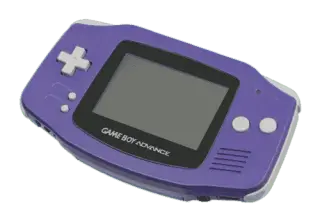
GBA
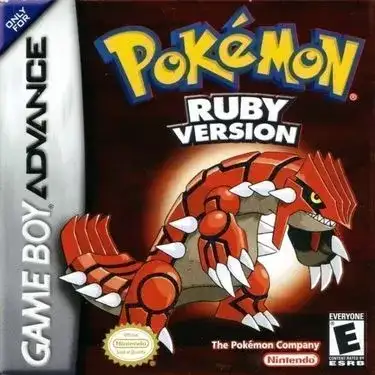
Pokémon Rubí
Pokémon Rubí es un videojuego de rol desarrollado por Game Freak y publicado por Nintendo para Game Boy Advance. Parte de la tercera generación de la serie Pokémon, introduce 135 nuevos Pokémon. Los jugadores viajan por la región Hoenn para convertirse en Campeones Pokémon mientras frustran los planes del Equipo Magma.
Fecha de lanzamiento
January 1, 2002
Desarrollador
Game FreakEditor
Game Freak
Jugadores
1
Región
US
Tamaño de ROM
16.0 MB
Compartir este juego
Historia
Setting Ruby and Sapphire are set in the Hoenn region, designed to be similar to Japan's island of Kyushu if rotated 90°. (pictured below). Kyushu island, Japan Pokémon Ruby and Sapphire occur in the Hoenn region, some distance from the Kanto and Johto regions featured in previous games. The design of Hoenn was based on the Japanese island and region of Kyushu ; however, Hoenn is rotated 90° relative to Kyushu, as Junichi Masuda felt that it would provide a better gameplay balance. Like Kyushu, Hoenn possesses many smaller islands, and part of the region is dominated by sea routes, several of which contain areas where the player can dive underwater.
Sistemas de juego
As with all Pokémon games for handheld consoles , the gameplay is in third-person , overhead perspective and consists of three basic screens: a field map , in which the player navigates the main character; a battle screen; and the menu, in which the player configures their party, items, or gameplay settings. Players begin the game with one Pokémon and can capture more using Poké Balls . They can also use their Pokémon to battle other Pokémon. When the player encounters a wild Pokémon or is challenged by a trainer to a battle, the screen switches to a turn-based battle screen where the Pokémon fight. During a battle, the player may use a move , use an item, switch their active Pokémon, or flee, although fleeing is not an option in battles against trainers. All Pokémon have hit points (HP); when a Pokémon's HP is reduced to zero, it faints and cannot battle until it is revived. If the player's Pokémon defeats the opposing Pokémon (causes it to faint), it receives experience points . After accumulating enough experience points, it will level up ; most Pokémon evolve into a new species of Pokémon when they reach a certain level. Apart from battling, capturing Pokémon is the most essential element of Pokémon gameplay. During a battle with a wild Pokémon, the player may use a Poké Ball on them. If successful, the Pokémon will be added to the player's active party, or stored if the player already has the maximum six Pokémon in their party. Factors in the success rate of capture include the HP, status effects such as Paralysis or Sleep, and the strength of the Poké Ball used: the lower the target's HP and the stronger the Poké Ball, the higher the success rate of capture is. Other trainers' Pokémon cannot be captured. New features Consequently, certain Pokémon moves can affect multiple combatants at once. Multi battles were added alongside double battles. They are identical to double battles, but there are two trainers to a side, each controlling one of the two Pokémon sent out. Also new to the games are innate abilities and natures ; the former is shared by every Pokémon of a certain species, while the latter may vary among a particular species. Abilities grant their holders certain powers in battle, such as immunity against certain types of moves or strengthening a certain type of move. Natures, like innate abilities, affect the strength of Pokémon in battle; however, they affect the stats of the Pokémon rather than directly affecting the strength of the moves. Another stat introduced in Pokémon Ruby and Sapphire is Condition, an important factor in Pokémon Contests, mini-games in which participants perform moves before a judge. Both Pokémon and their moves have a Condition, which is increased by using Pokéblocks, which are candies made from berries. Secret bases were added as a one-off feature where players could open up a hole in the world and customize the area with various items picked up in-game. Players who linked up with others who set up secret bases were able to battle an NPC version of that trainer within their secret base. Like Pokémon Gold , Silver , and Crystal , Pokémon Ruby and Sapphire keep track of real-life time; this influences events like tides and berry plant growth. However, unlike their predecessors, Ruby and Sapphire do not differentiate between day and night. Also, due to the differences in the technical specifications of Game Boy link cables and Game Boy Advance link cables, Ruby and Sapphire cannot be linked with Pokémon games of previous generations; one cannot battle with or trade with the previous generations.
Premios y distinciones
Handheld Game of the Year
Golden Joystick Awards • 2003
Children's Game
British Academy Game Awards • 2004
Game Boy Advance Game
British Academy Game Awards • 2004
Ventas y rendimiento comercial
Copias vendidas
1.25 million copies
Reseñas de medios
IGN
9.5/10
GameSpot
8.1/10
Famitsu
34/40
Eurogamer
7/10
Información extraída de Wikipedia, disponible bajo CC BY-SA 3.0.