PS1
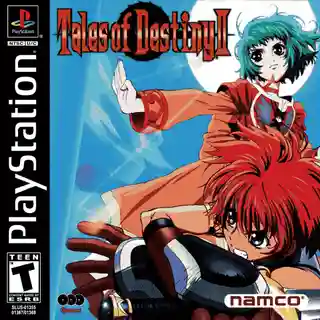
Tales of Destiny II
Tales of Destiny II es un juego de rol desarrollado por Wolf Team y publicado por Namco para PlayStation. Lanzado en 2000 en Japón y en 2001 internacionalmente como Tales of Eternia, sigue el viaje de Reid Hershel y sus compañeros mientras investigan misteriosos desastres naturales que amenazan su mundo. El juego presenta el característico Sistema de Batalla de Movimiento Lineal de la serie y fue elogiado por su jugabilidad refinada y contenido extenso.
Fecha de lanzamiento
January 1, 2000
Jugadores
1
Región
US
Tamaño de ROM
335.4 MB
Compartir este juego
Historia
Synopsis The game follows Reid Hershel as he tries to prevent the Grand Fall, a cataclysmic event that would destroy his planet along with that of newly found traveling companion Meredy. Specifically, the Grand Fall entails the violent collision of twin planets Inferia and Celestia. The two planets face one another while being separated by the Orbus Barrier. Interaction between the two planets has been infrequent over the last few centuries despite their proximity; the Bridge of Light linked Inferia and Celestia in the distant past, but the link has been severed for an extensive period of time. The Aurora War, an ancient conflict that set Inferia against Celestia over two thousand years ago, continues to generate persistent mistrust between the two groups. The Orbus Barrier has shown recent signs of weakening and possible collapse due to the actions of an unknown external force. The journey takes Reid across both planets, as he seeks out those responsible for this movement towards the brink of annihilation.
Sistemas de juego
The game plays similar to other Tales games, following the precedent set by previous role-playing video games in general as well. An overworld map is used to navigate from one location to another in the game's fictional world. Cities and towns, which are populated with NPCs , are valuable sources of information, for either triggering events that move the plot forward, or extra information that fleshes out the game's story and setting. Additionally, city merchants will exchange Gald, the in-game currency, for items or equipment that can be vital to completing the game. Progress can be saved at any time - a first for the series, and the player can also learn recipes throughout the game, using them to cook status-enhancing or healing food out of combat. Battles with enemies are done through the Linear Motion Battle System , a hybrid fighting system that combines fighting game and traditional role-playing game elements. Movements and attacks are done in real-time, with the fighting being compared to the Street Fighter series. Much like its predecessors, Tales of Eternia gives the player a large degree of control over computer-controlled allies and the techniques they use. Since the player only directly controls one character at a time, all other characters are governed by the general rules of AI behavior set by the player before and during battle. During battle, the player can switch which character he or she is controlling, while issuing specific orders to other allies to execute certain techniques on command. The action can be paused to use different menus for things such as item. The game's menu screens can be used to organize and uses items, creates new magic spells, develops battle strategies, changes character equipment, and views character statistics. Selected features from the menu screen, such as item use and AI settings, are available in battle, while other aspects are relegated to outside of battle.
Reseñas de medios
IGN
8.5/10
GameSpot
7.1/10
Famitsu
33/40
Eurogamer
8/10
Game Informer
7.75/10
Electronic Gaming Monthly
7/10
Información extraída de Wikipedia, disponible bajo CC BY-SA 3.0.