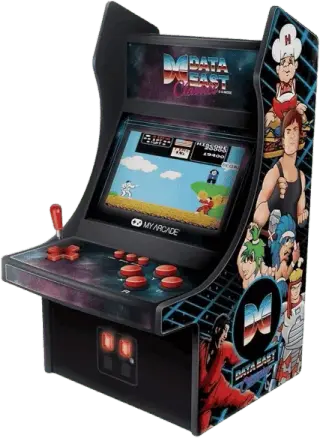
Arcade
The arcade gaming experience that started it all. Play classic cabinet games from the golden age of arcades, including fighting games, beat 'em ups, and shoot 'em ups.
Technical Specs
CPU
Varies by era and manufacturer: Intel 8080 (1970s), Motorola 68000/Z80 (1980s-1990s), MIPS R3000/R4000 (1990s), x86/AMD (2000s-present)
GPU
Varies: discrete TTL logic (early), custom 2D sprite hardware (1980s), Sega Model 1/2/3 custom 3D (1990s), NVIDIA/AMD PC GPUs (2000s-present)
Memory
Varies: from KB (1970s) to multiple GB (modern)
Storage
ROM boards, hard drives (modern), networked server-based (modern)
Display
CRT monitors standard through 2000s, LCD/LED from 2000s onward. Standard resolution to 1080p+ on modern hardware. Vector displays used in late 1970s-early 1980s
Audio
Varies: simple tone generators to FM synthesis (Yamaha YM2151/YM2612) to full PCM digital audio with surround sound (modern)
Media
PCB boards, JAMMA standard connector (since 1985), hard drives, networked downloads (modern)
History
The arcade gaming industry traces its origins to the early 1970s, when Atari's Pong (1972) demonstrated the commercial viability of coin-operated video games. Nolan Bushnell and Ted Dabney founded Atari after being inspired by Ralph Baer's Magnavox Odyssey, and Pong became the first commercially successful arcade video game, appearing in bars, bowling alleys, and dedicated arcades across the United States. The mid-1970s saw an explosion of Pong clones and early titles like Gun Fight (1975), which was the first game to use a microprocessor, and Breakout (1976), famously built by Steve Jobs and Steve Wozniak.
The golden age of arcade games began in 1978 with Taito's Space Invaders, designed by Tomohiro Nishikado. The game was so popular in Japan that it caused a reported shortage of 100-yen coins. Namco's Pac-Man (1980), created by Toru Iwatani, became the first true pop-culture gaming phenomenon, generating over $2.5 billion in quarters by the 1990s. Other golden age classics included Donkey Kong (1981), which introduced both Shigeru Miyamoto and the character Mario to the world, Galaga (1981), Frogger (1981), and Centipede (1981). The arcade industry peaked commercially in 1982, earning approximately $8 billion in quarters in the United States alone.
The fighting game revolution reignited arcade culture in the early 1990s. Capcom's Street Fighter II (1991), designed by Akira Nishitani and Akira Yasuda, single-handedly revitalized arcades worldwide. The game popularized competitive head-to-head play, spawning numerous updates and inspiring competitors like SNK's Fatal Fury, Mortal Kombat (1992) with its controversial digitized violence, and Sega's Virtua Fighter (1993), the first 3D polygon-based fighting game.
The mid-1990s brought a 3D revolution to arcades. Sega's Virtua Racing (1992) and Daytona USA (1994) showcased hardware capabilities far beyond home consoles. Namco countered with Ridge Racer (1993) and Tekken (1994). This era saw arcades maintain a significant technological advantage over home systems, driving foot traffic with experiences impossible to replicate at home. Rhythm games like Konami's Dance Dance Revolution (1998) and Bemani series created entirely new genres.
The decline of traditional arcades accelerated in the 2000s as home consoles matched and eventually surpassed arcade hardware. The PlayStation 2, Xbox, and subsequent generations eliminated the graphical advantage that had long justified the coin-op model. Western arcades largely transitioned to redemption games and entertainment centers. However, Japanese arcade culture remained vibrant, with genres like card-based games and network-connected cabinets thriving. A modest revival emerged in the 2010s through barcades combining retro gaming with adult-oriented venues, and through continued Japanese innovation in music games, mech pods, and VR arcade experiences.
Variants & Revisions
JAMMA Standard Cabinets
Released: January 1, 1985
The JAMMA (Japan Amusement Machine and Marketing Association) standard, introduced in 1985, defined a universal edge connector pinout, allowing operators to swap game boards in standard cabinets.
Neo Geo MVS (Multi Video System)
Released: April 26, 1990
SNK's arcade platform allowing up to 6 game cartridges in a single cabinet. Dominant platform for fighting games throughout the 1990s.
Sega Model Series (1/2/3)
Released: January 1, 1992
Sega's dedicated 3D polygon rendering boards: Model 1 (1992, Virtua Racing/Virtua Fighter), Model 2 (1994, Daytona USA), Model 3 (1996, Virtua Fighter 3).
Sega NAOMI / Atomiswave
Released: January 1, 1998
Sega's Dreamcast-based arcade board hosting Crazy Taxi, Marvel vs. Capcom 2, and many others.
Namco System Series
Released: January 1, 1994
Namco's arcade boards including System 11 (PlayStation-based, Tekken 1/2), System 12 (enhanced PS1, Tekken 3/Soul Calibur), System 246/256 (PS2-based).
Development Story
The technological evolution of arcade hardware represents one of the most fascinating chapters in computing history. Early arcade games like Pong used dedicated discrete logic circuits with no microprocessor at all. Each game was essentially a custom-built electronic device designed to perform one function. Midway's Gun Fight (1975) marked the transition to microprocessor-based designs, using an Intel 8080 CPU, which allowed far more complex game logic and opened the door to software-driven game development.
During the golden age, most arcade boards used variants of the Zilog Z80 or MOS 6502 processors with custom video hardware. Namco developed its own Galaga hardware platform, while dedicated boards were common since each game typically required its own PCB. The concept of standardized arcade system boards emerged gradually, with companies realizing the economic benefits of shared hardware platforms. Sega's System 16 (1985) and Namco's System 1 (1987) established the framework for reusable arcade platforms.
SNK's Neo Geo Multi Video System (MVS), launched in 1990, represented a revolutionary approach to arcade economics. The MVS allowed operators to swap game cartridges on a single base board, dramatically reducing costs compared to purchasing entirely new cabinets. The system was powered by a Motorola 68000 processor and a Zilog Z80 for audio, with custom video hardware capable of displaying 380 sprites simultaneously. The simultaneously released Neo Geo AES home console used identical hardware, creating a unique arcade-perfect home experience.
Capcom's CPS (CP System) series became legendary in fighting game history. The original CPS-1 (1988) powered Street Fighter II and its variants, using a Motorola 68000 CPU with custom graphics hardware. The CPS-2 (1993) added enhanced encryption to combat piracy and powered Super Street Fighter II and the Marvel vs. Capcom series. The CPS-3 (1996) introduced even more powerful hardware for Street Fighter III but saw limited adoption.
The 3D revolution demanded exponentially more powerful hardware. Sega's Model 1 board (1992), co-developed with Martin Marietta, used floating-point DSPs to render textured polygons for Virtua Racing and Virtua Fighter. The Model 2 (1993) dramatically increased polygon counts, powering Daytona USA and Virtua Fighter 2 with hardware designed by former GE Aerospace engineers, processing over 300,000 textured polygons per second. Sega's Model 3 (1996), using a PowerPC 603 CPU and dual Real3D graphics processors from Lockheed Martin, was the most powerful arcade board of its era, running Virtua Fighter 3 and Scud Race.
Namco responded with the System 22 (1993) for Ridge Racer, followed by System 23 (1997) for Time Crisis II. These boards featured custom 3D rendering pipelines rivaling contemporary workstation-class hardware. The business model of arcades evolved alongside the technology, transitioning from per-play revenue to time-based charging, card-based progression systems in Japan, and eventually the Western pivot toward entertainment centers combining games with dining and social experiences. Japanese arcade operators like Sega, Namco, and Taito maintained dedicated urban game centers that became cultural institutions, supporting competitive gaming communities decades before esports became mainstream.

The King of Fighters '97
• 1997
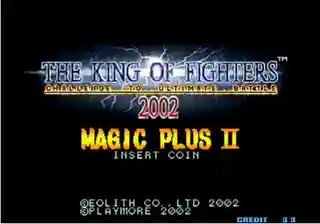
The King of Fighters 2002 Magic Plus II
• 2009
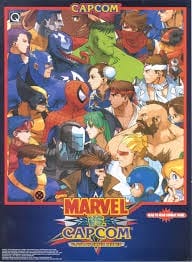
Marvel vs. Capcom: Clash of Super Heroes
• 1998

1942
• 1984
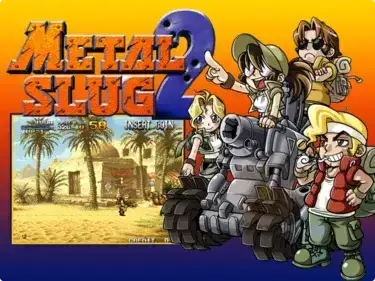
Metal Slug 2
• 1998

Street Fighter III: 3rd Strike - Fight for the Future
• 1999

Cadillacs and Dinosaurs
• 1993
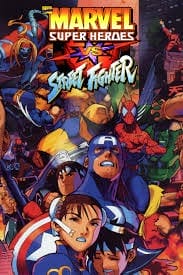
Marvel Super Heroes vs. Street Fighter
• 1997

Metal Slug 3
• 2000

The King of Fighters 2002
• 2002
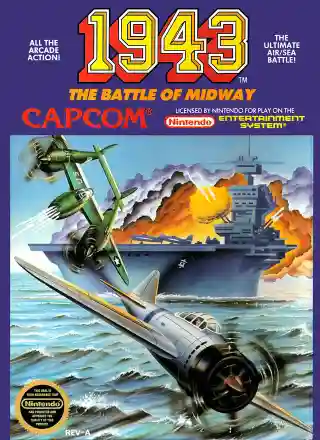
1943: The Battle of Midway
• 1987
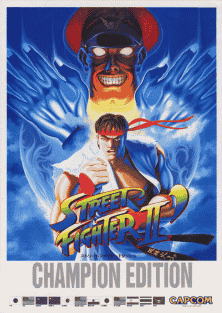
Street Fighter II: Champion Edition
• 1992
About the Arcade
The Arcade (Arcade) is a home video game console manufactured by Various. Released on November 29, 1972, it belongs to the 0th generation of gaming hardware.
With a library of 419+ ROMs available to download, the Arcade remains one of the most popular platforms for retro gaming enthusiasts. Each ROM is available for free download and compatible with popular emulators like RetroArch, giving you instant access to classic gaming history.
Whether you're looking for Arcade ROMs to play on your PC, phone, or dedicated retro handheld, our library has you covered with verified ROM files and complete game information.