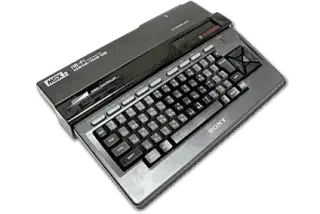
MSX2
Technical Specs
CPU
Zilog Z80A @ 3.579545 MHz
GPU
Yamaha V9938 Video Display Processor (VDP), 256 colors from 512-color palette, 512x212 max resolution, 32 hardware sprites (8 per line), hardware horizontal and vertical scroll
Memory
64 KB to 512 KB main RAM (varies by manufacturer and model), 128 KB dedicated VRAM
Storage
ROM cartridge (50-pin slot, up to 4 Mbit), 3.5-inch floppy disk drive (720 KB per disk), cassette tape interface
Display
Multiple display modes: Screen 5 (256x212, 256 colors), Screen 7 (512x212, 16 colors), Screen 8 (256x212, 256 colors from fixed palette), Screen 6 (512x212, 4 colors), plus text and multicolor modes; 32 sprites per screen, 8 per scanline
Audio
Yamaha YM2149 Programmable Sound Generator (PSG), 3 tone channels + 1 noise channel; optional MSX-MUSIC expansion with Yamaha YM2413 OPLL FM synthesis providing 9 additional FM channels or 6 FM + 5 rhythm channels
Media
ROM Cartridge (50-pin, dual slots on most models), 3.5-inch 2DD floppy disk (720 KB), cassette tape
History
The MSX2, released in 1985, was the second generation of the MSX home computer standard ??an ambitious initiative led by ASCII Corporation and Microsoft to create a unified, manufacturer-independent home computer platform. While the original MSX (1983) had established the standard, the MSX2 addressed its predecessor's graphical limitations and elevated the platform into the premier home computer for gaming in Japan and several international markets.
The MSX2's most significant upgrade was the Yamaha V9938 Video Display Processor, which replaced the original MSX's TMS9918-based VDP. The V9938 offered dramatically improved capabilities: 256-color mode from a 512-color palette, a resolution of up to 512x212, smooth hardware scrolling, and 32 hardware sprites. These improvements made the MSX2 competitive with dedicated gaming consoles and significantly more capable than many competing home computers of the mid-1980s.
Multiple manufacturers produced MSX2 machines, ensuring a range of price points and form factors. Sony, Panasonic (Matsushita), Philips, Sanyo, Canon, and numerous other companies built MSX2-compatible computers, each with their own design and additional features. This open ecosystem was far ahead of its time, presaging the standardized PC platform that would eventually dominate computing.
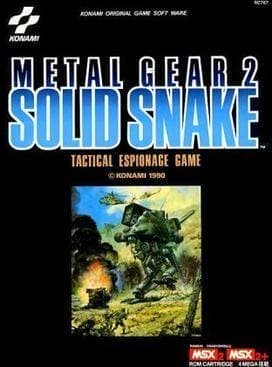
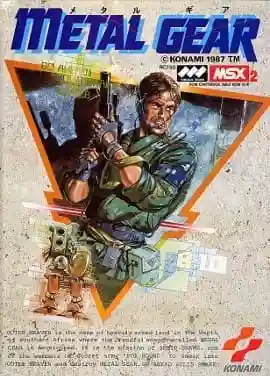
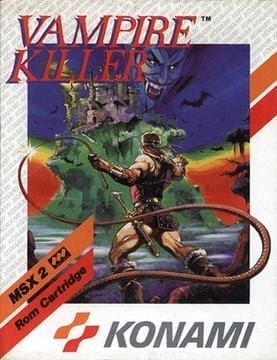
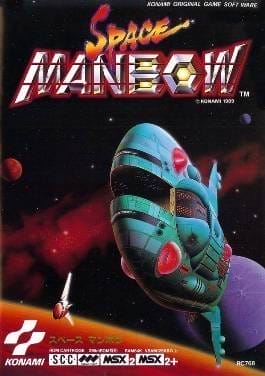
The MSX2's gaming legacy is extraordinary, largely thanks to Konami. The platform served as the birthplace of several of gaming's most revered franchises. Metal Gear (1987), created by a young Hideo Kojima, debuted on MSX2 and is considered the canonical version of the game ??the NES port, while more commercially successful in the West, was a significantly altered adaptation that Kojima himself has distanced himself from. Konami also released Vampire Killer (the MSX2 version of Castlevania), Gradius 2, Space Manbow, Snatcher, and SD Snatcher on the platform.
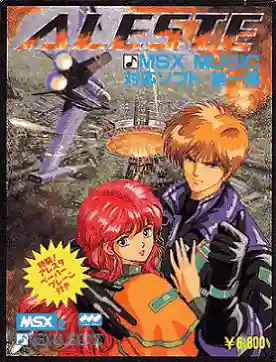
Beyond Konami, the MSX2 hosted the original Aleste series by Compile, the Dragon Slayer RPGs by Nihon Falcom, and numerous visual novels and adventure games that leveraged the platform's high-resolution graphics. The MSX2's disk drive support enabled larger, more complex games than cartridge-only systems.
The MSX standard was most popular in Japan, South Korea, the Netherlands, Spain, Brazil, the Middle East, and the Soviet Union, but it never gained significant traction in the United States or United Kingdom. The MSX2 was succeeded by the MSX2+ (1988) and MSX turboR (1990), but declining market relevance against the rising Famicom and IBM PC compatibles led to the standard's gradual phase-out by the early 1990s. The MSX community remains vibrant globally, with active homebrew development and preservation efforts continuing decades later.
Variants & Revisions
Sony HB-F1XD
Released: November 1, 1987
A popular Japanese MSX2 model with built-in 3.5-inch floppy drive, 64 KB RAM, 128 KB VRAM. Known for its sleek silver design and build quality.
Panasonic FS-A1 / FS-A1F
Released: October 1, 1986
The best-selling MSX2 line. The FS-A1F included a built-in floppy drive. Excellent price-performance ratio made it the default MSX2 choice in Japan.
Philips NMS-8250
Released: January 1, 1986
A popular European MSX2 model with 128 KB RAM, built-in floppy drive, and Philips' high build quality. Widely used in the Netherlands and Spain.
Sanyo WAVY PHC-23/PHC-77
Released: January 1, 1986
Sanyo's MSX2 models offered unique industrial design and competitive pricing, popular in Japan and South America.
Canon V-25/V-30
Released: January 1, 1986
Canon's MSX2 contributions featuring compact design with integrated peripherals, popular in educational settings.
Development Story
The MSX2 standard was conceived by Kazuhiko Nishi, the visionary co-founder of ASCII Corporation and a key figure in the Japanese personal computer industry. Nishi had originally created the MSX standard in 1983 in collaboration with Microsoft ??the "M" in MSX is widely believed to stand for Microsoft, though Nishi has given various explanations over the years. His vision was to create the VHS of personal computers: a universal standard that any manufacturer could build, ensuring software compatibility across all MSX machines.
The original MSX had been a commercial success in Japan and several other markets, but its Texas Instruments TMS9918-based graphics were already outdated by 1984. Nishi negotiated with Yamaha to develop the V9938, a powerful new VDP that would form the heart of the MSX2 specification. The V9938 was a substantial engineering achievement, packing 256-color capability, hardware scrolling, and a larger VRAM capacity (128 KB) into a cost-effective package. This chip was so capable that it continued to be used in arcade boards and other applications beyond the MSX platform.
The MSX2 specification mandated a minimum of 64 KB of main RAM and 128 KB of VRAM, along with a real-time clock (a novel feature for home computers of the era) and an optional but commonly included 3.5-inch floppy disk drive. These standardized requirements ensured that any MSX2 software would run on any MSX2 machine, regardless of manufacturer.
Konami's relationship with the MSX platform was uniquely intense. The company maintained a dedicated MSX development team that produced some of the most technically impressive games for the hardware. Hideo Kojima, who joined Konami in 1986, was initially assigned to the MSX2 division. His first credited project was Penguin Adventure (MSX), but his breakthrough came with Metal Gear (1987) for the MSX2. Kojima designed Metal Gear specifically around the MSX2's strengths and limitations ??the emphasis on stealth over action was partly a creative response to the hardware's difficulty in rendering many simultaneous moving sprites during combat.
The competition between MSX2 manufacturers created an interesting dynamic. Sony's HB-F1XD models were known for their sleek design and high build quality. Panasonic's FS-A1 series offered an excellent price-to-performance ratio and became the best-selling MSX2 line. Philips served the European market with the VG-8230 and NMS-8250 series. This manufacturer diversity ensured a healthy, competitive ecosystem but also created slight compatibility variations that occasionally caused software issues.
Nishi's dream of MSX becoming the global computer standard ultimately fell short. In the US and UK, the IBM PC compatible ecosystem and Commodore 64/Amiga had already established dominance. The MSX2's strength in Japan was eroded by the Famicom's gaming dominance and the rising popularity of Sharp X68000 and NEC PC-8801/9801 computers for more demanding applications. Nevertheless, the MSX philosophy of an open hardware standard predating by decades anticipates the modern open-source hardware movement.

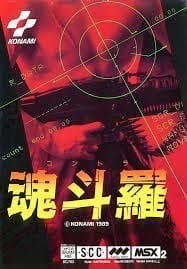
About the MSX2
The MSX2 (MSX2) is a home video game console manufactured by Various. Released on June 1, 1985, it belongs to the 0th generation of gaming hardware.
With a library of 9+ ROMs available to download, the MSX2 remains one of the most popular platforms for retro gaming enthusiasts. Each ROM is available for free download and compatible with popular emulators like RetroArch, giving you instant access to classic gaming history.
Whether you're looking for MSX2 ROMs to play on your PC, phone, or dedicated retro handheld, our library has you covered with verified ROM files and complete game information.