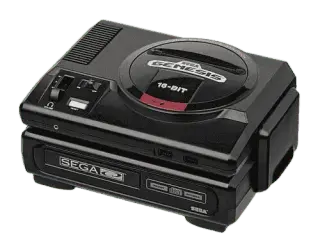
Sega CD
Technical Specs
CPU
Motorola 68000 @ 12.5 MHz (secondary processor, supplements Genesis 68000 @ 7.67 MHz)
GPU
Custom ASIC for hardware sprite scaling and rotation, bitmap processing; Sega custom gate array for CD-ROM data decompression and FMV playback
Memory
6 Mbit (768 KB) main program RAM, 512 Kbit (64 KB) PCM waveform memory, 256 Kbit (32 KB) CD-ROM data cache, 128 Kbit (16 KB) word RAM available as 2x 1 Mbit banks
Storage
Internal battery-backed SRAM (8 KB) for game saves, optional RAM cartridge for additional save data
Display
Uses Genesis VDP for primary display output; ASIC adds hardware-assisted scaling, rotation, and 256-color bitmap rendering capabilities overlaid on Genesis output
Audio
Ricoh RF5C164 PCM sound chip, 8 channels at 32 kHz sample rate, 16-bit stereo; CD-DA audio playback; mixes with Genesis YM2612 FM and SN76489 PSG audio
Media
CD-ROM (1x speed, 150 KB/s data transfer rate), supports CD-DA, CD+G, and mixed mode discs
History
The Sega CD (known as Mega-CD in Japan and Europe), released December 12, 1991 in Japan, was a CD-ROM add-on peripheral for the Sega Genesis/Mega Drive. It represented Sega's ambitious attempt to harness the emerging CD-ROM technology to extend the Genesis platform's capabilities and lifespan against the upcoming Super Nintendo.
The Sega CD added a second Motorola 68000 processor running at 12.5 MHz, effectively doubling the system's processing power. It also included hardware-assisted sprite scaling and rotation capabilities, a feature the base Genesis lacked, as well as a dedicated PCM sound chip offering eight channels of CD-quality audio. These enhancements, combined with the vast storage capacity of CD-ROM (roughly 500 MB vs. a typical 4 MB Genesis cartridge), opened up entirely new possibilities for game design.
The platform became synonymous with full-motion video (FMV) games ??a trend that was both its claim to fame and its curse. Titles like Night Trap, Sewer Shark, and Ground Zero Texas used live-action video sequences as the core gameplay mechanic. While technically impressive for the time, these games offered limited interactivity and aged poorly, giving the Sega CD a reputation as a gimmick rather than a serious gaming platform.
However, the Sega CD also hosted genuinely excellent games that transcended the FMV fad. Sonic CD, released in 1993, is widely considered one of the greatest Sonic games ever made, featuring time-travel mechanics and a spectacular CD-quality soundtrack. Lunar: The Silver Star and Lunar: Eternal Blue by Game Arts/Working Designs were beloved RPGs with anime cutscenes and voice acting. Hideo Kojima's Snatcher was a cult classic cyberpunk adventure. The Enhanced CD versions of Ecco the Dolphin and Earthworm Jim showcased how CD audio could transform existing Genesis games.
The Sega CD sold approximately 2.24 million units worldwide. Its high price ??$299 at launch on top of the cost of a Genesis ??limited its audience. The add-on's commercial underperformance, combined with the similarly unsuccessful 32X, contributed to the fragmented Sega ecosystem that confused consumers and eroded brand trust heading into the Saturn era.
Variants & Revisions
Mega-CD Model 1 (Japan, HAA-2910)
Released: December 12, 1991
The original Japanese model designed to sit underneath the Mega Drive. Front-loading CD tray with motorized drawer. Cost ?49,800 at launch.
Sega CD Model 1 (North America, MK-4102)
Released: October 15, 1992
The North American version designed to mount to the right side of the Genesis Model 1. Front-loading CD tray. Launched at $299.
Mega-CD II / Sega CD Model 2 (MK-4102A)
Released: April 23, 1993
A smaller, cost-reduced redesign with a top-loading disc mechanism and flip-top lid. Designed to pair with the Genesis Model 2. Launched at $229.
Sega Multi-Mega / CDX (MK-4121)
Released: May 1, 1994
A compact all-in-one device combining Genesis and Sega CD into a portable CD player-sized unit. Also functioned as a standalone music CD player. Very limited production run.
Aiwa Mega-CD (CSD-GM1)
Released: January 1, 1994
A licensed variant by Aiwa that integrated the Mega Drive and Mega-CD into a portable boombox-style unit with built-in speakers and radio.
Development Story
The Sega CD's development began in 1989, when CD-ROM technology was rapidly emerging in the PC world. Sega's hardware engineers in Japan, led by Hideki Sato, saw CD-ROM as the natural evolution for console gaming. The primary motivations were threefold: massively increased storage capacity, the ability to use CD-quality audio, and the potential for full-motion video that could bridge the gap between games and cinema.
The decision to include a second Motorola 68000 processor at 12.5 MHz ??faster than the Genesis's own 68000 at 7.67 MHz ??was significant. This meant the Sega CD wasn't merely a storage upgrade but a genuine processing enhancement. The custom ASIC chip handled bitmap scaling, rotation, and color manipulation that the Genesis VDP could not perform natively, enabling pseudo-3D effects and Mode 7-like capabilities that had previously been exclusive to the SNES.
Developing the Sega CD was complicated by the relationship between Sega of Japan and Sega of America. Sega of Japan drove the hardware development, while Sega of America was responsible for marketing and much of the software publishing in the West. Tom Kalinske, then CEO of Sega of America, was initially enthusiastic about the CD-ROM add-on but grew concerned about its high retail price. He advocated for a lower price point to ensure mass adoption, but Sega of Japan maintained the $299 price to recoup development costs.
The FMV game explosion was partly driven by the technology's novelty and partly by economic incentives. Producing FMV content was cheaper per megabyte than creating traditional sprite-based game content, and the CD format had ample storage for video data. Companies like Digital Pictures (founded by former Hasbro executive Tom Zito) built their entire business model around FMV games. However, the heavy MPEG compression required for video playback on the Sega CD's limited hardware resulted in grainy, small-window video that disappointed consumers expecting television-quality footage.
One unexpected legacy of the Sega CD was its role in popularizing voice acting and cinematic storytelling in console games. Working Designs' English localizations of the Lunar series set a new standard for RPG production values, with hours of dubbed dialogue and animated cutscenes. These productions influenced the industry's approach to game localization and voice acting for years to come. The Sega CD also introduced internal backup memory for game saves, eliminating the need for battery-backed cartridge RAM that was prone to failure.
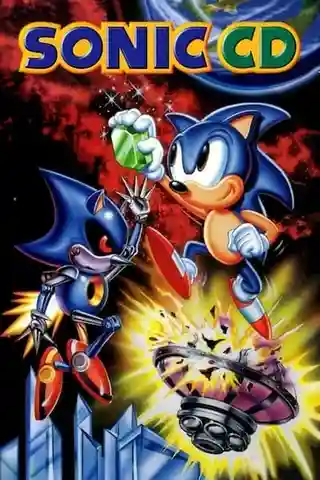
Sonic CD
• 1993

Sonic Megamix 5.0
• 2023

Sonic the Hedgehog Megamix 4.0b
• 2012
Mortal Kombat
• 1993
3 Ninjas Kick Back
• 1994
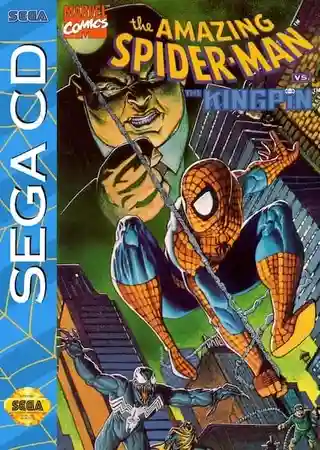
The Amazing Spider-Man vs. The Kingpin
• 1993

The Secret of Monkey Island
• 1993
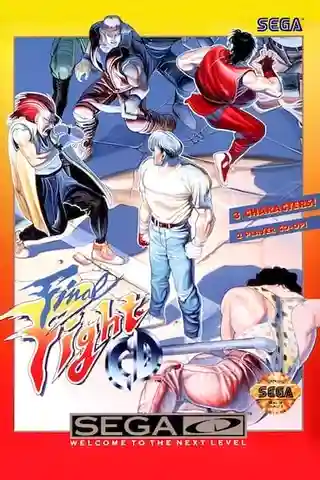
Final Fight CD
• 1993
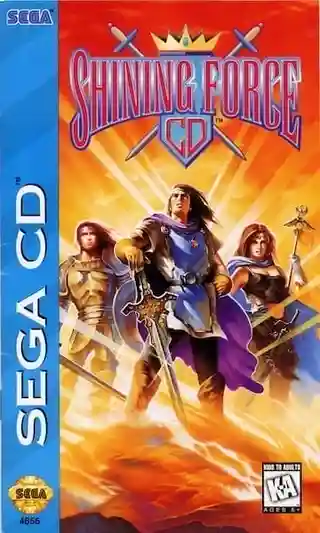
Shining Force CD
• 1994
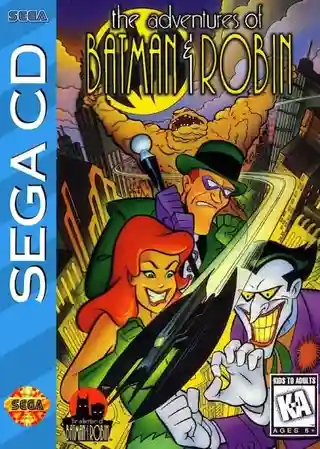
The Adventures of Batman & Robin
• 1995
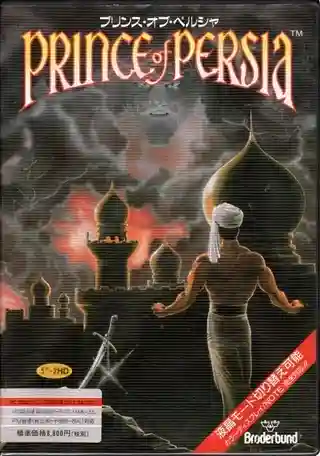
Prince of Persia
• 1993
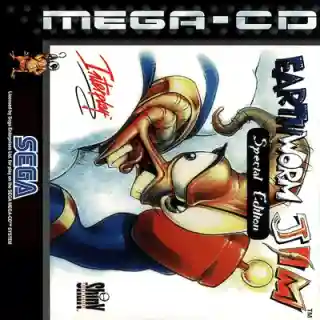
Earthworm Jim: Special Edition
• 1995
About the Sega CD
The Sega CD (SCD) is a home video game console manufactured by Sega. Released on December 12, 1991, it belongs to the 0th generation of gaming hardware.
With a library of 19+ ROMs available to download, the SCD remains one of the most popular platforms for retro gaming enthusiasts. Each ROM is available for free download and compatible with popular emulators like RetroArch, giving you instant access to classic gaming history.
Whether you're looking for SCD ROMs to play on your PC, phone, or dedicated retro handheld, our library has you covered with verified ROM files and complete game information.