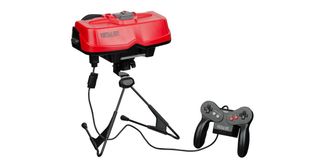
Virtual Boy
Technical Specs
CPU
NEC V810 32-bit RISC @ 20 MHz, 1 KB instruction cache
GPU
Custom VIP (Virtual Image Processor), handles rendering to dual display buffers, hardware support for affine transformations (scaling, rotation) on background layers and objects
Memory
1 Mbit (128 KB) DRAM main memory, 512 Kbit (64 KB) P-SRAM (frame buffer, dual 384x224 pixel buffers), 512 bytes OAM (Object Attribute Memory for sprites)
Storage
Game Pak cartridge (24-pin, similar form factor to Game Boy cartridges), ROM sizes from 512 Kbit to 16 Mbit, optional SRAM with battery backup for save data
Display
Dual 1x224 red LED arrays with oscillating flat mirrors (piezoelectric vibration); each eye receives a 384x224 pixel monochrome red image; stereoscopic 3D depth via binocular parallax; ~50.2 Hz refresh rate; 4 intensity levels per pixel (2-bit depth); virtual image appears at approximately 1 meter viewing distance
Audio
Virtual Sound Unit (VSU): 5 sound channels ??4 waveform channels with programmable 32-sample wavetable + 1 noise channel; 10-bit stereo DAC output; audio output via headphone jack on controller (no built-in speakers)
Media
Virtual Boy Game Pak (proprietary 24-pin cartridge format)
History
The Virtual Boy, released July 21, 1995 in Japan and August 14, 1995 in North America, stands as Nintendo's most notorious commercial failure and one of the most fascinating cautionary tales in gaming history. Conceived by Gunpei Yokoi as a 'virtual reality' gaming experience, the Virtual Boy was a monochromatic stereoscopic 3D system that required users to press their face against a tabletop-mounted visor ??a usage paradigm that was neither truly portable nor truly a home console.
The Virtual Boy used an ingenious but limited display technology. Each eye viewed a single column of 224 red LEDs that oscillated rapidly via a flat mirror mechanism, sweeping across the visual field to create the illusion of a 384x224 pixel display per eye. The use of two slightly offset images (one per eye) produced genuine stereoscopic 3D depth perception. However, due to cost constraints, only red LEDs were used (red LEDs were the cheapest and most power-efficient at the time), giving every game an eerie red-and-black aesthetic reminiscent of an infrared camera.
The 3D effect was genuinely impressive when experienced. Objects appeared to float at different depths, and certain games used the stereoscopic depth creatively. However, the monochrome red display caused significant eye strain and headaches in many users, especially during extended play sessions. Nintendo included explicit warnings in the manual and programmed automatic pause reminders into the system software, but the health concerns became a major marketing liability.
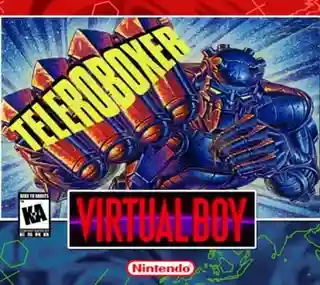
The Virtual Boy's game library was extremely small: only 22 games were released total ??19 in Japan and 14 in North America. Despite the limited library, several titles demonstrated what the hardware could achieve. Virtual Boy Wario Land is considered an excellent platformer and one of the best Wario games in the franchise. Mario's Tennis offered surprisingly engaging racquet action with effective use of 3D depth. Teleroboxer provided immersive first-person boxing using the dual D-pad controller. Red Alarm was an ambitious 3D wire-frame space shooter. Jack Bros. (an Atlus Megami Tensei spin-off) has become one of the rarest and most valuable Nintendo collectibles.
The Virtual Boy was rushed to market to free up development resources for the Nintendo 64, which was behind schedule. It launched at $179.99 in North America ??relatively affordable, but for a system that required a flat surface to play and could only display in red and black, the value proposition was questionable. Sales were dismal. The system sold fewer than 770,000 units worldwide (approximately 630,000 in Japan and 140,000 in North America) and was discontinued in March 1996, less than one year after launch. A planned European release was cancelled entirely.
The Virtual Boy's failure contributed to Gunpei Yokoi's departure from Nintendo after 31 years with the company. Despite its commercial ignominy, the Virtual Boy has gained a cult following among collectors and retro gaming enthusiasts, and its core concept of stereoscopic 3D gaming would find redemption in the Nintendo 3DS sixteen years later.
Variants & Revisions
Virtual Boy (VUE-001)
Released: July 21, 1995
The sole production model. A red and black tabletop unit consisting of a visor headpiece mounted on a bipod stand. Featured a unique dual-D-pad controller (VUE-010) with battery compartment and headphone jack. The visor contains the LED display arrays, mirrors, and optics. Launched at ?15,000 in Japan and $179.99 in North America. No European release.
Virtual Boy (Retail Demo Unit)
Released: August 14, 1995
Modified retail kiosk versions with an extended stand for in-store demonstrations. Featured a fixed mounting bracket and security tethers. Same internal hardware as consumer model.
Development Story
The Virtual Boy's origins trace to 1992, when Gunpei Yokoi encountered a display technology demonstration from Reflection Technology, a small American company based in Waltham, Massachusetts. Reflection Technology had developed a 'Private Eye' display module: a single column of LEDs paired with an oscillating mirror that scanned across the visual field, creating a virtual image that appeared much larger than the tiny physical display. Yokoi immediately saw potential for a gaming application.
Yokoi proposed a handheld stereoscopic 3D gaming device to Nintendo's leadership. By using two Private Eye-style displays (one per eye) with slightly offset viewpoints, the system could create genuine binocular depth perception without requiring special glasses. Nintendo president Hiroshi Yamauchi approved the project, and development began under the codename 'VR32.'
The engineering challenges were significant. The oscillating mirror mechanism required precise timing ??the mirror had to sweep at a consistent frequency to create a stable image. Any vibration or speed variation would cause visible distortion. The system used piezoelectric actuators to vibrate the mirrors, creating an audible hum during operation. The NEC V810 CPU (a 32-bit RISC processor running at 20 MHz) was chosen for its combination of processing power and relatively low cost.
The all-red color scheme was not an intentional aesthetic choice but a cost and power limitation. Full-color LED displays using red, green, and blue LEDs were technically possible but would have been prohibitively expensive and power-hungry. Yokoi reportedly wanted at least two colors (red and green or red and blue), but cost analysis showed that even a two-color display would push the retail price beyond the target. The team settled on red LEDs as the most efficient option, accepting the visual limitation.
The tabletop design was a compromise born from safety concerns. Yokoi's original vision was a head-mounted display like modern VR headsets. However, Nintendo's legal team was deeply concerned about children wearing a head-mounted device and walking around, potentially falling or colliding with objects. The stand-mounted design was proposed as a safer alternative, but it created an awkward usage paradigm: the player had to lean forward into the visor while sitting at a table, a posture that was neither comfortable for extended play nor visually appealing.
The controller design was one of the Virtual Boy's genuine innovations. Featuring dual D-pads (one for each thumb), it anticipated the dual-analog-stick controllers that would become standard in later console generations. Games could use the left D-pad for movement and the right for camera or aiming ??a control scheme remarkably similar to modern first-person shooters.
Nintendo president Hiroshi Yamauchi increasingly pressured Yokoi to finalize the Virtual Boy for a summer 1995 launch. The Nintendo 64 (then called 'Ultra 64') was behind schedule, and Yamauchi wanted a product to fill the holiday gap. Yokoi reportedly expressed frustration that the Virtual Boy was being released before it was ready ??he wanted more time to refine the hardware and build a stronger launch library. The rushed launch with only four games available in Japan reflected these compressed timelines.
After the Virtual Boy's commercial failure, Yokoi's position at Nintendo became untenable. He resigned in August 1996, ending a partnership that had produced some of gaming's most important innovations. Tragically, Yokoi was killed in an automobile accident on October 4, 1997, at age 56. His legacy extends far beyond the Virtual Boy: the D-pad, Game Boy, and Game & Watch are foundational to gaming history. Ironically, the concept he championed ??stereoscopic 3D gaming without glasses ??would prove commercially viable when Nintendo launched the 3DS in 2011.
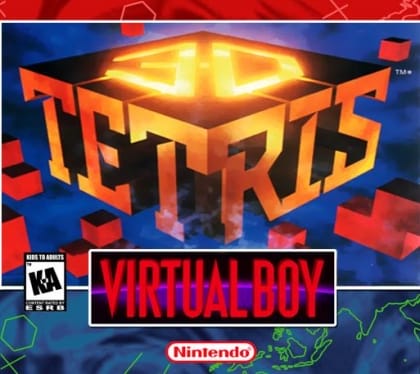





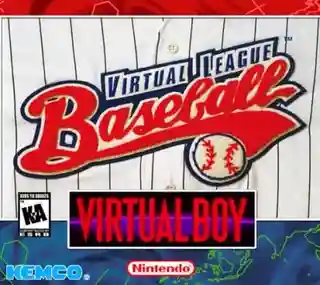


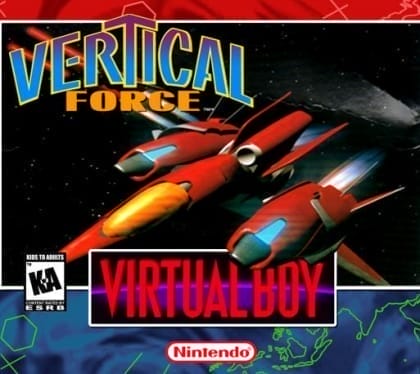

About the Virtual Boy
The Virtual Boy (VB) is a home video game console manufactured by Nintendo. Released on July 21, 1995, it belongs to the 5th generation of gaming hardware.
With a library of 14+ ROMs available to download, the VB remains one of the most popular platforms for retro gaming enthusiasts. Each ROM is available for free download and compatible with popular emulators like RetroArch, giving you instant access to classic gaming history.
Whether you're looking for VB ROMs to play on your PC, phone, or dedicated retro handheld, our library has you covered with verified ROM files and complete game information.