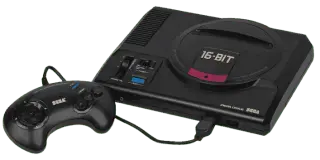
Genesis
梦幻模拟战
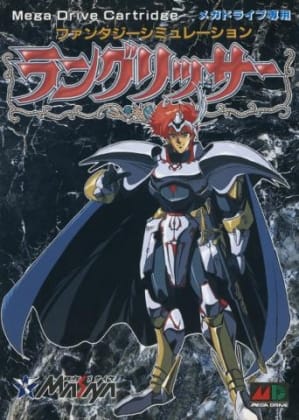
《梦幻模拟战》是由美塞亚为世嘉MD开发的战略角色扮演游戏,1991年发售。游戏结合了基于网格的战略战斗与RPG角色成长要素。玩家在光与暗的奇幻战争中率领军队,挥舞传说之剑兰古利萨。
发行日期
January 1, 1991
人数
1
地区
US
ROM 大小
512 KB
分享此游戏
故事
El Sallia, since time immemorial, has been influenced by the power of "gods". The evil gods were originally their own tribe, and over time one rose to power to dominate all the others. He was the dark god, Chaos , worshiped by the devil tribe. Conversely, Lushiris, a goddess of light, was worshiped by the humans. Each god has its own avatar to exercise its power in the human world and prepare for its coming. Chaos' avatar is Böser (German: "evil one"), a prince of darkness who is really the trapped soul of a damned human. Lushiris' avatar is Jessica, a magician. Each avatar has been entrusted with a sword that carries the weight of the gods' powers. Böser is responsible for Alhazard, and Jessica is responsible for Langrisser. By choosing a champion for the swords in each era, they influence the world in an endless series of wars. Langrisser itself is a copy of Alhazard made in ancient times and bound to the soul of Sieghart, the first king to rule Elthlead, later called Baldea, as a Descendant of Light. The series includes ties to Team Career's earlier strategy games. The storyline of Elthlead and its sequel Gaia no Monshō (both released in 1987) depict Sieghart's battles against Böser for the power of Gaia, which serve as the backstory of the original Langrisser (with Böser appearing as the antagonist for all three games). The titular ancient mech from Gaiflame (which is set in the distant future) makes an appearance in Langrisser IV along with other mechs used by the player in the same game.
玩法系统
Langrisser is divided into Scenarios, each of which reveals a portion of the story through battle interaction. The series set itself apart from other tactical RPGs in its time with larger-scale battles, where the player can control over thirty units at one time and fight against scores of enemies. Battle system At the outset of battle, military commanders are positioned on the game's map and units are hired. Combat always follows a system of turns . In the first two games, any unit can be moved at any time during the player's turn, but each unit can only be moved once. In the last two games, a clock was introduced and units were moved in turn according to agility. A unit's commander class dictates the radius of its command range. Units battling within this command range receive a bonus to their attack and defense due to proximity to the commander. Commanders can recover life using a specific command depending on the game. In the first game the Treat Command will recover 3 health points . In later versions of the game the Treat Command is replaced by the Heal command which recovers 3 health points (HP) and 2 magic points . A commander's troops recover by being positioned directly around the commander. Each will recover 3 HP at the start of a turn. Units work on an affinity system. Fliers are strong to soldiers but weak to bowmen. Soldiers are strong to pikemen but weak to cavalry. Cavalry are strong to soldiers and weak to pikemen. Holy units are strong against demon units. Seafaring units get a tactical advantage when attacking from water. The game engine used in Langrisser III is a considerable departure from the rest of the series, relying on mass battles between a commander's entire platoon against his enemy's.
部分信息来源于 Wikipedia, 授权协议 CC BY-SA 3.0.