玩法系统
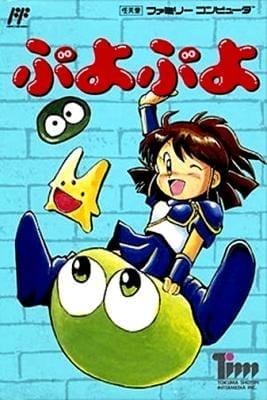
Generally, the objective of Puyo Puyo games is to defeat the opponent by causing the third column from the left of their side of the screen to become filled with Puyo . Puyo are round, slime-like creatures that, in most variations of the game, fall from the top of the screen in groups of two, three, and four. The pieces can be moved, dropped, and rotated as they fall. The piece falls until it reaches another Puyo or the bottom of the screen. When four or more Puyo of the same color line up adjacent to each other, the Puyo will connect to each other, "Pop", and disappear. Puyo of the same color can connect horizontally or vertically, but not diagonally. The Puyo above those that are cleared fall onto other pieces or the bottom of the screen. Simultaneous Pops (同時消し, simultaneous erasing) are created when more than one group is formed at a time. A Chain occurs when falling Puyo trigger a new group of Puyo to Pop, setting off a chain reaction. Achieving a Chain results in Garbage Puyo, also known as Ojama Puyo (お邪魔ぷよ), being sent to either block the opponent's screen or counterbalance (offset, 相殺) the Garbage Puyo sent by the opponent. Garbage Puyo are translucent pieces that disappear when adjacent Puyo are popped. If multiple groups of Puyo are cleared consecutively due to a chain, the amount of Garbage Puyo increases based solely on the number of steps in the chain. Garbage Puyo are cached above the opponent's playing field, and do not fall until the attacker's chain concludes, and then the defender puts down a piece. Garbage Puyo block the opponents' playing fields, and can cause them to lose if one is placed the third spot from the left in the top row.
部分信息来源于 Wikipedia, 授权协议 CC BY-SA 3.0.