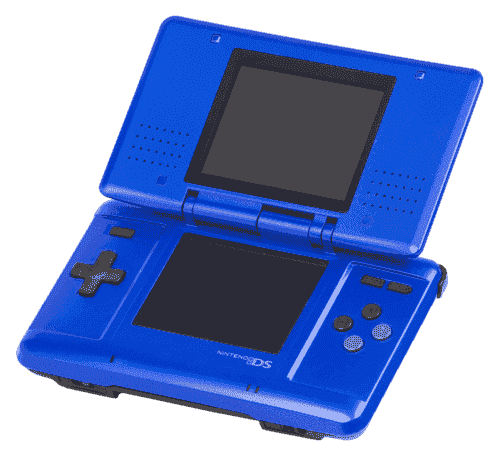
NDS

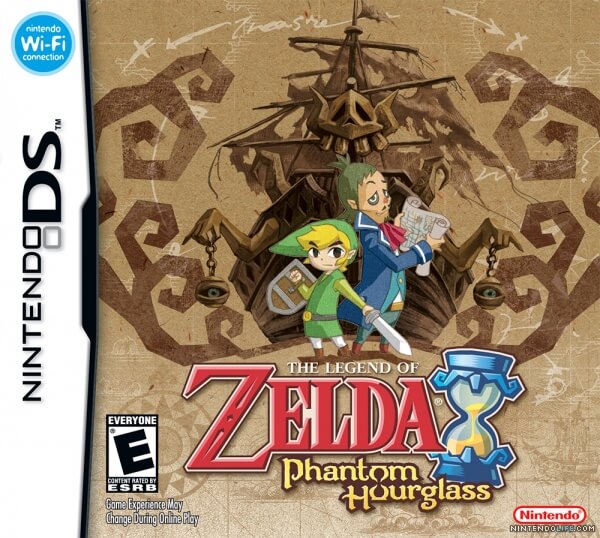
The Legend of Zelda: Phantom Hourglass

The Legend of Zelda est l'une des séries de jeu de rôle les plus recherchées de tous les temps. Pendant ses plus de 30 ans d'existence, elle n'a jamais cessé d'être célèbre. The Legend of Zelda: Phantom Hourglass, sorti en 2007 par Nintendo, fonctionne exclusivement sur la console portable Nintendo DS. Cela montre une intégration passionnante et apporte de nombreux résultats positifs à cette version. Ce sera la suite directe de The Wind Waker, où Link se réveille dans un autre monde et découvre que son navire a disparu, le laissant seul dans des mers inconnues. L'aventure sera aussi charmante que dans les précédents volets, offrant aux joueurs une expérience RPG de haute qualité pour ce genre. Dans ce jeu, il y a une introduction pour les nouveaux joueurs qui découvrent la série, leur permettant de saisir rapidement le contenu. De plus, il apporte également de nombreux nouveaux puzzles qui feront réfléchir davantage les joueurs. Le gameplay tournera autour du Phantom Hourglass, car c'est la seule chose qui peut fournir à Link les minutes dont il a besoin pour survivre. Pendant cette aventure, des améliorations intéressantes sont apportées au contrôle par le dessin de trajets. C'est simple, mais il y a des différences à apprendre. Si vous vous habituez à dessiner, cela fonctionnera aussi vite qu'appuyer sur les boutons de l'écran. Vous utiliserez votre doigt pour toucher l'écran et contrôler le protagoniste, et glisserez autour de lui pour attaquer. Si vous utilisez une console DS, vous profiterez de la puissance de ses deux écrans tactiles pour observer flexiblement la carte du combat. Vous pouvez également tracer un arc pour montrer la trajectoire de votre boomerang et attendre son retour. En général, ce système de contrôle incitera le joueur à penser à des attaques plus flexibles.

En savoir plus
Date de sortie
January 1, 2007
Développeur
Nintendo
Éditeur
Nintendo
Joueurs
1
Région
US
Taille du ROM
46.0 MB

Partager ce jeu

Histoire

Tetra enters it and is heard screaming. Link fails to come to her help and falls into the ocean as the Ghost Ship vanishes. Washed ashore on Mercay Island, Link meets the fairy Ciela and her adoptive grandfather, Oshus, and both agree to help him rescue Tetra. Link enlists Captain Linebeck, a miserly treasure hunter who believes the Ghost Ship houses great treasure. The group learns that the Temple of the Ocean King contains sea-glyphs that function as maps, though these are guarded by fierce Phantoms. To access the glyphs , Link must free the three Spirits from various temples: one of Power, one of Wisdom, and one of Courage. After freeing the Spirit of Power, Link obtains the Phantom Hourglass, a vessel for the Sands of Time that enable him to explore the Temple of the Ocean King without draining his life force. Upon rescuing the Spirit of Courage, the group notices its similarity to Ciela. Oshus arrives and reveals that Ciela is one half of the Spirit of Courage; Oshus split Ciela's soul into two after she was attacked by Bellum, a demon who consumes all life. With the three Spirits rescued, Link locates the Ghost Ship and finds Tetra, only to find her lifeless and petrified. Oshus reveals that he is the Ocean King and that he took human form after battling Bellum, whom he trapped in the depths of his Temple. He instructs Link to seek three pure metals which can be crafted into the Phantom Sword, a blade capable of defeating Phantoms and Bellum; only by defeating Bellum, Oshus says, can Tetra be restored to life. Linebeck is devastated that there is no treasure aboard the Ghost Ship, but continues to help Link when Oshus promises to grant him one wish in return for his aid. After acquiring the Phantom Sword, Link defeats Bellum in the Temple's depths. He is teleported out to Linebeck's ship, where he reunites with a revived Tetra, only for Bellum to take Tetra away to the Ghost Ship. Link destroys the Ghost Ship using Linebeck's cannon, but Bellum possesses Linebeck and forces him to fight Link. In the course of battle, Link kills Bellum, frees Linebeck, and rescues Tetra, though Linebeck's ship is destroyed and the Phantom Hourglass's sand whisks away in the sea. Oshus returns to his true form as a white whale and leaves with the Spirits, granting Linebeck his wish; Linebeck forgoes his wish for treasure to have his ship restored instead. Link and Tetra are teleported back to Tetra's ship, but Tetra's crew insists their adventure was only a ten-minute dream. Link is confused as he holds the empty Phantom Hourglass in his hands; looking to the horizon, he sees Linebeck's ship.

Systèmes de jeu

The Legend of Zelda: Phantom Hourglass is an action-adventure game with gameplay similar to the other games in The Legend of Zelda series. The player controls Link and explores the world to find new items, information, and allies to help him save his friend Tetra and defeat the antagonist Bellum. The game is divided into two gameplay types: sailing between islands, and exploring the islands and their dungeons on foot. While on land, Link discovers and utilizes many items, including the classic boomerang , bow , and bombs . When sailing, the game shows a map of the area on the Nintendo DS 's top screen, and a 3D top-down view of Link and his nearby surroundings on the lower touchscreen . The player can bring down the map from the top screen to the lower screen to make notes. During certain events, including most boss battles, a 3D view is shown on both screens, allowing the player to have a wider view of their surroundings. The player controls Link with the stylus , moves him by pointing to the sides of the screen, and uses the stylus to interact with objects and people or attack foes by pointing at them. To travel between islands on the Great Sea , the player controls a paddle steamer called the S.S. Linebeck . The player can plot a course by drawing on a sea chart, redraw the course to make any necessary alterations, shoot at enemies that attack the ship using a cannon , and jump to avoid obstacles. The game includes a one-on-one multiplayer battle mode. In an arena, one player controls Link, while the other player, on defense, controls three Phantom Guardians. Players of both sides are aided by power-up items that appear on the playing field. Link's goal is to grab a Force Gem and carry it to his base. The other player, controlling the three Phantom Guardians, must find and catch Link before he returns any Force Gems. When Link is caught, or if the round is over, players switch sides. Each multiplayer game consists of three rounds, and in each round, each player takes a turn at both sides. The maximum length of a multiplayer game is 12 minutes, assuming Link does not get caught. The game supports multiplayer both locally and online through the Nintendo Wi-Fi Connection , as well as Download Play . The game is the third The Legend of Zelda game to include multiplayer, following Four Swords and Four Swords Adventures . Phantom Hourglass introduces the game mechanic of a large dungeon central to the game's story, in this case the Temple of the Ocean King. Link visits the Temple multiple times during the course of the game's story, in order to obtain sea charts that allow him to sail to other parts of the ocean. Throughout the game, the Temple has a curse placed on it that drains Link's life whenever he is inside, but upon obtaining the Phantom Hourglass , Link is able to explore the Temple without being affected by the curse for a limited amount of time. In addition to the curse, Link must contend with Phantoms, a type of enemy exclusive to the Temple. Phantoms are invincible for the most part, necessitating the use of stealth in order to get past them. "Safe zones" are scattered throughout the Temple, and allow Link to avoid both the Phantoms and the Temple's curse. As Link progresses through the game, he is able to access deeper levels of the Temple and stay inside for longer. The Temple, including the puzzles within, will reset whenever Link leaves, but as he obtains new items, he can unlock new routes and shortcuts that enable him to travel through the Temple quicker. All this is done similarly to a dungeon crawler .

Récompenses et distinctions

Golden Joystick Award

Ventes et performance commerciale

Copies vendues
4.13 million copies

Critiques médias

IGN
9/10
GameSpot
9/10
Famitsu
10/10
Edge
9/10
Eurogamer
9/10
Game Informer
9.5/10
Nintendo Power
9.5/10

Certaines informations proviennent de Wikipedia, disponible sous CC BY-SA 3.0.