PS1
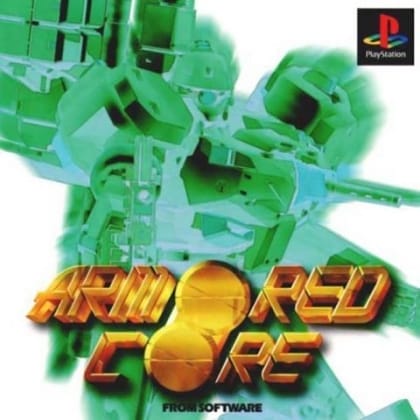
Armored Core
Armored Core is a groundbreaking mech simulation game where players customize and pilot powerful armored cores (ACs) through challenging missions. Features deep customization and tactical combat.
Release Date
January 1, 1997
Players
1
Region
US
ROM Size
219.9 MB
Share this game
Story
Premise In the original continuity established by 1997's Armored Core through 2001's Armored Core 2: Another Age , Earth experienced a cataclysm known as the "Great Destruction" and humanity has been forced underground. Corporations begin fighting for dominance, leading to the increasing reliance on Armored Core pilots called Ravens. Following the events of 1999's Armored Core: Master of Arena , humanity rebuilds and colonizes Mars. Through 2000's Armored Core 2 and its expansion, Another Age , the fledgling Earth government struggles to maintain power as opportunistic corporations exploit the power gap and rebel groups resist against the hegemony of government and business interests. The series was rebooted with 2002's Armored Core 3 , beginning a new story arc that concluded with Armored Core: Last Raven in 2005. Following a global nuclear war, humanity has retreated underground. Following centuries of rule by an artificial intelligence called The Controller, its decay leads to the destruction of much of humanity's underground network, causing them to look toward the surface for safety. By the end of 2003's Silent Line: Armored Core , humanity has fully returned to the surface of Earth. The final two games of this continuity, 2004's Armored Core: Nexus and 2005's Armored Core: Last Raven involve the end of the existing power dynamic of corporations and Ravens fighting over the surface. 2006's Armored Core 4 rebooted the series yet again. Here, corporations have seized control of Earth governments and are waging war across the surface for dominance. A war waged over the course of the game pollutes the environment, leading to the creation of floating cities in 2008's Armored Core: For Answer . Depending on the player's choices, humanity either barely survives the fallout of For Answer's conflict or is completely eradicated. The third continuity of the series continued with 2012's Armored Core V . A single corporation has dominance over a contaminated Earth and is being opposed by a resistance faction that seeks to overthrow them, while 2013's Armored Core: Verdict Day details the outbreak of another war 100 years later following an apocalyptic event. Another continuity has begun with 2023's Armored Core VI: Fires of Rubicon . The game takes place far away from Earth in a human-colonized star system on the planet Rubicon 3. Decades prior to the game's start, a powerful resource called Coral was discovered, leading to significant technological advances, but a disaster called the Fires of Ibis scorched the entire Rubicon system and left it highly contaminated. However, the Coral, thought to have all burned, has begun to reappear, bringing multiple corporations into conflict for control of it which, in turn, has brought the attention of mercenaries. Added into the conflict are the Planetary Closure Administration, an organization tasked with quarantining Rubicon, and the Rubicon Liberation Front, a resistance group who venerate the Coral, wishing to end its exploitation and free the planet.
Gameplay Systems
Within the core games of the franchise, the gameplay is generally focused on the player taking the role of a mech -piloting mercenary, taking on missions for various clients and gaining currency from completing them. Missions can involve multiple objectives and pit the player against computer controlled opponents, some of which pilot mechs as well. Upon completion of a mission, the operating costs of the mech, such as repairs and ammunition, are deducted from the total earnings of the player, as well as compensation for destroying valuable objects within the mission area. Likewise, if the player loses a mission, those same deductions occur from the player's direct balance. The game's mechs, called Armored Cores (or ACs for short), are highly customizable with hundreds of parts and weapons that can be purchased from an in-game shop (and equally sold back to the shop at full price) or by fulfilling certain requirements. Different parts can provide gameplay advantages in certain terrains or against certain enemies, which forces the player to put thought into how to approach the construction of their mech as each sortie often has different obstacles and hazards to overcome. The customization of Armored Cores is strictly limited by multiple factors such as the maximum weight load of their leg parts carrying the overall weight of every equipped part attached to it, and the energy output of their generators supplying power to all equipped parts of the AC. As such, an Armored Core's performance varies depending on the parts that compose it, as an over-equipped AC becomes overburdened and performs slower in combat, while a lightweight AC yields faster speed and quicker responses to enemy fire at the cost of defensive and offensive counter-measures. Many of the franchise's games feature a branching storyline where taking on certain missions can block off others, with consequences of a player's decision in a mission being relayed to them at the end of a mission. Certain games require multiple playthroughs to access additional contents, such as missions inaccessible during the initial playthrough, and even different endings that add additional lore and context to the games. An Arena mode introduced in Armored Core: Project Phantasma gave players the opportunity to fight opponents outside of missions for additional rewards. Project Phantasma also introduced the import feature, allowing players to retain their progress from a previous entry when starting a new one. This import feature would become a mainstay of the franchise, with "expansion" titles like Silent Line: Armored Core allowing for importing saved data. Multiplayer Since its first release, the Armored Core games have featured multiplayer options in some form. In the original PlayStation era, local split-screen multiplayer modes were the primary method, generally featuring head-to-head battles. A PlayStation Link Cable feature, allowing for the connection of two PlayStation consoles, was included in all three original Armored Core titles. With the PlayStation 2, split-screen and console linking continue to be the primary source of multiplayer. 2004's Armored Core: Nexus introduced the LAN multiplayer mode, in addition to connecting through their internet service and allowed up to 4 players to fight in matches together. Online multiplayer was first introduced in the Japanese release of Armored Core 2: Another Age , but was removed in other regions due to the PlayStation Network Adapter not being ready in time. No PlayStation 2-era game after this release would include online play either, with the first game to do so being Armored Core 4 .
Some information sourced from Wikipedia, available under CC BY-SA 3.0.