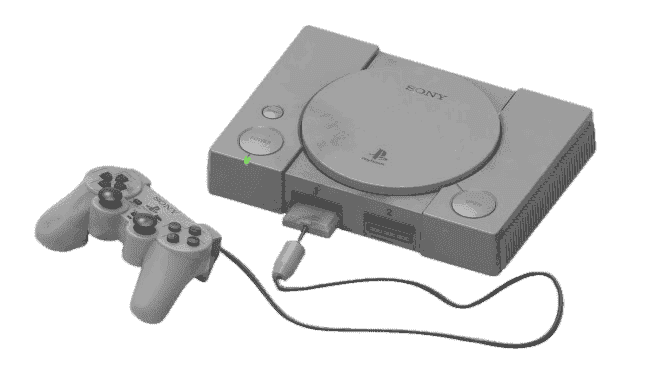
PlayStation
Technical Specs
CPU
MIPS R3000A 32-bit RISC @ 33.8688 MHz, with Geometry Transformation Engine (GTE) coprocessor and Motion Decoder (MDEC)
GPU
Custom Sony/Toshiba GPU, 360,000 flat-shaded polygons/sec, 180,000 textured and light-sourced polygons/sec, Gouraud shading, texture mapping, hardware sprite scaling/rotation, 16.7 million colors
Memory
2 MB main RAM, 1 MB VRAM, 512 KB sound RAM
Storage
Memory Card (128 KB per card, 15 save blocks)
Display
256x224 to 640x480 pixels (interlaced), 24-bit color depth (16.7 million colors)
Audio
SPU (Sound Processing Unit), 24 channels ADPCM, 44.1 kHz sampling rate, digital effects including reverb, CD-DA audio playback
Media
CD-ROM 2x speed (300 KB/s), 650 MB per disc
History
The Sony PlayStation, released on December 3, 1994 in Japan and September 9, 1995 in North America, fundamentally altered the gaming industry landscape and established Sony as a dominant force in interactive entertainment. Selling approximately 102.49 million units worldwide, the PlayStation was the first home console to surpass the 100-million-unit milestone, and its success launched a platform dynasty that continues to dominate the console market decades later.
The PlayStation's origins lay in one of the most dramatic corporate betrayals in gaming history. Sony and Nintendo had jointly developed a CD-ROM add-on for the Super Nintendo, but Nintendo secretly negotiated an alternative deal with Philips, publicly humiliating Sony at the June 1991 Consumer Electronics Show. Furious at the betrayal, Sony chairman Norio Ohga authorized the continuation of the project as a standalone console, and engineer Ken Kutaragi was tasked with creating what would become the PlayStation.
The PlayStation launched in Japan with Ridge Racer, a Namco arcade port that showcased the system's 3D capabilities, and quickly built momentum through a combination of aggressive pricing, developer-friendly tools, and a marketing strategy that positioned gaming as a mainstream adult entertainment medium rather than a children's pastime. In North America, the console launched at $299, deliberately undercutting the Sega Saturn's surprise $399 launch price that had been announced just hours earlier at E3 1995.
Sony's strategy of courting third-party developers with affordable, accessible development tools proved transformative. The PlayStation development kit was priced at approximately $2,000, a fraction of the cost of competing platforms, and Sony's libraries and documentation were significantly more developer-friendly than the Saturn's notoriously complex architecture. This approach attracted an unprecedented breadth of third-party support, and the PlayStation's library eventually exceeded 7,900 titles worldwide.
The PlayStation's CD-ROM format provided crucial advantages over the Nintendo 64's cartridges. With 650 megabytes of storage capacity per disc, developers could include pre-rendered cutscenes, voice acting, full orchestral soundtracks, and vast game worlds that would have been impossible on cartridge media. The manufacturing cost of CD-ROMs was also dramatically lower than cartridges, reducing financial risk for publishers and enabling more experimental titles.
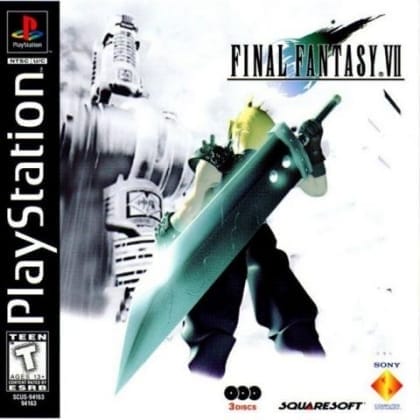
Final Fantasy VII, released in January 1997, became the PlayStation's defining moment and one of the most important games in industry history. Square's decision to move the Final Fantasy franchise from Nintendo to Sony, driven by the N64's cartridge limitations, validated the PlayStation as the platform of choice for Japanese RPGs. Final Fantasy VII sold over 13 million copies, introduced millions of Western players to JRPGs for the first time, and demonstrated that narrative-driven games could achieve mainstream blockbuster success. The game's massive marketing campaign, including the first television commercials for a game that showed no gameplay footage, represented a new era in game marketing.
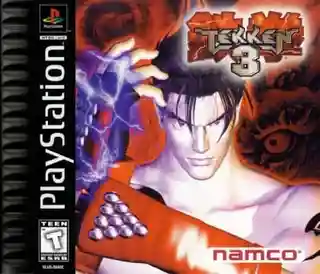
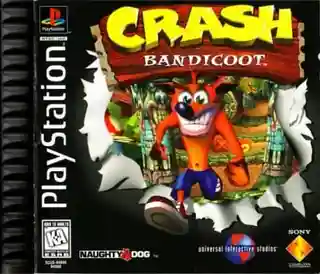
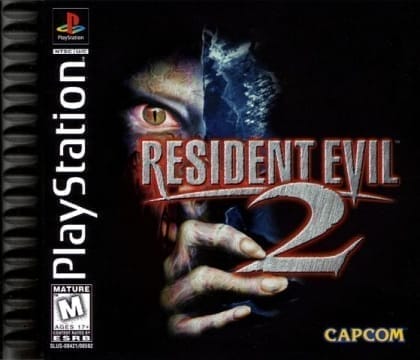
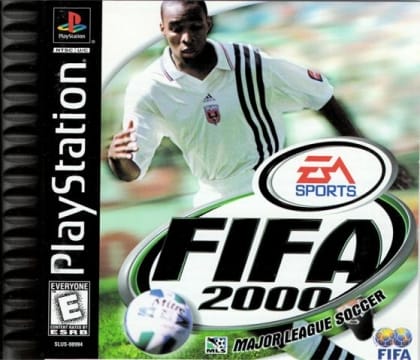
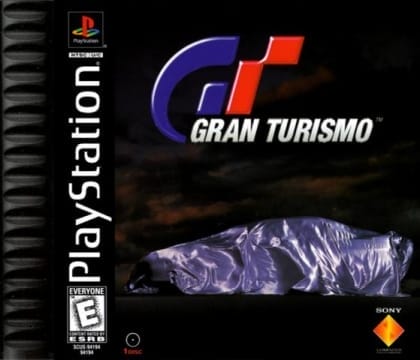
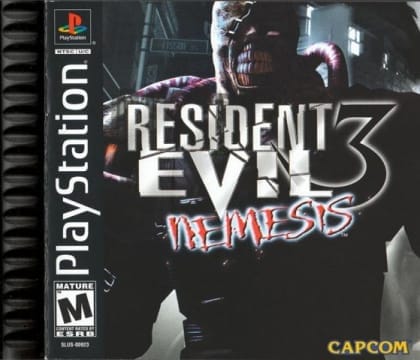
The PlayStation library encompassed landmark titles across every genre: Metal Gear Solid pioneered cinematic stealth gameplay, Resident Evil defined survival horror, Gran Turismo elevated racing simulation, Crash Bandicoot and Spyro the Dragon provided memorable platforming, Tekken 3 perfected 3D fighting, and Castlevania: Symphony of the Night revitalized the Metroidvania genre. The breadth, depth, and quality of the PlayStation's library established a standard that subsequent console generations struggled to match.
Variants & Revisions
PlayStation (SCPH-1000)
Released: December 3, 1994
Original Japanese launch model with S-Video output, RCA jacks, and parallel I/O port. Gray color scheme.
PlayStation (SCPH-5501/7501/9001)
Released: September 9, 1995
North American models across multiple revisions. Successive revisions reduced costs and removed features like the parallel port. Gray color scheme.
PSone (SCPH-100/101)
Released: July 7, 2000
Compact redesign: 38% smaller and 28% lighter than the original. Rounded white/gray design. Optional clip-on 5-inch LCD screen accessory for portable use.
Net Yaroze (DTL-H3000/3001)
Released: June 21, 1996
Black-colored PlayStation sold to hobbyist developers and universities. Came with development tools and documentation, enabling homebrew game creation.
Development Story
The PlayStation's creation story begins with Ken Kutaragi, a Sony engineer who had been fascinated by gaming since working on a digital audio chip for the Super Famicom's sound system. Kutaragi developed the SPC700 sound processor used in the SNES, an arrangement that most Sony executives were unaware of, as they considered gaming to be beneath the company's prestige consumer electronics brand. When the Nintendo partnership to develop a CD-ROM add-on collapsed in the dramatic 1991 CES betrayal, Kutaragi found an unlikely ally in Sony chairman Norio Ohga, who was reportedly so personally angered by Nintendo's duplicity that he authorized Kutaragi to develop a standalone console partly out of a desire for corporate revenge.
Kutaragi assembled a team to design what was internally codenamed "PS-X." The hardware centered around a custom 32-bit MIPS R3000A CPU running at 33.8688 MHz, paired with a Geometry Transformation Engine (GTE) co-processor capable of performing the vector mathematics required for 3D graphics at hardware speed. The GTE could process up to 360,000 flat-shaded polygons per second, or approximately 180,000 textured polygons, performance that substantially exceeded the Sega Saturn in real-world 3D rendering scenarios despite the Saturn having more total processors.
The graphics hardware included a custom GPU that handled 2D rendering, texture mapping, and frame buffer management. The system used 2 MB of main RAM and 1 MB of video RAM, with an additional 512 KB of sound RAM for the SPU (Sound Processing Unit), which could handle 24 ADPCM channels simultaneously with hardware reverb effects. The audio capabilities, reflecting Sony's expertise in consumer audio, were exceptional for the era and enabled CD-quality music and sound design.
Sony's approach to developer relations was revolutionary and became one of the PlayStation's most important competitive advantages. Kutaragi and his team made the deliberate decision to offer development tools at a fraction of competitors' prices. While Sega's Saturn development kits could cost $20,000 or more, Sony priced its Net Yaroze hobbyist development kit at $750 and professional kits at around $2,000. More importantly, Sony provided comprehensive C-language libraries and technical documentation that made the PlayStation significantly easier to develop for than the Saturn's complex multi-processor architecture. This accessibility attracted thousands of developers ranging from major publishers to small independent studios, creating an ecosystem of software support that no competitor could match.
The marketing strategy, developed in partnership with advertising agency Chiat/Day (known for Apple's iconic "1984" commercial), positioned the PlayStation as a lifestyle brand for young adults rather than a children's toy. The aggressive "U R Not E" campaign, combined with club promotions, music event sponsorships, and placement in trendy retail environments, cultivated an image of gaming as cool adult entertainment. This cultural positioning was essential in expanding the gaming market beyond its traditional demographics.
The PlayStation's retail launch strategy in North America was a masterclass in competitive positioning. At E3 1995, after Sega announced the Saturn's surprise early launch at $399, Sony's Olaf Olafsson took the stage, and Steve Race famously uttered a single number: "$299." The crowd erupted, and the moment became one of the most celebrated in gaming industry history. The $100 price advantage, combined with stronger launch software and developer support, gave the PlayStation an insurmountable lead that the Saturn never recovered from.
Sony also innovated in memory card and peripheral design. The PlayStation memory card, using 128 KB of flash memory on a removable card, standardized the concept of portable save data that players could carry between consoles. The Dual Analog Controller (1997), and its successor the DualShock (1997), added twin analog sticks and vibration feedback, establishing the controller template that would define PlayStation hardware for decades.


About the PlayStation
The PlayStation (PS1) is a home video game console manufactured by Sony. Released on December 3, 1994, it belongs to the 0th generation of gaming hardware.
With a library of 217+ ROMs available to download, the PS1 remains one of the most popular platforms for retro gaming enthusiasts. Each ROM is available for free download and compatible with popular emulators like RetroArch, giving you instant access to classic gaming history.
Whether you're looking for PS1 ROMs to play on your PC, phone, or dedicated retro handheld, our library has you covered with verified ROM files and complete game information.