NES
Dragon Quest
The game that defined Japanese RPGs, Dragon Quest (known as Dragon Warrior in North America initially) introduced core mechanics that became genre staples: turn-based combat, experience points, and equipment progression.
Share this game
Story
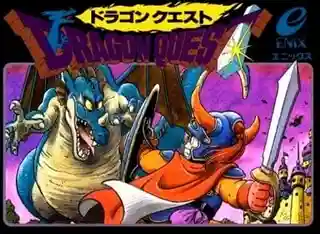
Development and history The series' monsters, characters, and box art were designed by Toriyama. The music for the Dragon Quest series was composed by Koichi Sugiyama . In the past, main Dragon Quest games have been developed by Chunsoft , Heartbeat , ArtePiazza , Level-5 and starting with Dragon Quest X , by Square Enix for the first time. Horii's company, Armor Project, is in charge of the script and design of Dragon Quest games that were published by Enix and Square Enix. Origin In 1982, Enix sponsored a video game programming contest in Japan which brought much of the Dragon Quest team together, including creator Yuji Horii. The prize was a trip to the United States and a visit to AppleFest '83 in San Francisco, where Horii discovered the Wizardry video game series. The contest winners Koichi Nakamura and Yukinobu Chida, together with Horii, released the Enix NES game The Portopia Serial Murder Case . Music composer Sugiyama, known for composing jingles and pop songs, was impressed with the group's work and sent a postcard to Enix praising the game. Enix asked him to compose music for some of its games. The group then decided to make a role-playing video game that combined elements from the western RPGs Wizardry and Ultima . Horii wanted to introduce the concept of RPGs to the wider Japanese video game audience. He chose the Famicom because, unlike arcade games, players would not have to worry about spending more money if they got a " game over ", and could continue playing from a save point . Horii used the full-screen map of Ultima and the battle and statistics-oriented Wizardry screens to create the gameplay of Dragon Quest . Dragon Ball creator and manga artist Akira Toriyama , who knew of Horii through the manga magazine Weekly Shōnen Jump , was commissioned to illustrate the characters and monsters to separate the game from other role-playing games of the time. The primary game designs were conceived by Horii before being handed to Toriyama to re-draw under Horii's supervision. When Horii first created Dragon Quest many people doubted that a fantasy series with swords and dungeons, instead of science fiction elements, would become popular in Japan; however, the series has become very popular there. Since then Horii has been the games' scenario director. Dragon Quest was Sugiyama's second video game he had composed for, Wingman 2 being his first. He says it took him five minutes to compose the original opening theme. His musical motifs from the first game have remained relatively intact. The first six Dragon Quest stories are divided into two trilogies. The first three games of the series tell the story of the legendary hero known as Roto (Erdrick or Loto in some versions). Dragon Quest IV - VI are based around a castle in the sky called Zenithia, referred to as the Tenku in Japan, meaning "heaven". Games in the main series from Dragon Quest VII onwards are stand-alone games. The early Dragon Quest games were released under the title Dragon Warrior in North America to avoid trademark conflict with the pen-and-paper role-playing game Dragon Quest , which was published by Simulations Publications in the 1980s until the company's 1982 bankruptcy and acquisition by TSR, Inc. TSR continued publishing the line as an alternative to Dungeons & Dragons ( D&D ) until 1987. On July 23, 2002, Square Enix registered the Dragon Quest trademark in the United States for use with manuals, video cassette tapes , and other video game software. On October 8, 2003, Square Enix filed for a more comprehensive Dragon Quest trademark, also on August 2, 2016. Dragon Quest VIII: Journey of the Cursed King became the first Dragon Quest game released outside Japan, all previous games having used the Dragon Warrior title. Dragon Quest was not as successful outside Japan, as it was eclipsed by another RPG series, Final Fantasy . Because of Enix's closure of its North American branch in the mid-1990s, Dragon Quest V and Dragon Quest VI were not officially released in North America. No games were released in Europe prior to the spin-off Dragon Quest Monsters . With the merger of Square and Enix in 2003, Dragon Quest games were released in numerous markets. In May 2008 Square Enix announced localizations of the Nintendo DS remakes of Dragon Quest IV , V , and VI for North America and the PAL region , commonly referred to as the "Zenithia" or "Tenku trilogy". With this announcement, all the main Dragon Quest games at the time had been released outside Japan. The ninth installment was released in Japan for Nintendo DS on July 11, 2009. The North American version was released on July 11, 2010, while the European version came out on July 23, 2010. The tenth installment of the main series was released for the Wii. Nintendo has been a major publisher outside Japan for the main Dragon Quest games, publishing the first Dragon Quest game in North America, and published Dragon Quest IX worldwide outside Japan; the NDS version of Dragon Quest VI is published by Nintendo in North America.
Gameplay Systems
In most Dragon Quest games, players control a character or party of characters that can walk into towns and buy weapons, armor, and items to defeat monsters outside of the towns: on the world map or in a dungeon. However, in the original Dragon Quest , there was only one character walking on the map. In most of the games, battles occur through random monster attacks and improving the characters' levels requires players to grind . The series uses cursed items, difficult dungeons where players need to use their resources wisely to complete them, and difficult boss battles. When the party encounters monsters the view switches perspective and players are presented with several options on a menu ; these turn-based menu-driven battles have become a staple of the series. Players use the menus to select weapons, magic, and other items used to attack and defeat the monsters, or can attempt to flee the fight; though characters cannot flee during a boss battle. Once the party defeats the monsters by winning the battle, each party member gains experience points in order to reach new levels. When a character gains a new level, the statistics (stats) of the character are upgraded. Winning battles also rewards players with gold which can be used to purchase items. In addition to the experience points and gold awarded for successfully defeating monsters, occasionally, items will be dropped as well that are added to the player's inventory. In most Dragon Quest games, players must visit a church (known as a House of Healing in the NES translations) and talk to a priest or nun to save the games' progress; in Dragon Warrior , players had to talk to a king to save their progress, though the first two Dragon Quest titles for Famicom use a password save system . If the party dies in battle the group loses half of its gold and warps to the nearest save location where the hero is revived; players must then pay a priest or nun to revive their party members. Dragon Quest features " Puff Puff " – massage girls that the player can hire with text describing their actions in some of the games; it is a pun on a Japanese onomatopoeia for a girl rubbing her breasts in someone's face, which can also be used for the general term of a girl jiggling her own breasts. in later games gags were used since breasts could not be displayed. The text descriptions were removed from some North American translations. In Dragon Quest III , Dragon Quest VI , Dragon Quest VII , and Dragon Quest IX , several character classes can be chosen for the party members. Each game has its particular set of classes with typical options, including the Cleric , Fighter , Jester, Thief , Warrior , and Mage . All the aforementioned games also include advanced classes such as the Sage. In addition, Dragon Quest VI and VII include monster classes. In Dragon Quest IV: Chapters of the Chosen , a new collectible item known as mini medals, resembling small gold coins with a five-pointed star in the middle, was introduced; they have nothing to do with winning the game, but they can be traded with a certain character for items. Players collect them throughout the game, primarily by opening chests, breaking pots and barrels, and searching in sacks and drawers. Horii introduced them as he wanted to have something players collected that were similar to the crests and orbs in the previous Dragon Quest games, but did not want to repeat the necessity for players having to collect a certain number of them before they could complete the game.
Awards & Honors
a special award
Sales & Commercial Performance
Total Copies Sold
85 million copies
Total Revenue
$143 million
Media Reviews
IGN
2005
Famitsu
2009
OPM
2022
Some information sourced from Wikipedia, available under CC BY-SA 3.0.