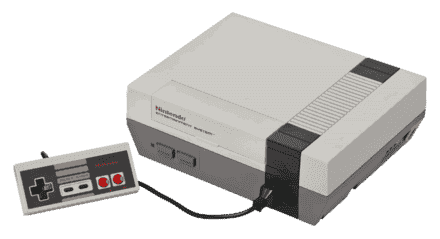
Nintendo Entertainment System
The console that saved the video game industry. The NES brought gaming into millions of homes with timeless classics that still hold up today.
Technical Specs
CPU
Ricoh 2A03 (modified MOS 6502) @ 1.79 MHz (NTSC) / 1.66 MHz (PAL)
GPU
Ricoh 2C02 PPU (Picture Processing Unit)
Memory
2 KB work RAM, 2 KB video RAM
Storage
Cartridge-based (ROM), 8 KB to 1 MB typical cart size
Display
256x240 pixels, 52 colors available, 25 colors on-screen simultaneously, 64 sprites (8 per scanline)
Audio
5 channels: 2 pulse wave, 1 triangle wave, 1 noise, 1 DPCM sample
Media
72-pin cartridge (NES) / 60-pin cartridge (Famicom)
History
The Nintendo Entertainment System (NES), released in North America on October 18, 1985, is widely credited with reviving the home video game industry following the catastrophic crash of 1983. Originally launched as the Family Computer (Famicom) in Japan on July 15, 1983, the system sold approximately 61.9 million units worldwide and established Nintendo as the dominant force in the gaming industry for over a decade. The NES did not merely revive the market; it fundamentally restructured the business model of the entire video game industry.
The Famicom launched in Japan to immediate success, though early units were recalled due to a faulty circuit chip. After the recall, the system rapidly became the best-selling console in Japan, powered by arcade ports like Donkey Kong and original titles. By late 1984, the Famicom had sold over 2.5 million units in Japan. However, bringing the system to North America posed an enormous challenge. The 1983 crash had devastated the American video game industry; retailers refused to stock video game consoles, and the term "video game" itself had become toxic in the retail industry.
Nintendo of America, under the leadership of Minoru Arakawa and marketing manager Gail Tilden, undertook a deliberate strategy to reposition the Famicom as something other than a video game console for the American market. The system was redesigned with a front-loading cartridge slot resembling a VCR, given the deliberately non-gaming name "Nintendo Entertainment System," and paired with accessories like R.O.B. (Robotic Operating Buddy) and the Zapper light gun to present it as an entertainment system rather than a video game console. The initial test launch in New York City in October 1985 was conducted on consignment, with Nintendo promising to buy back any unsold inventory, an unprecedented offer that convinced skeptical retailers to stock the product.
The NES's quality control program, centered on the "Official Nintendo Seal of Quality," transformed the industry's relationship with third-party developers. The 10NES lockout chip physically prevented unlicensed cartridges from running on the console, giving Nintendo unprecedented control over what software could be released. Publishers were limited to five titles per year, and Nintendo controlled cartridge manufacturing. While critics argued that these restrictions were monopolistic, the quality control system prevented the flood of low-quality software that had contributed to the 1983 crash.
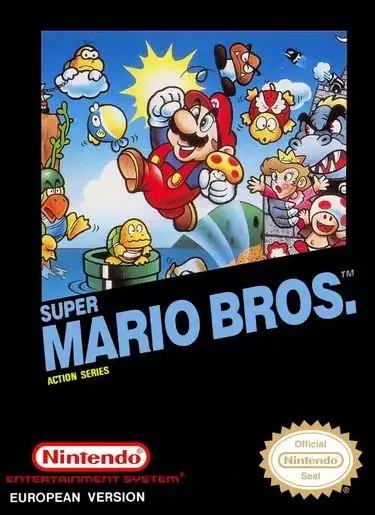
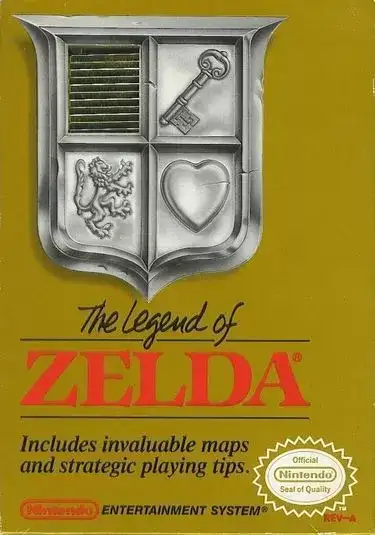
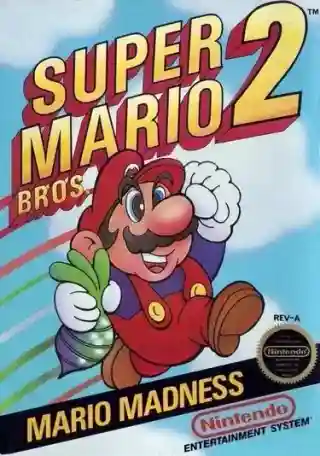
The NES library spawned franchises that remain among the most valuable intellectual properties in gaming. Super Mario Bros. (1985), designed by Shigeru Miyamoto and Takashi Tezuka, redefined platforming with its precise controls, hidden secrets, and imaginative world design, selling over 40.2 million copies. The Legend of Zelda (1986) pioneered the action-adventure genre with its open-world exploration and battery-backed save system. Metroid (1986) introduced atmospheric, non-linear gameplay and one of gaming's first prominent female protagonists in Samus Aran. Dragon Quest (1986) and Final Fantasy (1987) established the Japanese RPG genre on consoles. Mega Man, Castlevania, Contra, and Kid Icarus further enriched the library.
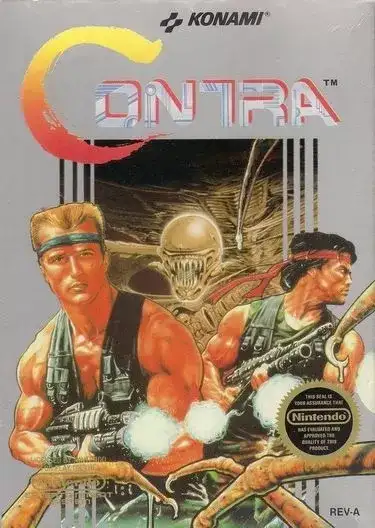
Third-party developers created landmark titles that rivaled Nintendo's own output. Konami produced Castlevania, Contra, and Metal Gear. Capcom delivered Mega Man and DuckTales. Square and Enix brought RPGs to the forefront. Tecmo contributed Ninja Gaiden with its pioneering use of cinematic cutscenes. The NES's 700+ game North American library represented a breadth and quality of software that had never before existed on a single platform.
Variants & Revisions
Famicom (HVC-001)
Released: July 15, 1983
Original Japanese model with hardwired controllers, red and white color scheme, and 60-pin cartridge slot. Featured a microphone on the second controller.
NES (NES-001)
Released: October 18, 1985
North American front-loading model with 72-pin ZIF connector, gray color scheme, and detachable controllers. Designed to resemble a VCR.
NES Top Loader (NES-101)
Released: October 1, 1993
Redesigned North American model with top-loading cartridge slot, more reliable pin connector, and dog-bone shaped controllers. RF output only.
AV Famicom (HVC-101)
Released: December 1, 1993
Redesigned Japanese model with AV output, detachable controllers matching the NES-101 dog-bone style, and top-loading cartridge design.
Sharp Twin Famicom
Released: July 1, 1986
Licensed Sharp Corporation variant combining the Famicom and Famicom Disk System in a single unit, available in red and black color options.
Development Story
The development of the Famicom (and subsequently the NES) was led by Masayuki Uemura, a former Sharp Corporation engineer who headed Nintendo's R&D2 division. Uemura was tasked by Nintendo president Hiroshi Yamauchi with creating a home console capable of faithfully reproducing Nintendo's arcade games at a consumer-friendly price point. Yamauchi set aggressive cost targets: the system was to retail for 9,800 yen in Japan (approximately $75 USD), a price that demanded creative engineering compromises.
The CPU was a custom Ricoh 2A03 processor, essentially a MOS Technology 6502 core running at 1.79 MHz with integrated sound generation hardware. The arrangement with Ricoh was financially advantageous for Nintendo, as Ricoh agreed to produce the chip at a low price in exchange for a guaranteed high-volume order. The 6502 core was chosen for its proven reliability, low cost, and the extensive developer expertise available, though the Ricoh version omitted the original 6502's BCD (Binary-Coded Decimal) mode, likely to avoid patent licensing fees to MOS Technology.
The Picture Processing Unit (PPU), another custom Ricoh chip (2C02 in NTSC markets), provided the Famicom's graphics capabilities. It could display 25 colors simultaneously from a palette of 54, render up to 64 sprites (8 per scanline), and manage two hardware scrolling background layers. While these specifications were modest, the PPU's efficient design and the developers' ingenious exploitation of its capabilities produced visuals that far exceeded what the raw numbers suggested. Techniques like carefully timed mid-frame register changes (used by games like Battletoads and Kirby's Adventure) pushed the hardware well beyond its nominal limits.
The Famicom's original Japanese design featured a distinctive red-and-white color scheme with hardwired controllers, the second of which included a built-in microphone. The controllers used a simple but effective layout: a D-pad (an invention Nintendo had patented following its use in the Game & Watch series), two action buttons (A and B), and Select and Start buttons. The D-pad, credited to Gunpei Yokoi, would become the standard directional input for game controllers across the industry.
The redesign for the North American market was driven by both practical and strategic considerations. The front-loading cartridge mechanism, while more prone to connector issues than the Famicom's top-loading design (leading to the infamous "blinking screen" problem that plagued NES units in later years), was deliberately chosen to evoke the appearance of a VCR and distance the product from the stigma associated with video game consoles. The grey color scheme and angular industrial design further reinforced the perception of a sophisticated electronic device rather than a toy.
R.O.B. (Robotic Operating Buddy) was perhaps the most ingenious element of the NES's launch strategy. The robot peripheral, which responded to on-screen flashes to manipulate physical accessories for two compatible games (Gyromite and Stack-Up), was never intended to be a long-term product. Its purpose was purely strategic: R.O.B. gave Nintendo a credible reason to pitch the NES as an electronic toy rather than a video game console, bypassing the retail resistance that had made bringing any video game system to market in America nearly impossible. Once the NES established itself, R.O.B. was quietly discontinued.
The 10NES lockout chip, designed by Nintendo engineer Masao Yamamoto, used a CIC (Checking Integrated Circuit) that performed a handshake authentication between the console and the cartridge. A chip in the console (the "lock") communicated with a corresponding chip in each authorized cartridge (the "key"). If authentication failed, the console would repeatedly reset. This system generated significant legal controversy; Atari Games (through its subsidiary Tengen) reverse-engineered and cloned the 10NES chip, leading to a protracted lawsuit that Nintendo eventually won. The lockout system established the template for console manufacturers controlling their software ecosystems, a practice that continues to this day.




About the Nintendo Entertainment System
The Nintendo Entertainment System (NES) is a home video game console manufactured by Nintendo. Released on July 15, 1983, it belongs to the 3th generation of gaming hardware.
With a library of 284+ ROMs available to download, the NES remains one of the most popular platforms for retro gaming enthusiasts. Each ROM is available for free download and compatible with popular emulators like RetroArch, giving you instant access to classic gaming history.
Whether you're looking for NES ROMs to play on your PC, phone, or dedicated retro handheld, our library has you covered with verified ROM files and complete game information.