
NES
Tetris
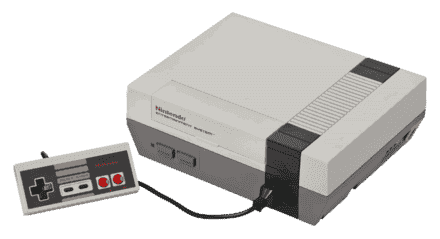
Tetris is a tile-matching puzzle game developed and published by Nintendo for the NES. Released in 1989, it became the definitive version of Alexey Pajitnov's original concept, featuring addictive gameplay where players rotate and arrange falling tetrominoes to clear lines. The NES version is particularly renowned for its iconic music and competitive two-player mode.
Share this game
Story
Creation (1984–1985) Alexey Pajitnov was a speech recognition and artificial intelligence researcher for the Dorodnitsyn Computing Center of the Academy of Sciences . Pajitnov developed several puzzle games on the institute's Elektronika 60 , an archaic Russian clone of the PDP-11 computer. In June 1984, he became inspired to convert pentomino tiling puzzles to the computer after he bought a pentomino puzzle set from a store and played with it in his office. Pajitnov programmed Tetris using Pascal for the RT-11 operating system on the Elektronika 60 and experimented with different versions. Because the Elektronika 60 had no graphical interface , Pajitnov modeled the field and pieces using spaces and brackets. He felt that the game would be needlessly complicated with the twelve different shapes of pentominoes, so he scaled the concept down to tetrominoes , of which there are only seven shapes. Afterward, he programmed the basic mechanics, including the ability to flip tetrominoes as they fell in a vertical screen and the clearing of lines. The name Tetris was a combination of "tetra" (meaning "four") and Pajitnov's favorite sport, tennis . Pajitnov completed the first version of Tetris c. 1985. {{cite web|url=https://www.timeextension.com/news/2024/06/anniversary-is-tetris-really-40-this-year|work=[[Time Extension]]|title=Anniversary: Is ''Tetris'' Really 40 This Year?|last1=McFerran|first1=Damien|last2=Yarwood|first2=Jack|date=June 24, 2024|accessdate=November 18, 2024|archiveurl=https://web.archive.org/web/20240717140506/https://www.timeextension.com/news/2024/06/anniversary-is-tetris-really-40-this-year|archivedate=July 17, 2024}}</ref>"}},"i":0}}]}'> This version had no scoring system and no levels, but it nonetheless captivated Pajitnov's peers. Pajitnov sought to port Tetris to the IBM Personal Computer (IBM PC), which had a higher-quality display than the Elektronika 60. He recruited his colleague Dmitry Pavlovsky and the 16-year-old computer prodigy Vadim Gerasimov . Using Turbo Pascal , the three adapted Tetris to the IBM PC over two months, with Gerasimov incorporating color and Pavlovsky incorporating a scoreboard. Floppy disk copies of this version were distributed freely throughout the Dorodnitsyn Computing Center, before spreading quickly among Moscow computer circles. Pajitnov kept note of second-hand accounts of Tetris ' s spread during this time. Tetris reportedly won second place in a Zelenodolsk computer game competition in November 1985, and by 1986, nearly everyone with an IBM computer in Moscow and several major cities had played Tetris .
Gameplay Systems
Across its numerous versions, Tetris generally has a consistent puzzle video game design. Gameplay consists of a rectangular field in which tetromino pieces, geometric shapes consisting of four connected squares, descend from the top-center. During the descent, the player can move the piece horizontally and rotate them until they touch the bottom of the field or another piece. The player's goal is to stack the pieces in the field to create horizontal lines of blocks. When a line is completed, it disappears and the blocks placed above fall one row. The speed of the descending pieces increases as lines are cleared. The game ends if the accumulated pieces in the field block other pieces from entering the field, a process known as "topping out". Common mechanics among Tetris versions include the queue (viewing the pieces that are next to appear), soft drop (increasing the descent of the piece), hard drop (instantly placing the piece as far down as it can go), and holding (reserving a piece for later use). The objective of Tetris is to collect as many points as possible during a gameplay session by clearing lines. Tetris ' s scoring system has remained mostly consistent since Tetris DS (2006) with some exceptions. Points gained during gameplay increase with the descent speed. The more lines cleared at once, the higher the score for a line clear. Completing four horizontal lines at once by placing an I-shaped tetromino into a single-column gap is referred to as a "Tetris"; most versions award the highest score for it. The player can also gain points by using hard drops or soft drops. Advanced techniques, often used in competitive play, include T-spins (spinning a T-shaped tetromino into a blocked gap), perfect clears (emptying the field following a line clear), and combos (clearing lines consecutively).
Sales & Commercial Performance
Total Copies Sold
35 million copies
Media Reviews
Famitsu
2
Some information sourced from Wikipedia, available under CC BY-SA 3.0.