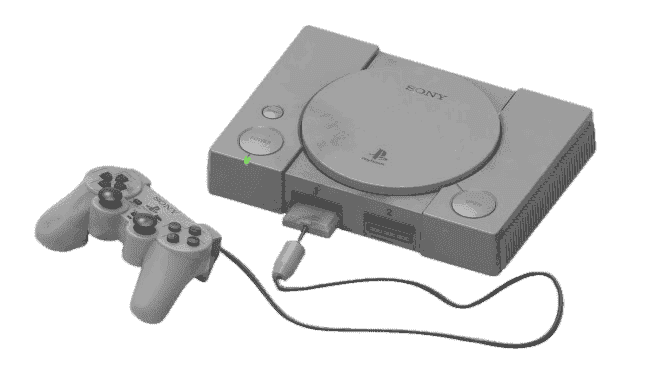
PS1
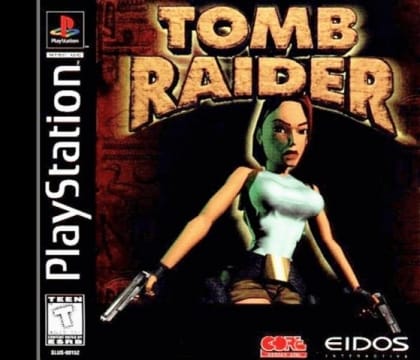
Tomb Raider
The groundbreaking 3D adventure that introduced Lara Croft. Explore ancient ruins, solve puzzles, and battle dangerous creatures in this iconic PlayStation title.
Release Date
January 1, 1996
Players
1
Region
US
ROM Size
297.1 MB
Share this game
Story
Original series at Core Design (1994–2006) The concept for Tomb Raider originated in 1994 at Core Design, a British game development studio. One of the people involved in its creation was Toby Gard , who was mostly responsible for creating the character of Lara Croft. Gard originally envisioned the character as a man: company co-founder Jeremy Heath-Smith was worried the character would be seen as derivative of Indiana Jones , so Gard changed the character's gender. Her design underwent multiple revisions and redrafts during early development. The game proved an unexpected commercial success, reversing Eidos' then-bleak financial situation. After the success of Tomb Raider , work began on a sequel. Gard was no longer given creative control of the character, and it was stated by development staff that he was both saddened and disappointed by the use of Lara Croft's sex appeal in marketing. Gard left Core Design in 1997, alongside Tomb Raider co-creator Paul Douglas, to found their own gaming company Confounding Factor . The remaining team members, alongside new arrivals, would work on the sequel Tomb Raider II which released a year after the original game and proved as big a commercial success. The development team were burned out by release due to the extreme crunch policy at Core Design. The vision for the franchise in late 1997 involved an expansion pack for Tomb Raider II , entitled The Further Adventures of Lara Croft , followed by a survival game called Tomb Raider III to be released two or three years later for the PlayStation 2 . Eidos were initially behind this direction, but later were driven by a desire to have annual releases for the Christmas window. This led them to request that a second team be created to develop an expanded version of The Further Adventures and release that as Tomb Raider III in the interim. The decision was not communicated to the original team, which learned of the move only when Tomb Raider III was publicly announced as a 1998 title for the original PlayStation. They were exhausted and withdrew from the PlayStation 2 project in response, which was soon cancelled. The Tomb Raider II team did not work on the franchise again, with some team members going on to work on Project Eden . Going forwards the franchise would be worked on by the Tomb Raider III team, and in line with Eidos' vision for the franchise they would aim for annual releases. Core Design's policy at the time involved years-long crunch periods, which placed strain on them and ultimately led to similar burnout. For this reason, and the feeling that they had exhausted the series' potential, the team tried to kill off Lara at the end of the fourth game, The Last Revelation . Eidos insisted that the series continue, and so Chronicles was developed by the Tomb Raider team while an additional group made preparations for the transition to PlayStation 2 with The Angel of Darkness . The Chronicles team strongly disliked being forced to continue the franchise, with the lead animator enjoying creating new death animations for Lara on that basis. The game was poorly received, with reviewers suggesting the series was growing stale. During this period, multiple handheld titles were developed by both Core Design and third-party developers. The production of The Angel of Darkness was beset by problems from an early stage, with the team wanting to create a grander game to compete with contemporary action-adventure games. When the Chronicles team came back over to work on The Angel of Darkness , they found that production had completely "gone off the rails", with the entire project having been scrapped and restarted once already. Under pressure from Eidos, key sections of the game needed to be cut, and it was released before the team felt it was ready. It also suffered from crunch and burnout. The game received negative reactions from critics, and was cited by Paramount as the reason for the second Tomb Raider film underperforming. While development of the next title Legend moved to Crystal Dynamics, Core Design continued to work on the franchise. A remake of the original game for PlayStation Portable was in development there, entitled 10th Anniversary . While Eidos had been averse to further Tomb Raider titles from the group, their recent purchase by SCi meant that the decision would now be made by the new parent company, and they were in favour. By 2006 the title was nearly finished, but after Crystal Dynamics sent a demo to SCi showing the first level of Legend running on PSP, 10th Anniversary was cancelled and Crystal Dynamics were charged with remaking the original instead. One of the key reasons for this was the fact that Crystal Dynamics had stronger capabilities to do a cross-platform launch. The decision "went down like a cup of cold sick" at Core Design. The studio attempted to reskin the title as a National Treasure or Indiana Jones game in the wake of the decision, but these did not come to fruition. The loss of the Tomb Raider IP was a factor in the studio's closure several years later.
Gameplay Systems
The gameplay of Tomb Raider is primarily based around an action-adventure framework, with Lara navigating environments and solving mechanical and environmental puzzles, in addition to fighting enemies and avoiding traps. These puzzles, primarily set within ancient tombs and temples, can extend across multiple rooms and areas within a level. Lara can swim through water, a rarity in games at the time that has continued through the series. According to original software engineer and later studio manager Gavin Rummery, the original set-up of interlinking rooms was inspired by Egyptian multi-roomed tombs, particularly the tomb of Tutankhamun . The feel of the gameplay was intended to evoke that of the 1989 video game Prince of Persia . In the original games, Lara utilised a "bulldozer" steering set-up, with two buttons pushing her forward and back and two buttons steering her left and right, and in combat Lara automatically locked onto enemies when they came within range. The camera automatically adjusts depending on Lara's action, but defaults to a third-person perspective in most instances. This basic formula remained unchanged through the first series of games. Angel of Darkness added stealth elements. For Legend , the control scheme and character movement was redesigned to provide a smooth and fluid experience. One of the key elements present was how buttons for different actions cleanly transitioned into different actions, along with these moves being incorporated into combat to create effects such as stunning or knocking down enemies. Quick-time events were added into certain segments within each level, and many of the puzzles were based around sophisticated in-game physics. Anniversary , while going through the same locales of the original game, was rebuilt using the gameplay and environmental puzzles of Legend . For Underworld , the gameplay was redesigned around a phrase the staff had put to themselves: "What Could Lara Do?". Using this set-up, they created a greater variety of moves and greater interaction with the environment, along with expanding and improving combat. The gameplay underwent another major change for the 2013 reboot. Gameplay altered from progression through linear levels to navigating an open world, with hunting for supplies and upgrading equipment and weapons becoming a key part of gameplay, yet tombs were mostly optional, and platforming was less present in comparison to combat. The combat was redesigned to be similar to the Uncharted series: the previous reticle-based lock-on mechanics were replaced by a free-roaming aim. Rise of the Tomb Raider built on the 2013 reboot's foundation, adding dynamic weather systems, reintroducing swimming, and increasing the prevalence of non-optional tombs with more platforming elements.
Sales & Commercial Performance
Total Copies Sold
7 million copies
Total Revenue
$275 million
Media Reviews
IGN
2
Eurogamer
2008
Electronic Gaming Monthly
1997
OPM
2006
Some information sourced from Wikipedia, available under CC BY-SA 3.0.