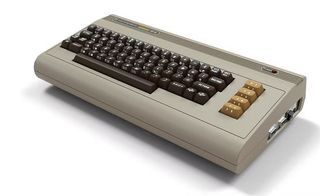
Commodore 64
Technical Specs
CPU
MOS Technology 6510 (modified 6502) @ 1.023 MHz (NTSC) / 0.985 MHz (PAL)
GPU
MOS Technology VIC-II (6567 NTSC / 6569 PAL), 320x200 hi-res or 160x200 multicolor mode, 16 fixed colors, 8 hardware sprites (24x21 single-color or 12x21 multicolor), raster interrupt support
Memory
64 KB RAM, 20 KB ROM (8 KB BASIC, 8 KB KERNAL, 4 KB character ROM)
Storage
Datasette (cassette tape) or 5.25-inch floppy disk (1541 drive, 170 KB per side), cartridge slot
Display
320x200 pixels (hi-res) or 160x200 (multicolor), 40x25 text mode, 16 colors, PAL or NTSC composite/RF output
Audio
MOS Technology 6581/8580 SID (Sound Interface Device), 3 independent oscillators, 4 waveforms each (sawtooth, triangle, variable pulse, noise), multi-mode analog filter, ring modulation, ADSR envelope generators
Media
Cartridge (expansion port), Datasette (cassette), 5.25-inch floppy disk (Commodore 1541 drive)
History
The Commodore 64, released in August 1982, stands as the best-selling single personal computer model in history, with estimates ranging from 12.5 to 17 million units sold during its commercial lifespan. Priced at $595 at launch, it was aggressively positioned by Commodore founder Jack Tramiel to undercut the competition, and within a year its price dropped to under $200, making it accessible to millions of households that could never previously afford a computer. The C64 was sold not just in computer stores but in department stores, toy stores, and eventually discount outlets, a distribution strategy that was revolutionary for the computer industry.
The C64's impact on gaming was enormous. Its combination of capable hardware and enormous installed base made it the primary gaming platform in North America and Europe throughout the mid-1980s. The machine supported thousands of games across every genre, from the sprawling Ultima RPG series to innovative titles like Impossible Mission, Maniac Mansion, and The Bard's Tale. European developers particularly embraced the platform, with companies like Ocean Software, Gremlin Graphics, Codemasters, and Ultimate Play the Game creating a vibrant games industry centered largely on the C64 and its competitor the ZX Spectrum.
The C64's SID (Sound Interface Device) chip, the MOS Technology 6581, became legendary in computing history. Designed by Bob Yannes, who would later co-found synthesizer company Ensoniq, the SID was a true three-voice synthesizer chip with programmable waveforms, ring modulation, and filters. Composers like Rob Hubbard, Martin Galway, Ben Daglish, and Jeroen Tel created music that rivaled contemporary pop songs in sophistication and catchiness. The SID chip's unique analog warmth and character inspired an enduring musical legacy; SID music remains actively composed and performed today, with dedicated festivals and thousands of compositions in online archives.
The Commodore 64 also gave birth to the demoscene, a creative subculture where programmers and artists competed to push the machine far beyond its design specifications. Demos featured scrolling text, animated graphics, and music that exploited undocumented hardware behaviors and cycle-precise programming. Groups like Crest, Fairlight, and Booze Design produced works of remarkable technical artistry. The demoscene, which spread to Amiga and PC, originated largely on the C64 and remains active to this day.
The C64's dominance began to wane in the late 1980s as 16-bit computers like the Amiga and Atari ST offered dramatically superior capabilities. Commodore discontinued the C64 in April 1994, but its cultural impact endures. The machine introduced an entire generation to programming through BASIC, inspired countless careers in game development and software engineering, and created communities that persist decades later through retro computing clubs, emulators, and new hardware projects like the Ultimate 64 FPGA recreation.
Variants & Revisions
Commodore 64 (Original, breadbin)
Released: August 1, 1982
Original model with distinctive brown/beige breadbox case design. Used MOS 6581 SID chip and original VIC-II.
Commodore 64C
Released: January 1, 1986
Redesigned model with a flatter, more modern cream/beige case matching the Commodore 128 styling. Later revisions used the updated MOS 8580 SID chip.
Commodore 64G
Released: January 1, 1987
European market variant with the original breadbin case shape but updated internals similar to the C64C.
Commodore SX-64
Released: January 1, 1984
Portable version with a built-in 5-inch color CRT display and 1541 floppy disk drive. Weighed approximately 10.5 kg (23 lbs). No cassette port.
Commodore 64 Games System
Released: December 1, 1990
Console-style variant designed for cartridge gaming only. Removed keyboard, datasette port, and user port. Commercial failure due to limited cartridge library.
Development Story
The development of the Commodore 64 is inseparable from the vision and aggressive business philosophy of Jack Tramiel, Commodore's founder. Tramiel, a Holocaust survivor who built Commodore from a typewriter repair shop into a computer company, believed passionately in making computers affordable for ordinary people. His motto was "computers for the masses, not the classes." After the success of the VIC-20, Tramiel pushed his engineering team to create a more powerful successor that could be manufactured at an even lower per-unit cost.
The heart of the C64 was built around chips developed by MOS Technology, which Commodore had acquired in 1976. This vertical integration was crucial to Tramiel's price war strategy. The CPU was the MOS Technology 6510, a variant of the legendary 6502 designed by Chuck Peddle, running at approximately 1 MHz. The 6510 added an integrated I/O port for bank switching, allowing the C64 to map its 64 kilobytes of RAM in flexible configurations alongside ROM chips containing the BASIC interpreter and KERNAL operating system.
The VIC-II (Video Interface Chip II, MOS 6567/6569) was designed by Al Charpentier and Charles Winterble. It provided hardware sprite support (8 sprites per scan line), smooth scrolling, multiple graphics modes including multicolor bitmap mode at 160x200, and a text mode with programmable characters. The VIC-II could display 16 colors and included raster interrupt capability, which skilled programmers exploited extensively to perform mid-screen hardware changes, effectively multiplexing sprites and creating effects far beyond the chip's nominal specifications.
The SID chip (MOS 6581) was perhaps the most remarkable component. Bob Yannes designed it as a genuine synthesizer-on-a-chip, incorporating three oscillators with four selectable waveforms (triangle, sawtooth, pulse with variable width, and noise), programmable ADSR envelope generators, ring modulation, oscillator synchronization, and a multi-mode resonant filter. The analog filter section, manufactured through a digital CMOS process, exhibited significant unit-to-unit variation that gave each individual C64 a subtly different sonic character. The SID was far more capable than any other home computer sound chip of its era and arguably remained superior to most until dedicated sound cards appeared on the PC platform.
The C64's aggressive pricing triggered devastating price wars in the home computer market. Tramiel intentionally undercut competitors, particularly Texas Instruments' TI-99/4A and the Atari 800 line. TI was forced to sell its computers at a loss and eventually exited the market entirely in late 1983. Atari's computer division hemorrhaged money, contributing to the company's sale by Warner Communications. Even Tramiel's own company suffered from razor-thin margins, and internal conflicts eventually led to Tramiel's ouster from Commodore in January 1984.
The C64's hardware design proved remarkably resilient. Despite being designed in late 1981, the machine remained commercially viable for over a decade. A revised version, the C64C, was released in 1986 with a redesigned case and updated board. The C64 Games System (1990) attempted to reposition it as a dedicated console. Cost reductions through die shrinks and board revisions kept production economical well into the early 1990s, making the Commodore 64 not just the best-selling computer model ever but also one of the longest-lived commercial computing platforms in history.
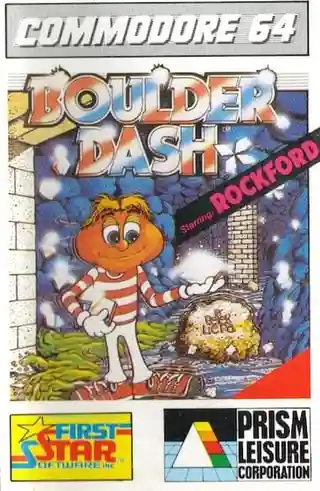
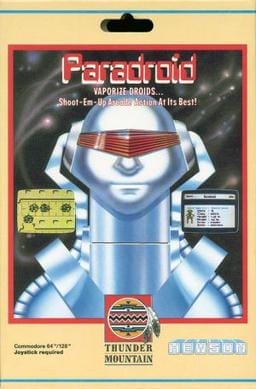


About the Commodore 64
The Commodore 64 (C64) is a home video game console manufactured by Commodore. Released on August 1, 1982, it belongs to the 3th generation of gaming hardware.
With a library of 4+ ROMs available to download, the C64 remains one of the most popular platforms for retro gaming enthusiasts. Each ROM is available for free download and compatible with popular emulators like RetroArch, giving you instant access to classic gaming history.
Whether you're looking for C64 ROMs to play on your PC, phone, or dedicated retro handheld, our library has you covered with verified ROM files and complete game information.