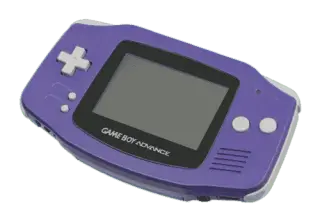
Game Boy Advance
Nintendo's ultimate handheld gaming device. The GBA delivered console-quality gaming on the go with an incredible library of RPGs and platformers.
Technical Specs
CPU
ARM7TDMI 32-bit RISC @ 16.78 MHz, secondary 8-bit Sharp SM83 (Z80-derived) for GB/GBC backward compatibility
GPU
Custom integrated graphics engine, tile-based rendering with affine transformations (rotation/scaling), 240x160 pixel resolution, 32,768 color palette, 128 sprites, 4 background layers
Memory
32 KB internal work RAM, 256 KB external work RAM, 96 KB VRAM
Storage
Cartridge-based ROM (up to 32 MB), optional SRAM/Flash/EEPROM save on cartridge
Display
2.9-inch reflective TFT LCD, 240x160 pixels, 32,768 colors (no backlight on original model)
Audio
6 channels total: 4 legacy Game Boy channels + 2 PCM DMA channels (8-bit), stereo sound via headphone jack
Media
32-pin cartridge (GBA), 8-pin cartridge slot for GB/GBC games (not on Game Boy Micro)
History
The Game Boy Advance (GBA), released on March 21, 2001 in Japan and June 11, 2001 in North America, represented Nintendo's leap to 32-bit handheld gaming. With capabilities roughly comparable to the Super Nintendo, the GBA delivered a portable gaming experience that surpassed anything previously available in handheld form. The system sold approximately 81.5 million units worldwide across its original and redesigned variants, establishing itself as a dominant force in portable gaming during the early 2000s.
The GBA launched with a strong lineup including Super Mario Advance (a port of Super Mario Bros. 2 with enhanced graphics), F-Zero: Maximum Velocity, and Castlevania: Circle of the Moon. However, it was the subsequent years of software releases that cemented the GBA's reputation as one of the finest gaming platforms ever created. The system's library became a treasure trove of both original titles and exceptional ports that introduced classic SNES-era games to a new generation.
Strategy and RPG fans found the GBA particularly compelling. Fire Emblem: The Blazing Blade (2003) marked the series' Western debut, introducing international audiences to the tactical RPG franchise that would later become a major Nintendo property. Advance Wars (2001) and its sequel Advance Wars 2: Black Hole Rising (2003), developed by Intelligent Systems, became cult classics of turn-based strategy. The Golden Sun series by Camelot delivered original RPG adventures with impressive pseudo-3D graphics. Final Fantasy Tactics Advance, Pokemon Ruby and Sapphire, and the Mario & Luigi: Superstar Saga demonstrated the breadth of the RPG genre on the platform.
The GBA excelled in action games as well. Metroid Fusion and Metroid: Zero Mission revitalized the Metroid franchise with tight 2D gameplay. Castlevania continued its renaissance with Harmony of Dissonance and the outstanding Aria of Sorrow. The Legend of Zelda: The Minish Cap, developed by Capcom's Flagship studio, delivered a full Zelda adventure in portable form. Kirby & the Amazing Mirror offered a unique non-linear take on the series formula.
An innovative feature of the GBA was its connectivity with the Nintendo GameCube via a dedicated link cable. Games like The Legend of Zelda: Four Swords Adventures, Final Fantasy Crystal Chronicles, and Pac-Man Vs. used the GBA as a secondary screen and controller, presaging the dual-screen gameplay concepts that Nintendo would later refine with the DS and Wii U. While the feature never achieved mass adoption due to the hardware requirements, it demonstrated Nintendo's experimental approach to multiplayer gaming.
The GBA's commercial life was marked by significant hardware revisions. The original model's lack of a frontlight or backlight was widely criticized, as the reflective TFT screen was difficult to see in many lighting conditions. The Game Boy Advance SP, released in February 2003, addressed this with a clamshell design featuring a frontlit (and later backlit in the AGS-101 revision) screen, a rechargeable lithium-ion battery, and a more compact form factor. The SP became the definitive GBA hardware, and its AGS-101 variant is particularly prized by collectors for its excellent screen quality. The Game Boy Micro, released in September 2005, offered an ultra-compact form factor with a backlit screen but sacrificed backward compatibility with original Game Boy and Game Boy Color cartridges. The GBA platform continued to receive software support even after the Nintendo DS launch, with its last notable releases arriving in 2006.
Variants & Revisions
Game Boy Advance (AGB-001)
Released: March 21, 2001
Original wide-format handheld with 2.9-inch reflective TFT screen (no backlight), two AA batteries providing ~15 hours of play.
Game Boy Advance SP (AGS-001)
Released: February 14, 2003
Clamshell redesign with frontlit screen, rechargeable lithium-ion battery (~10 hours), and compact folding form factor.
Game Boy Advance SP (AGS-101)
Released: September 1, 2005
Updated SP model with a true backlit screen offering dramatically improved brightness and color vibrancy. Considered the definitive GBA hardware.
Game Boy Micro (OXY-001)
Released: September 13, 2005
Ultra-compact redesign (4x2x0.7 inches) with 2-inch backlit screen and interchangeable faceplates. Dropped backward compatibility with GB/GBC cartridges.
Game Boy Player (DOL-017)
Released: March 21, 2003
GameCube accessory enabling GBA (and GB/GBC) games to be played on a television via the GameCube's video output.
Development Story
The Game Boy Advance was developed under the project codename "Atlantis" within Nintendo's hardware development division. Following the extraordinary commercial success of the original Game Boy and Game Boy Color, Nintendo sought to create a successor that would deliver a generational leap in portable gaming capability while maintaining the battery life and affordability that had defined the Game Boy brand.
The central processing unit chosen for the GBA was the ARM7TDMI, a 32-bit RISC processor running at 16.78 MHz. This was a significant architectural departure from the Z80-derived processors used in previous Game Boys, representing Nintendo's adoption of the ARM architecture that would continue through the DS and 3DS. The ARM7TDMI offered an excellent balance of performance per watt, delivering processing power roughly comparable to the Super Nintendo while operating within the power constraints of a portable device. The GBA also retained a Sharp SM83 CPU core (similar to the original Game Boy's processor) for backward compatibility with the entire Game Boy and Game Boy Color library.
The graphics hardware could display 240x160 pixels in up to 32,768 colors simultaneously, with support for hardware-accelerated rotation, scaling, and alpha blending. The system featured multiple background layers with Mode 7-style rotation and scaling capabilities, 128 simultaneous hardware sprites, and a sophisticated DMA controller for efficient memory operations. With 256 KB of external work RAM, 32 KB of internal work RAM, and 96 KB of VRAM, the GBA provided developers with substantially more resources than any previous handheld.
The audio system provided six channels: four legacy channels compatible with Game Boy sound hardware and two direct sound channels capable of playing PCM audio. This combination allowed GBA games to feature CD-quality sampled sound effects and music while maintaining compatibility with the extensive Game Boy library.
The original GBA hardware's most controversial design decision was its display. Nintendo chose a 2.9-inch reflective TFT LCD with no integrated light source. In well-lit environments, the screen displayed vivid, colorful graphics, but in dim lighting conditions (a common scenario for portable gaming), the screen became nearly impossible to see. This decision was driven by the same battery-life-first philosophy that had guided the original Game Boy, but consumer expectations had evolved significantly since 1989, and the lack of illumination was widely viewed as a serious design flaw.
Nintendo addressed the screen issue decisively with the Game Boy Advance SP redesign. The SP's development was led with a focus on three improvements: integrated illumination, rechargeable power, and a more pocketable form factor. The clamshell design protected the screen when not in use, the frontlight (later replaced with a true backlight in the AGS-101 revision) made the screen visible in any lighting condition, and the built-in lithium-ion battery eliminated the ongoing cost of disposable batteries. The SP's design was a commercial triumph, reinvigorating GBA hardware sales and becoming the preferred way to experience the platform.
The GBA-GameCube connectivity feature was championed by Shigeru Miyamoto, who envisioned asymmetric multiplayer experiences where each player had access to different information on their personal screen. The technical implementation required a custom cable that connected the GBA's link port to a GameCube controller port, with the GameCube streaming data to the GBA's display. While creative in concept, the requirement that each participating player own both a GBA and a link cable limited adoption. Nevertheless, the concept directly influenced the design philosophy of the Nintendo DS, whose dual screens internalized the same asymmetric information display concept without requiring additional hardware.
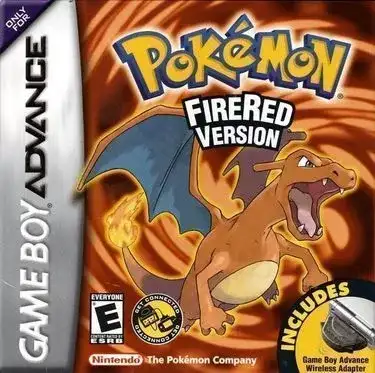
Pokémon FireRed
• 2004

Pokémon Sword and Shield
• 2019
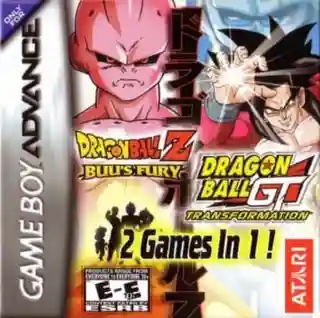
2 in 1 - Dragon Ball Z: Buu's Fury & Dragon Ball GT: Transformation
• 2005
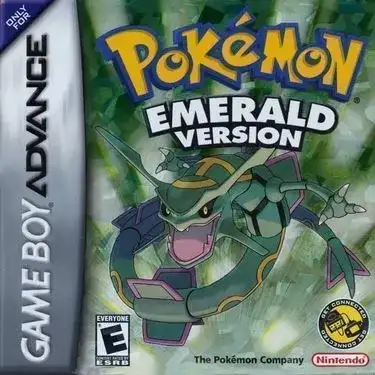
Pokémon Emerald
• 2004
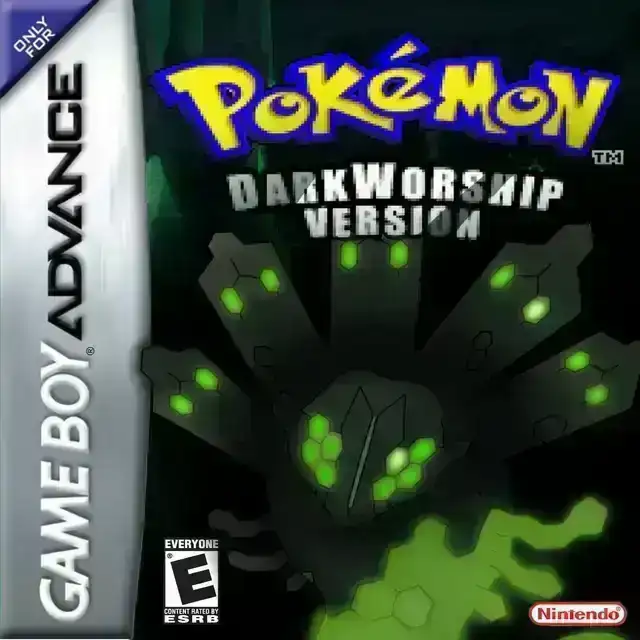
Pokemon Dark Worship
• 2024
Pokemon Emerald Rebirth Reborn
• 2023

FIFA Soccer 07
• 2006
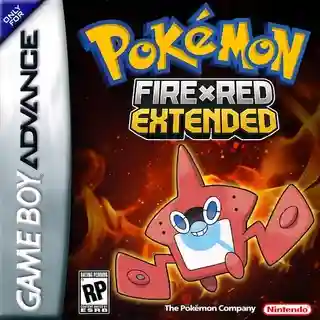
Pokemon Fire Red Extended
• 2020

Pokémon Unbound
• 2016
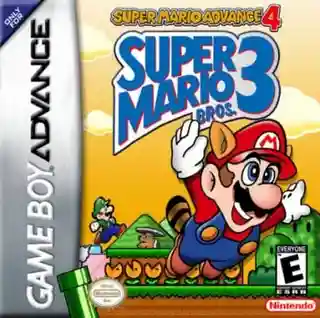
Super Mario Advance 4: Super Mario Bros. 3
• 2003
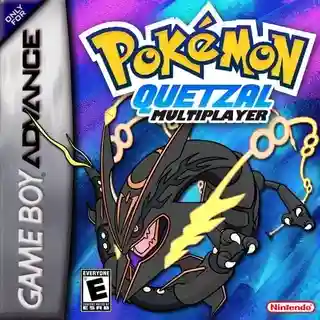
Pokémon Quetzal Alpha8 V2
• 2023
About the Game Boy Advance
The Game Boy Advance (GBA) is a handheld gaming device manufactured by Nintendo. Released on March 21, 2001, it belongs to the 5th generation of gaming hardware.
With a library of 232+ ROMs available to download, the GBA remains one of the most popular platforms for retro gaming enthusiasts. Each ROM is available for free download and compatible with popular emulators like RetroArch, giving you instant access to classic gaming history.
Whether you're looking for GBA ROMs to play on your PC, phone, or dedicated retro handheld, our library has you covered with verified ROM files and complete game information.