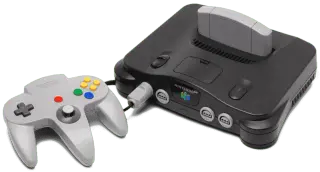
Nintendo 64
Nintendo's first 3D console featuring iconic games like Super Mario 64 and Zelda: Ocarina of Time. Four controller ports made it perfect for multiplayer.
Technical Specs
CPU
NEC VR4300 (MIPS R4300i) 64-bit @ 93.75 MHz
GPU
Reality Co-Processor (RCP) @ 62.5 MHz ??includes Reality Signal Processor (RSP) and Reality Display Processor (RDP), Z-buffering, anti-aliasing, trilinear mip-mapping, perspective correction, environment mapping
Memory
4 MB unified Rambus DRAM (expandable to 8 MB with Expansion Pak), 562.5 MB/s bandwidth
Storage
Cartridge-based, 64 Mbit (8 MB) to 512 Mbit (64 MB)
Display
256x224 to 640x480 pixels, 21-bit color depth (32,768 to 2,097,152 colors), hardware anti-aliasing
Audio
Handled by RSP via software microcode, 16-bit stereo, up to 100 channels theoretically (typically 16-24), ADPCM compression
Media
64-pin cartridge, Controller Pak (256 Kbit flash memory card)
History
The Nintendo 64, released on June 23, 1996 in Japan and September 29, 1996 in North America, represented Nintendo's ambitious leap into three-dimensional gaming. Developed in partnership with Silicon Graphics Inc. (SGI) under the project name "Project Reality," the N64 delivered hardware capabilities that rivaled contemporary arcade systems and significantly exceeded those of the competing Sega Saturn and Sony PlayStation in raw polygon processing. The console sold approximately 32.9 million units worldwide, a commercial disappointment compared to the PlayStation's 102 million, but its cultural impact and software library remain among the most celebrated in gaming history.
The N64 launched with Super Mario 64, a game that fundamentally redefined three-dimensional game design. Designed by Shigeru Miyamoto, Super Mario 64 introduced a free-roaming 3D camera system, intuitive analog control, and level designs that exploited three-dimensional space in ways no previous game had attempted. Its influence on subsequent 3D game design cannot be overstated; virtually every 3D platformer and action-adventure game that followed drew from its template. The only other launch title in Japan was Pilotwings 64, making for an extraordinarily thin launch lineup, though the quality of Super Mario 64 alone drove strong initial sales.
The N64's controller introduced several innovations that shaped gaming input for decades. The analog thumbstick, positioned prominently in the center prong of the controller's unusual three-pronged design, provided precise 360-degree input that was essential for 3D gameplay. The Z-trigger on the back of the controller introduced the concept of a rear trigger button that became standard in subsequent controller designs. The Rumble Pak, released alongside Star Fox 64 in 1997, was the first widely adopted force feedback device for home consoles, adding vibration to gameplay that enhanced immersion. The controller's Expansion Pak slot allowed for Memory Paks (for game saves) and the Transfer Pak (for Game Boy connectivity).
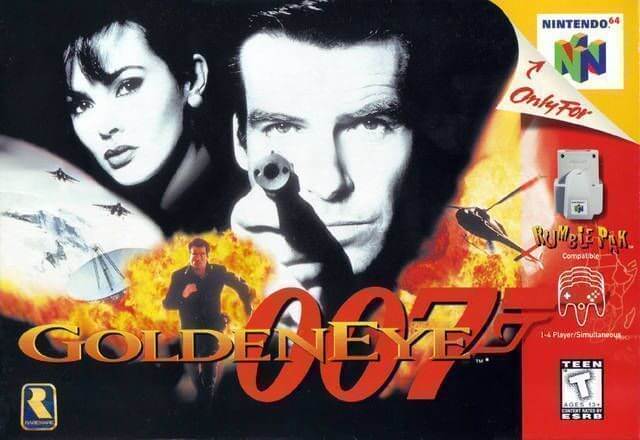
The N64's game library, while smaller than the PlayStation's due to the cartridge format's higher development and manufacturing costs, contained an extraordinary concentration of landmark titles. The Legend of Zelda: Ocarina of Time (1998), widely regarded as one of the greatest games ever made, pioneered context-sensitive controls, Z-targeting, and a seamless 3D world that set the standard for action-adventure games. GoldenEye 007 (1997), developed by Rare, popularized console first-person shooters and established multiplayer FPS as a social gaming phenomenon. Super Smash Bros. (1999) created an entirely new genre of platform fighter that remains one of Nintendo's most profitable franchises.
The console became synonymous with local multiplayer gaming. Its four built-in controller ports, a hardware feature absent from the PlayStation and Saturn, made it the definitive party gaming platform. Mario Kart 64, Mario Party, GoldenEye's four-player split-screen, and later Perfect Dark created shared gaming memories for millions. The social, living-room-centric experience the N64 provided remains a defining characteristic of the console's legacy.
The 4MB Expansion Pak, released in 1998, doubled the N64's available RAM and was required for certain games. Donkey Kong 64 was bundled with the Expansion Pak, and The Legend of Zelda: Majora's Mask required it for the entire game. Other titles like Perfect Dark offered enhanced features when the Expansion Pak was installed, including higher-resolution graphics modes.
Variants & Revisions
NUS-001 (Original)
Released: June 23, 1996
Original model available in charcoal gray. Featured four controller ports, cartridge slot, and Expansion Pak port under a cover on top.
Funtastic Series
Released: March 1, 1999
Translucent colored variants in Fire Orange, Grape Purple, Ice Blue, Jungle Green, Smoke Gray, and Watermelon Red. Identical hardware to the original.
Pikachu Edition (Blue/Yellow)
Released: November 1, 2000
Special edition with Pikachu-shaped body, blue and yellow color scheme. Pikachu's cheeks light up when the console is powered on.
iQue Player
Released: November 17, 2003
Chinese market variant designed by iQue (co-founded by Wei Yen). Redesigned as a controller with built-in console hardware, games downloaded to flash memory.
Development Story
The Nintendo 64 originated from Project Reality, an ambitious partnership announced in August 1993 between Nintendo and Silicon Graphics Inc. (SGI), the Silicon Valley company renowned for its workstation computers used in Hollywood visual effects. SGI's MIPS Technologies subsidiary designed the custom processor that would power the console, designated the Reality Co-Processor (RCP). The partnership was brokered by SGI engineer Wei Yen, who approached Nintendo with the concept of bringing workstation-class 3D graphics to a consumer game console.
The N64's main CPU was a 64-bit NEC VR4300, a cost-reduced derivative of the MIPS R4300i running at 93.75 MHz. This made the N64 one of the first consumer devices to use a 64-bit processor and gave the console its name (originally codenamed "Ultra 64"). The Reality Co-Processor, designed by Wei Yen's team at SGI, was a separate chip containing both the Reality Signal Processor (RSP) and the Reality Display Processor (RDP). The RSP handled geometry transformation, lighting, audio processing, and physics, while the RDP performed rasterization, texture mapping, and anti-aliasing. This architecture allowed the N64 to render approximately 100,000 polygons per second with effects like Z-buffering, Gouraud shading, and anti-aliasing that smoothed the jagged edges common in early 3D graphics.
The most consequential and controversial decision in the N64's development was Nintendo's choice to retain cartridge-based media rather than adopting CD-ROM technology. Hiroshi Yamauchi and Shigeru Miyamoto justified this decision on several grounds: cartridges offered nearly instantaneous load times compared to CD-ROM's multi-second seeks, they were more durable and harder to pirate, and the cartridge manufacturing process gave Nintendo continued control over third-party production and revenue. However, N64 cartridges could hold a maximum of 64 megabytes of data compared to a CD-ROM's 650 megabytes, and cartridge manufacturing costs were significantly higher, with per-unit costs ranging from $15-25 compared to under $1 for a CD.
This decision had profound consequences for the N64's software library. Square, formerly one of Nintendo's most important third-party partners, moved its flagship Final Fantasy series to the PlayStation, stating that the cartridge format could not accommodate the pre-rendered cinematics and vast data requirements of Final Fantasy VII. Enix followed with Dragon Quest VII. The exodus of major Japanese RPG developers left the N64 with a significant gap in its library and is widely considered one of the key factors in the PlayStation's dominance, particularly in Japan where RPGs drove console sales.
The N64 controller's design underwent extensive iteration under Shigeru Miyamoto's direction. The three-pronged design was conceived to accommodate three distinct play styles: the left prong with D-pad for traditional 2D games, the center prong with analog stick for 3D games, and the right prong for secondary functions. While criticized by some as ergonomically awkward, the design reflected the transitional period between 2D and 3D gaming. The analog stick used an optical encoder system with a plastic gimbal mechanism that was precise but prone to wear, a design limitation that became apparent as games like Mario Party required rapid stick rotation.
The console's 4 megabytes of unified Rambus RDRAM (expandable to 8 MB with the Expansion Pak) used a high-bandwidth memory architecture that was expensive but provided excellent throughput. This memory was shared between the CPU, audio, and video systems, requiring careful optimization by developers. The N64's architecture was notoriously challenging to program, with the microcode-based RSP requiring specialized knowledge. However, second-party developers like Rare (Banjo-Kazooie, Perfect Dark) and internal Nintendo teams mastered the hardware, producing visual results that often exceeded what the theoretically more developer-friendly PlayStation could achieve.




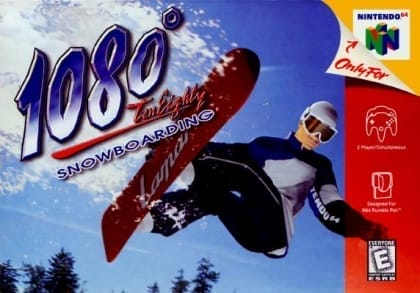

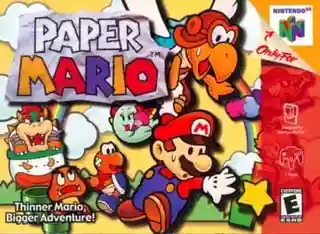
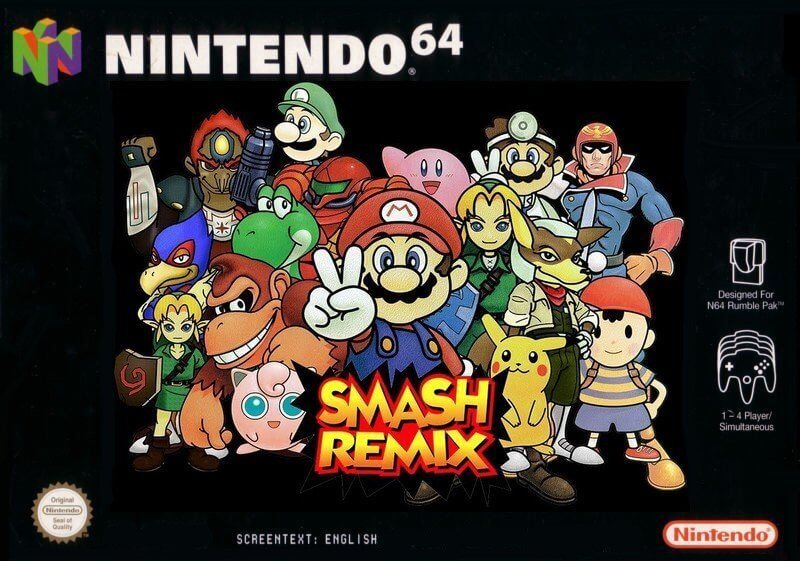
About the Nintendo 64
The Nintendo 64 (N64) is a home video game console manufactured by Nintendo. Released on June 23, 1996, it belongs to the 5th generation of gaming hardware.
With a library of 170+ ROMs available to download, the N64 remains one of the most popular platforms for retro gaming enthusiasts. Each ROM is available for free download and compatible with popular emulators like RetroArch, giving you instant access to classic gaming history.
Whether you're looking for N64 ROMs to play on your PC, phone, or dedicated retro handheld, our library has you covered with verified ROM files and complete game information.