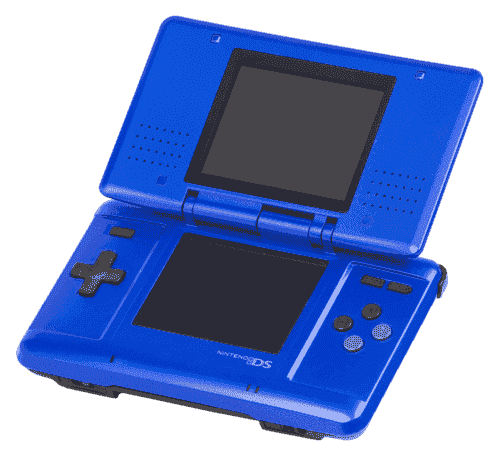
Nintendo DS
Nintendo's innovative dual-screen handheld. The DS introduced touch controls and dual screens for unique gaming experiences.
Technical Specs
CPU
Dual ARM processors: ARM946E-S @ 67 MHz (main) + ARM7TDMI @ 33 MHz (sub/GBA compatibility)
GPU
Custom 3D engine, hardware transform and lighting, texture mapping, alpha blending, up to 6,144 vertices per frame, 120,000 polygons/sec
Memory
4 MB main RAM (16 MB in DSi), 656 KB VRAM, 512 KB ARM7 RAM
Storage
Game cards (ROM, up to 512 MB), GBA cartridge slot (Slot-2), 256 KB firmware flash
Display
Two 3-inch TFT LCD screens, 256x192 pixels each, 262,144 colors, bottom screen is resistive touchscreen (backlit)
Audio
16-channel ADPCM/PCM stereo sound, built-in speakers and microphone, headphone jack
Media
DS game card (proprietary ROM), GBA cartridge (Slot-2, removed in DSi)
History
The Nintendo DS, released on November 21, 2004 in North America and December 2, 2004 in Japan, became the best-selling handheld gaming device ever produced and one of the best-selling gaming platforms of all time, with approximately 154.02 million units sold worldwide across all variants. Its dual-screen clamshell design, featuring one touchscreen and one conventional display, represented a bold departure from traditional handheld design and created entirely new paradigms for portable gaming.
The DS launched with titles including Super Mario 64 DS, a remake that demonstrated the touchscreen's potential as a control input, and Feel the Magic: XY/XX, which showcased the touch interface's creative possibilities. However, the system's early months were marked by consumer uncertainty about whether the dual-screen concept was a genuine innovation or a gimmick. This concern dissipated rapidly as developers discovered compelling uses for the second screen, transforming inventory management, map display, and input methods across dozens of genres.
Nintendo's own software development drove the DS's unprecedented market expansion. Nintendogs, released in April 2005 in Japan, was a virtual pet simulation that appealed to demographics far beyond traditional gamers, selling over 23.96 million copies worldwide. Brain Age: Train Your Brain in Minutes a Day! (2005), based on the work of neuroscientist Dr. Ryuta Kawashima, marketed the DS as a tool for mental fitness and became a massive hit among older adults in Japan, Europe, and North America. These titles, along with the cooking guide Personal Trainer: Cooking and the art application Art Academy, demonstrated that the DS could serve purposes beyond entertainment, dramatically expanding the addressable market.
The DS's traditional gaming library was equally impressive. New Super Mario Bros. (2006) revived 2D Mario platforming and sold over 30 million copies. Mario Kart DS (2005) introduced online multiplayer to the franchise. Pokemon Diamond and Pearl (2006) moved the series into a new dimension with dual-screen gameplay and Wi-Fi trading. The Legend of Zelda: Phantom Hourglass (2007) reimagined Zelda controls for touchscreen input. Phoenix Wright: Ace Attorney brought visual novels to mainstream Western audiences. Dragon Quest IX sold over 5 million copies in Japan alone. The Professor Layton series by Level-5 created a new genre of puzzle-adventure games perfectly suited to the touchscreen.
The DS introduced the Nintendo Wi-Fi Connection service, enabling free online multiplayer gaming for the first time on a Nintendo platform. While the service was more limited than Xbox Live or the PlayStation Network, games like Mario Kart DS, Pokemon, and Animal Crossing: Wild World provided millions of players with their first online gaming experiences on a Nintendo device.
The Nintendo DS Lite, released in March 2006 in Japan, was a dramatic hardware revision that reduced the system's size and weight while significantly improving screen brightness with four adjustable backlight levels. The DS Lite's elegant design and improved screens drove a massive sales surge, and it became the definitive DS hardware variant. Subsequent revisions included the DSi (2008), which added cameras, expandable storage via SD card, and the DSi Shop for downloadable software, and the DSi XL (2009), which offered larger screens aimed at the casual and older demographics.
Variants & Revisions
Nintendo DS (NTR-001)
Released: November 21, 2004
Original model with dual 3-inch screens, GBA slot, stylus, built-in Wi-Fi and microphone. Silver or Graphite Black. Somewhat bulky design.
Nintendo DS Lite (USG-001)
Released: March 2, 2006
Redesigned model: 42% smaller, 21% lighter, with brighter screens (4 brightness levels), improved stylus placement, and sleeker design. Best-selling DS model.
Nintendo DSi (TWL-001)
Released: November 1, 2008
Added two VGA cameras (0.3 MP), internal storage (256 MB), SD card slot, slightly larger 3.25-inch screens, and access to DSiWare shop. Removed GBA cartridge slot. Upgraded to 16 MB RAM.
Nintendo DSi XL / LL (UTL-001)
Released: November 21, 2009
Larger form factor with 4.2-inch screens (vs 3.25-inch on DSi), bigger stylus, wider viewing angles. Same internal hardware as DSi. Marketed toward adult audiences.
Development Story
The Nintendo DS was born from the vision of Nintendo president Satoru Iwata, who sought to disrupt the handheld gaming market rather than merely iterating on the Game Boy formula. Iwata, who had assumed the presidency in 2002, believed that competing solely on hardware specifications was a losing strategy and that Nintendo needed to expand the gaming audience through innovative interfaces. The DS project, internally codenamed "Nitro," embodied this philosophy by building the entire hardware concept around a novel interaction method rather than around processor benchmarks.
The decision to use dual screens drew from Nintendo's long history with multi-screen concepts. The original Game & Watch Multi Screen series (1982-1989), created by Gunpei Yokoi, had used two screens in a clamshell form factor. Iwata and his team recognized that a touch-sensitive lower screen paired with a conventional upper display could create an entirely new category of gameplay. The resistive touchscreen technology chosen was deliberately low-tech compared to the emerging capacitive touchscreens used in PDAs, but it offered the advantage of working with a stylus for precise input and did not require bare skin contact, making it usable with gloves.
Shigeru Miyamoto was notably skeptical of the dual-screen concept during early development. Miyamoto reportedly questioned whether two screens were necessary and whether the added complexity would confuse consumers. However, as prototype software demonstrated the interface's potential, Miyamoto became an enthusiastic supporter, eventually designing Nintendogs as one of the system's showcase applications and contributing significantly to the DS's software strategy.
The DS hardware used two ARM processors: an ARM946E-S running at 67 MHz as the main CPU and an ARM7TDMI running at 33 MHz as a co-processor for audio, Wi-Fi, touchscreen input, and backward compatibility with Game Boy Advance cartridges. The system featured 4 MB of main RAM and 656 KB of VRAM, with 3D graphics hardware capable of rendering up to 120,000 polygons per second with hardware transformation and lighting. The 3D capabilities, while modest compared to home consoles, were unprecedented in a handheld and enabled ports of PlayStation and N64 titles.
Iwata's marketing strategy for the DS was carefully crafted to manage expectations. Rather than positioning the DS as the Game Boy's successor, Nintendo initially described it as a "third pillar" alongside the Game Boy Advance and GameCube. This hedging allowed Nintendo to retreat to the established Game Boy brand if the dual-screen concept failed commercially. In practice, the DS rapidly cannibalized Game Boy Advance sales and clearly became the successor platform, but the "third pillar" messaging reduced the perceived risk for both consumers and investors during the launch period.
The DS Lite redesign, spearheaded by Nintendo's design team under Kenichi Nishi, was inspired by Apple's design aesthetics and the growing consumer electronics trend toward sleek, minimalist hardware. The DS Lite reduced the original's 275-gram weight to 218 grams, slimmed the profile dramatically, and most importantly upgraded the screens with significantly brighter backlights. The redesign was a commercial masterstroke; the DS Lite launched at the same price as the original DS and immediately became one of the fastest-selling consumer electronics devices in history, with sustained shortages in Japan and North America throughout 2006. The DS Lite's success validated Iwata's strategy of expanding the gaming audience and laid the philosophical groundwork for the Wii, which launched later in 2006 with a similarly accessible approach to gaming interfaces.
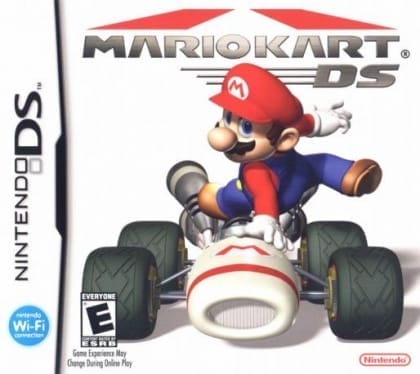
Mario Kart DS
• 2005

New Super Mario Bros.
• 2006
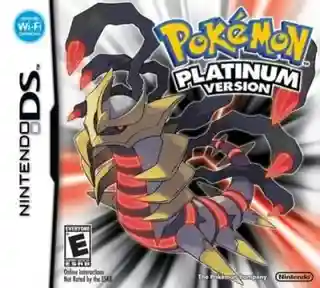
Pokémon Platinum Version
• 2008
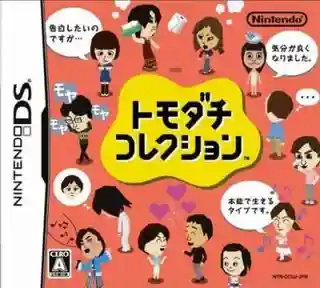
Tomodachi Collection
• 2009

Call of Duty: Black Ops
• 2010
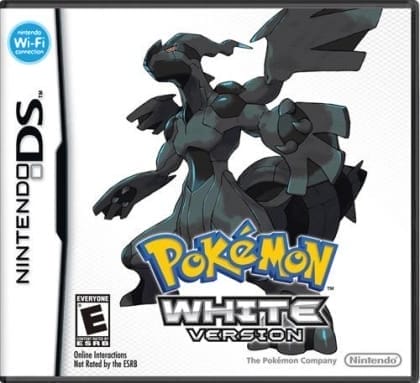
Pokémon White Version
• 2010
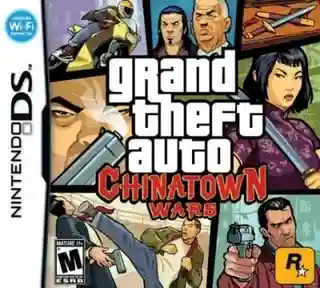
Grand Theft Auto: Chinatown Wars
• 2009
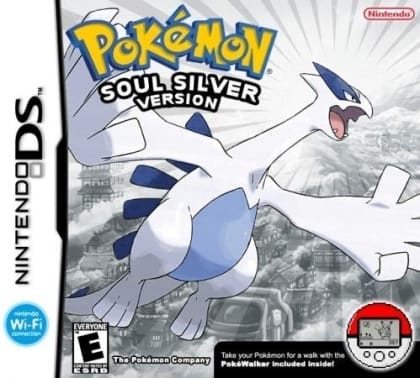
Pokémon SoulSilver Version
• 2009

Animal Crossing: Wild World
• 2005
The Amazing Spider-Man
• 2012

Kirby Super Star Ultra
• 2008
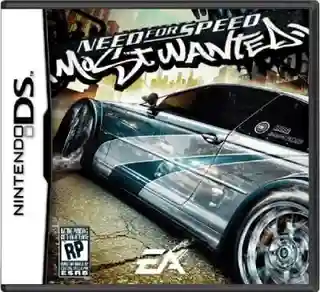
Need for Speed: Most Wanted
• 2005
About the Nintendo DS
The Nintendo DS (NDS) is a handheld gaming device manufactured by Nintendo. Released on November 21, 2004, it belongs to the 7th generation of gaming hardware.
With a library of 93+ ROMs available to download, the NDS remains one of the most popular platforms for retro gaming enthusiasts. Each ROM is available for free download and compatible with popular emulators like RetroArch, giving you instant access to classic gaming history.
Whether you're looking for NDS ROMs to play on your PC, phone, or dedicated retro handheld, our library has you covered with verified ROM files and complete game information.