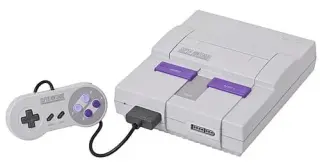
Super Nintendo Entertainment System
Nintendo's 16-bit powerhouse that defined a generation. Home to legendary RPGs, platformers, and action games with stunning Mode 7 graphics.
Technical Specs
CPU
Ricoh 5A22 (based on WDC 65C816) @ 3.58 MHz, with DMA and interrupt controller
GPU
Custom PPU (PPU1 + PPU2), 256x224 default resolution (up to 512x448 interlaced), 32,768 color palette, 256 simultaneous colors, 128 sprites, Mode 7 rotation/scaling
Memory
128 KB work RAM, 64 KB VRAM, 512 bytes OAM, 256 words CGRAM
Storage
Cartridge-based, up to 48 Mbit (6 MB) without enhancement chips
Display
256x224 to 512x448 pixels, 4 background layers, Mode 0-7 background modes
Audio
Sony SPC700 @ 2.048 MHz + DSP, 8 channels 16-bit ADPCM, 64 KB dedicated audio RAM, hardware echo/reverb/pitch modulation
Media
62-pin cartridge
History
The Super Nintendo Entertainment System (SNES), released as the Super Famicom in Japan on November 21, 1990 and in North America on August 23, 1991, represented the pinnacle of the 16-bit console generation and remains one of the most beloved gaming platforms ever created. Selling approximately 49.1 million units worldwide, the SNES maintained Nintendo's dominance in Japan while engaging in a fierce and historic battle with the Sega Genesis for North American market supremacy.
The SNES launched into a market where the Genesis had already established a significant foothold. Sega's 18-month head start in North America, aggressive marketing, and the emergence of Sonic the Hedgehog as a cultural icon meant that the SNES faced genuine competition in a way that the NES never had. The resulting "console wars" became one of the defining narratives of gaming culture, with Sega's edgy, youth-oriented marketing directly challenging Nintendo's family-friendly image. While the Genesis initially held market share advantages in North America, the SNES's superior hardware capabilities and extraordinary software library gradually shifted momentum, and by the mid-1990s the platforms had reached an approximate equilibrium in the Western markets.
The SNES's Mode 7 graphics capability became one of its most distinctive features. This hardware-driven rotation and scaling effect applied to background layers enabled pseudo-3D visuals that were unique to the platform. F-Zero (1990) used Mode 7 to create a stunning sense of speed on a futuristic racetrack. Pilotwings showcased the effect for flight simulation. Super Mario Kart (1992), perhaps the most commercially significant Mode 7 title, used the technique for its iconic track rendering and launched the kart racing genre that continues to be one of Nintendo's most profitable franchises.
The SNES hosted what many consider the greatest RPG library of any single platform. Chrono Trigger (1995), developed by a Square dream team including Dragon Quest creator Yuji Horii, Final Fantasy creator Hironobu Sakaguchi, and Dragon Ball artist Akira Toriyama, is frequently cited as one of the greatest games ever made. Final Fantasy IV (released as Final Fantasy II in North America) and Final Fantasy VI expanded the narrative ambitions of console RPGs with sophisticated storytelling and unforgettable characters. Secret of Mana offered real-time cooperative RPG gameplay. EarthBound delivered a quirky, self-aware take on the genre. Super Mario RPG: Legend of the Seven Stars combined Mario platforming with Square's RPG expertise. Dragon Quest V and VI, while Japan-exclusive on the platform, further enriched the RPG landscape.
Beyond RPGs, the SNES library excelled across every genre. Super Mario World (1990), the system's pack-in launch title in many markets, refined 2D platforming to near-perfection and introduced Yoshi as a rideable companion. The Legend of Zelda: A Link to the Past (1991) established the template for top-down Zelda adventures that influenced the series for decades. Super Metroid (1994) created the definitive "Metroidvania" formula with its atmospheric world design and interconnected exploration. Donkey Kong Country (1994), developed by Rare using pre-rendered 3D sprites, showcased visual techniques that pushed the SNES to its perceived limits and sold over 9 million copies.
The SNES pioneered the use of enhancement chips embedded in game cartridges to extend the console's capabilities. The Super FX chip, co-developed with Argonaut Games, enabled polygon-based 3D graphics in Star Fox (1993) and Stunt Race FX. The SA-1 chip provided a second, faster 65C816 processor for games like Kirby Super Star and Super Mario RPG. The DSP series of chips handled mathematical calculations for games like Pilotwings and Mario Kart. The Cx4 chip powered the wireframe effects in Mega Man X2 and X3. These enhancement chips allowed SNES games to evolve graphically throughout the console's lifespan, maintaining visual competitiveness even as the 32-bit generation approached.
Variants & Revisions
Super Famicom (SHVC-001)
Released: November 21, 1990
Original Japanese model with rounded design, colorful A/B/X/Y buttons, and eject lever mechanism.
SNES (SNS-001)
Released: August 23, 1991
North American model with angular, boxy design, purple/gray color scheme, concave X/Y and convex A/B buttons, and sliding power switch.
Super NES Jr. / SNES 2 (SNS-101)
Released: October 1, 1997
Compact redesigned North American model. Removed S-Video output and RF modulator port. Smaller and lighter form factor.
Super Famicom Jr. (SHVC-101)
Released: March 27, 1998
Japanese compact redesign matching the SNES 2 form factor, maintaining the Super Famicom styling and cartridge format.
Super NES (PAL version)
Released: April 11, 1992
European and Australian model sharing the Super Famicom design but with PAL output running at 50 Hz, resulting in slower game speed and borders compared to NTSC versions.
Development Story
The development of the Super Famicom was led once again by Masayuki Uemura's R&D2 division at Nintendo. The system used a Ricoh 5A22 CPU based on the WDC 65C816, a 16-bit extension of the 6502 architecture used in the original Famicom. Running at a variable clock speed of 1.79, 2.68, or 3.58 MHz depending on the memory region being accessed, the CPU was notably slower in clock speed than the Genesis's 7.67 MHz Motorola 68000, a disparity that Sega exploited mercilessly in its "Blast Processing" marketing campaigns. However, the SNES compensated with superior graphics and audio subsystems that gave it significant advantages in visual and sonic presentation.
The SNES's graphics hardware, driven by dual PPU (Picture Processing Unit) chips, was substantially more capable than the Genesis's VDP. It could display 256 colors simultaneously from a palette of 32,768, compared to the Genesis's 64 from 512. The system supported up to 128 sprites, eight background layers (though practically limited by VRAM to fewer), hardware transparency effects through color mathematics, and the celebrated Mode 7 rotation and scaling capability. These features gave SNES games a visual richness and complexity that the Genesis could not fully match, particularly in the areas of color depth and special effects.
The audio system was perhaps the most remarkable aspect of the SNES hardware, and its development story is deeply intertwined with the origin of the PlayStation. Sony's Ken Kutaragi, then a relatively junior engineer, designed the SPC700 digital signal processor and the associated S-DSP chip that powered the SNES's audio. This eight-channel ADPCM sound system, with 64KB of dedicated sound RAM and hardware support for ADSR envelope generation, echo, reverb, pitch modulation, and stereo panning, delivered audio quality that was generations ahead of the Genesis's FM synthesis. Composers like Koji Kondo (Super Mario World, A Link to the Past), Nobuo Uematsu (Final Fantasy IV, V, VI), and Yasunori Mitsuda (Chrono Trigger) created soundtracks of extraordinary beauty and sophistication. The collaboration between Kutaragi and Nintendo on the audio hardware led to discussions about a CD-ROM peripheral, which ultimately became the catalyst for the PlayStation after the partnership between the two companies collapsed.
The Sony-Nintendo CD-ROM deal and its spectacular collapse remains one of the most consequential events in gaming history. In 1988, Nintendo approached Sony to develop a CD-ROM add-on for the Super Famicom, with Kutaragi leading Sony's technical development. The agreement gave Sony control over the CD-ROM format and licensing, terms that Nintendo president Hiroshi Yamauchi grew increasingly uncomfortable with as he recognized the strategic implications. In June 1991, at the Consumer Electronics Show, Sony announced the "Play Station," a Super Famicom-compatible device with a CD-ROM drive. The next day, Nintendo announced a competing CD-ROM partnership with Philips, publicly humiliating Sony. This betrayal directly led to the creation of the PlayStation as a standalone console and fundamentally altered the gaming industry's competitive landscape.
The Super FX chip represented a landmark collaboration between Nintendo and British developer Argonaut Games. The chip's development was led by Jez San, Argonaut's founder, and Ben Cheese, who designed the RISC-based co-processor specifically to handle 3D polygon calculations that the SNES's 65C816 CPU could not perform in real time. The original Super FX (MARIO chip) ran at 10.5 MHz and powered Star Fox with flat-shaded polygons at a modest resolution. The improved Super FX 2 (GSU-2) doubled the clock speed to 21 MHz and enabled more complex games like Yoshi's Island, which used the chip not for 3D polygons but for advanced 2D scaling and rotation effects that created the game's distinctive hand-drawn visual style. The Super FX chip's development prefigured the GPU-centric architecture of modern gaming hardware, where dedicated graphics processors handle rendering tasks that general-purpose CPUs cannot efficiently perform.
Enhancement chip technology became a defining characteristic of the SNES platform. Unlike the Genesis, which relied almost entirely on its base hardware throughout its lifespan, the SNES ecosystem embraced cartridge-based hardware expansion as a means of extending the console's capabilities. This approach increased cartridge manufacturing costs but allowed the SNES to deliver experiences that would have been impossible on the base hardware alone, effectively making each enhanced cartridge a minor hardware upgrade for the duration of that game.
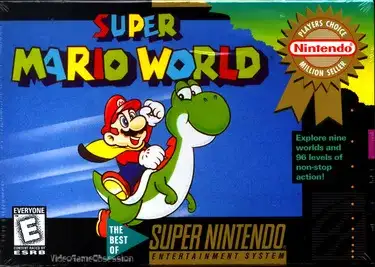
Super Mario World
• 1990
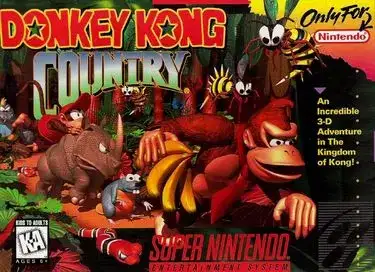
Donkey Kong Country
• 1994
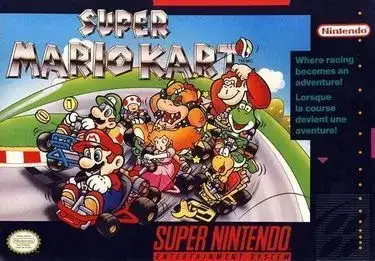
Super Mario Kart
• 1992
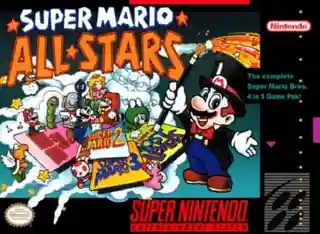
Super Mario All-Stars
• 1993

Ultimate Mortal Kombat 3
• 1996
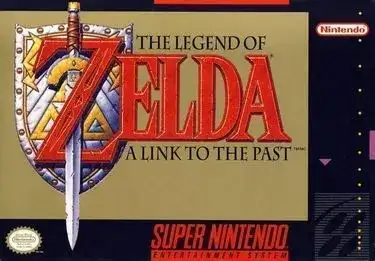
The Legend of Zelda: A Link to the Past
• 1991
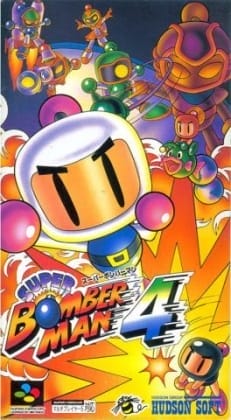
Super Bomberman 4
• 1996
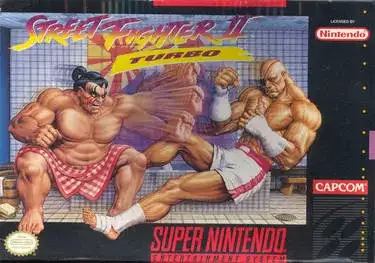
Street Fighter II' Turbo: Hyper Fighting
• 1992

Aladdin
• 1993
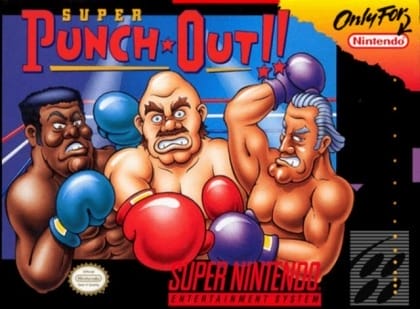
Super Punch-Out!!
• 1994
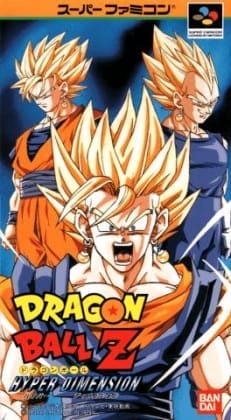
Dragon Ball Z: Hyper Dimension
• 1995
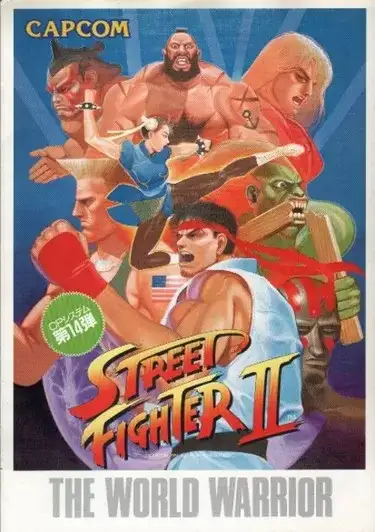
Street Fighter II: The World Warrior
• 1991
About the Super Nintendo Entertainment System
The Super Nintendo Entertainment System (SNES) is a home video game console manufactured by Nintendo. Released on November 21, 1990, it belongs to the 4th generation of gaming hardware.
With a library of 331+ ROMs available to download, the SNES remains one of the most popular platforms for retro gaming enthusiasts. Each ROM is available for free download and compatible with popular emulators like RetroArch, giving you instant access to classic gaming history.
Whether you're looking for SNES ROMs to play on your PC, phone, or dedicated retro handheld, our library has you covered with verified ROM files and complete game information.