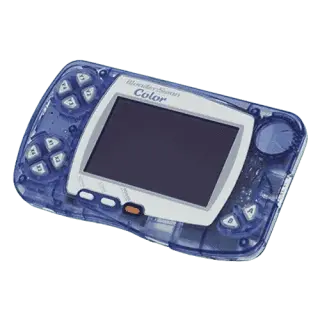
Bandai WonderSwan
Technical Specs
CPU
NEC V30MZ (16-bit, x86 compatible) @ 3.072 MHz, extremely low power consumption designed for battery efficiency
GPU
Custom LCD controller with hardware sprite engine, supports horizontal and vertical display orientations; WonderSwan: monochrome (8 shades); WonderSwan Color: 241 simultaneous colors from 4,096 palette; SwanCrystal: same as WSC with improved TFT panel
Memory
WonderSwan: 16 KB work RAM, 16 KB display RAM; WonderSwan Color/SwanCrystal: 64 KB work RAM, 64 KB display RAM
Storage
Cartridge ROM (up to 128 Mbit / 16 MB), with optional SRAM or EEPROM for game saves
Display
224x144 pixel resolution in both orientations; WonderSwan: reflective monochrome LCD (8 shades of gray); WonderSwan Color: reflective STN color LCD (241 colors from 4,096 palette, 12-bit RGB); SwanCrystal: TFT color LCD (same color specs, dramatically improved visibility and response time)
Audio
4 channels: 1 PCM channel + 3 wavetable channels (or 4 wavetable channels), mono speaker, stereo headphone output, hardware sound DMA
Media
WonderSwan Cartridge (48-pin proprietary); WonderSwan Color and SwanCrystal are backward compatible with original WonderSwan cartridges; WS Color exclusive cartridges exist
History
The WonderSwan, launched March 4, 1999 in Japan, was the final hardware creation to emerge from the design philosophy of Gunpei Yokoi, Nintendo's legendary engineer who had created the Game Boy, Game & Watch series, and the Virtual Boy. After leaving Nintendo in 1996, Yokoi founded Koto Laboratory and began designing a new handheld console that would embody his 'Lateral Thinking with Withered Technology' principle ??using mature, inexpensive technology in innovative ways. Tragically, Yokoi was killed in a traffic accident on October 4, 1997, before the WonderSwan's completion. The project was finished by his team at Koto and brought to market by Bandai.
The WonderSwan was a marvel of minimalist design. Powered by a single AA battery that delivered an astonishing 40 hours of play time, it was thinner and lighter than the Game Boy Color. Its most distinctive feature was the ability to be played in both horizontal and vertical orientations, with directional buttons on both the left side and bottom of the unit enabling comfortable control in either mode. This dual-orientation design was years ahead of its time.
The original WonderSwan featured a monochrome reflective LCD screen with 224x144 resolution. Bandai quickly followed up with the WonderSwan Color (WSC) in December 2000, adding a color display capable of showing 241 colors simultaneously from a 4,096-color palette while maintaining excellent battery life (approximately 20 hours on one AA). The final revision, the SwanCrystal (2002), upgraded to a TFT LCD for improved visibility and color reproduction.
The WonderSwan's software library was bolstered by a remarkable exclusive partnership with Square (later Square Enix). Square released enhanced remakes of Final Fantasy I, II, III, and IV exclusively for the WonderSwan Color, along with Romancing SaGa, Front Mission, Wild Card, and other titles. This exclusive Square support was a significant coup for Bandai and gave the WonderSwan a library of RPGs that rivaled anything else in the handheld market at the time.
Beyond Square, the WonderSwan hosted notable titles including Gunpey (a puzzle game named in Yokoi's honor), Digimon games (leveraging Bandai's own property), Klonoa: Moonlight Museum, Riviera: The Promised Land, and numerous original Japanese exclusives. The platform was never officially released outside Japan, limiting its global audience.
The WonderSwan and its variants sold approximately 3.5 million units combined. While commercially overshadowed by Nintendo's Game Boy Advance (which launched in 2001 and quickly dominated the Japanese handheld market), the WonderSwan is remembered as a beautifully designed device that embodied Yokoi's vision of elegant simplicity. It remains a cherished collector's item and a testament to one of gaming's greatest hardware designers.
Variants & Revisions
WonderSwan (SW-001)
Released: March 4, 1999
The original model with monochrome reflective LCD (8 shades). Extremely thin and lightweight. Single AA battery provides 40 hours of play. Available in multiple shell colors including skeleton (transparent) variants.
WonderSwan Color (SC-001)
Released: December 9, 2000
Color upgrade with reflective STN LCD displaying 241 colors from 4,096 palette. Single AA battery provides ~20 hours of play. Backward compatible with original WonderSwan games. Heavier and slightly thicker than the original.
SwanCrystal (SCR-001)
Released: July 12, 2002
The final and most premium WonderSwan variant. Upgraded to a superior TFT LCD panel with dramatically improved visibility, contrast, and response time. Same specs as WonderSwan Color but with the best screen of any WS model. Available in crystal blue, crystal black, and other transparent shell colors.
Development Story
The WonderSwan's development is inseparable from the legacy of Gunpei Yokoi, one of the most influential figures in video game history. After 31 years at Nintendo, where he had created the D-pad, Game & Watch series, Game Boy, R.O.B., and (unfortunately) the Virtual Boy, Yokoi departed the company in August 1996. The Virtual Boy's commercial failure was widely perceived as the reason for his exit, though Yokoi himself stated he had been planning retirement for years.
Yokoi immediately founded Koto Laboratory with several colleagues and began work on a new handheld console. He brought the design philosophy that had made the Game Boy a phenomenon: prioritize battery life and playability over raw technical specifications. Where the Game Boy's competitors (Game Gear, Lynx, TurboExpress) had offered superior screens but poor battery life, Yokoi knew that a handheld's true value lay in being able to play it anywhere, for extended periods, without worrying about power.
The NEC V30MZ processor was chosen for its excellent power efficiency. This 16-bit CPU, running at just 3.072 MHz, consumed minimal battery power while providing sufficient processing capability for engaging 2D games. The single AA battery design was a deliberate statement ??in an era when competitors used four or six batteries, the WonderSwan's radical minimalism was pure Yokoi.
The dual-orientation concept was Yokoi's most innovative contribution to the WonderSwan. By placing two sets of directional controls (one for horizontal play, one for vertical), the WonderSwan could switch between landscape and portrait orientations with the press of a button. This was not merely a gimmick ??vertical orientation was ideal for shooters, puzzle games, and RPGs with vertically-scrolling interfaces, while horizontal mode suited platformers and action games. This design concept would later influence smartphone gaming and even Nintendo's own future products.
Yokoi's sudden death in October 1997 ??he was struck by a car after exiting his vehicle to inspect damage from a minor highway collision ??sent shockwaves through the gaming industry. The WonderSwan project was carried forward by the remaining Koto Laboratory team with Bandai's engineering support. The development team was determined to realize Yokoi's vision as faithfully as possible.
Bandai's decision to pursue Square as a exclusive software partner for the WonderSwan Color was a strategic masterstroke. Square, still four years away from merging with Enix, was the most prestigious RPG developer in Japan. At the time, Square was exploring platforms beyond the PlayStation, and Bandai's executives negotiated a deal that brought Final Fantasy and other Square franchises to the WSC. The presence of Square's RPGs gave the WonderSwan Color a level of software prestige that far exceeded what Bandai's own development teams could have achieved alone. The Final Fantasy remakes, in particular, were carefully crafted to take advantage of the WSC's capabilities and attracted a significant RPG-focused audience.
The SwanCrystal, the platform's final revision, addressed the most common criticism of the original WSC ??its reflective STN LCD's poor visibility in certain lighting conditions. The TFT upgrade was expensive, and the SwanCrystal was priced higher than the WSC as a result, but it offered dramatically better image quality.

Naruto: Konoha Ninpouchou
• 2001

From TV Animation One Piece - Grand Battle Swan Colosseum
• 2002
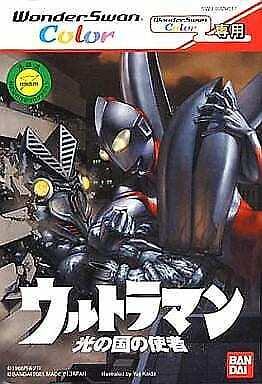
Ultraman: Messenger of the Land of Light
• 2000
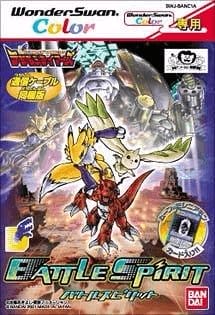
Digimon: Battle Spirit
• 2001
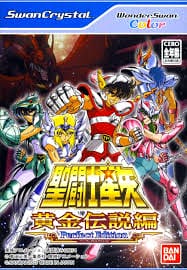
Saint Seiya: Ougon Densetsu Hen - Perfect Edition
• 2003
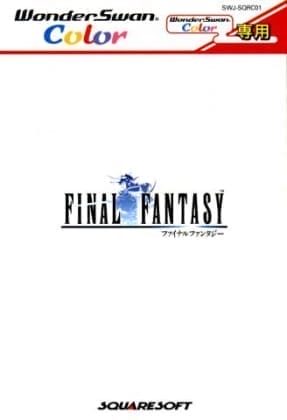
Final Fantasy
• 2000
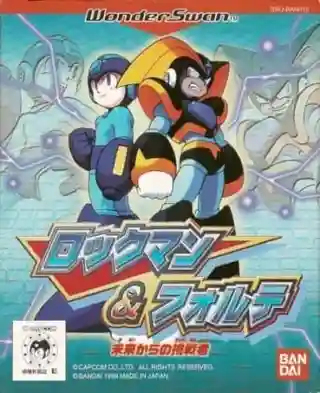
Rockman & Forte: Challenger from the Future
• 1999
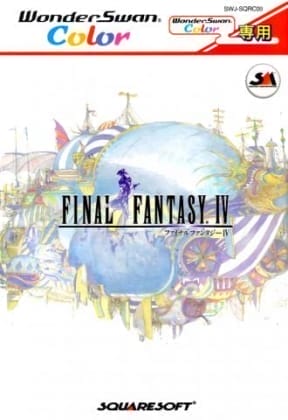
Final Fantasy IV
• 2002
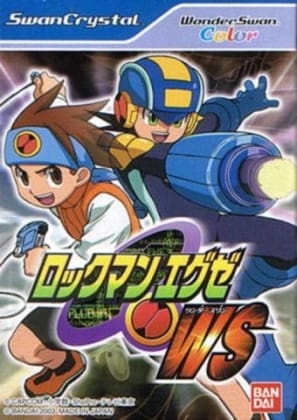
Rockman EXE WS
• 2003
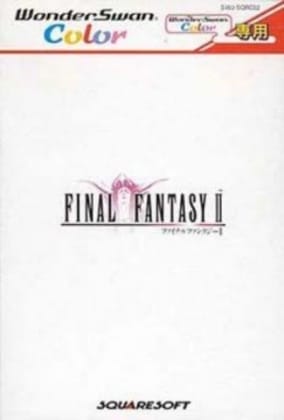
Final Fantasy II
• 2001
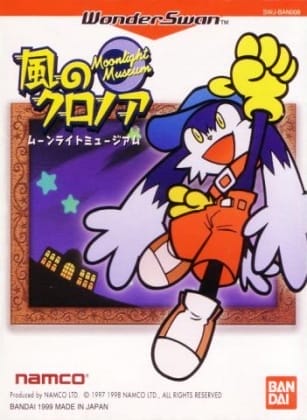
Klonoa of the Wind: Moonlight Museum
• 2001
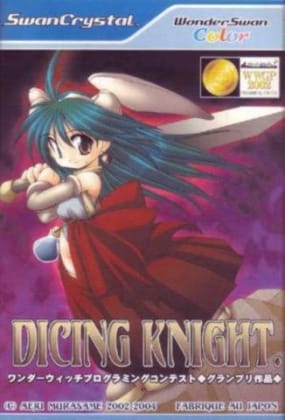
Dicing Knight
• 1999
About the Bandai WonderSwan
The Bandai WonderSwan (WS) is a handheld gaming device manufactured by Bandai. Released on March 4, 1999, it belongs to the 4th generation of gaming hardware.
With a library of 17+ ROMs available to download, the WS remains one of the most popular platforms for retro gaming enthusiasts. Each ROM is available for free download and compatible with popular emulators like RetroArch, giving you instant access to classic gaming history.
Whether you're looking for WS ROMs to play on your PC, phone, or dedicated retro handheld, our library has you covered with verified ROM files and complete game information.