
GB
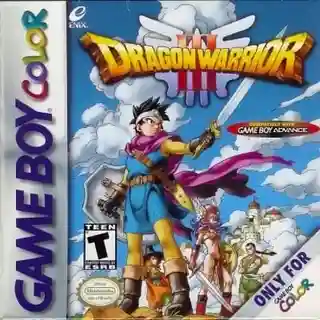
Dragon Warrior III
Dragon Warrior III is a JRPG originally developed by Chunsoft and published by Enix. Players create a party of adventurers and embark on an epic quest across a world inspired by real Earth geography. Features the innovative class change system and is widely regarded as one of the greatest RPGs ever made.
Release Date
January 1, 1985
Players
1
Region
US
ROM Size
1.9 MB
Share this game
Story
Dragon Quest III is set many years before the original Dragon Quest in a world separate from the first two games. A wicked fiend named Baramos threatens to destroy the world. The story revolves around the Hero , son or daughter (the player can choose to be either male or female, with few gameplay changes) of the legendary warrior Ortega. On their sixteenth birthday, the Hero is summoned to the castle and is given by the King of Aliahan the challenge to rid the world of the evil archfiend Baramos, which Ortega attempted in the past but seemingly perished in a volcano. The Hero then is able to recruit up to three traveling companions to help fight Baramos. The Hero leaves their home country of Aliahan to travel the world and complete their father's quest to defeat Baramos. A major portion of the adventure is the quest to acquire the last two of the three keys needed to open doors throughout the game. After saving two people of the town of Baharata from the rogue Kandar and stealing back the King of Romaly's crown, the Hero receives Black Pepper, which they then trade for a sailing ship at Portoga. With the ship, the Hero acquires the Final Key and the six mystical orbs which are used to revive the legendary bird Ramia. Ramia allows the Hero and their party to travel to Baramos' castle, which is surrounded by mountains. After defeating Baramos in a ferocious battle and returning to Aliahan, the Hero's celebration is cut off as Zoma, Baramos's master and the game's true villain, reveals his existence. He attacks and opens a pit to the Dark World, which the Hero jumps into. The Dark World is, in fact, Alefgard (of the previous installments of the series), where the Hero must acquire several of the artifacts that were collected in the original Dragon Quest , including the Sun Stone and the Rain Staff. Rubiss, a legendary sage, has been turned to stone and is rescued by the Hero, and the Hero receives the Sacred Amulet in return. These items, as in the original game, create the Rainbow Bridge which leads the Hero to Zoma's castle for the final confrontation. Along the way, the Hero briefly reunites with Ortega as he is slain by Zoma's monsters, then continues on to defeat the revived Baramos, now turned into the powerful Baramos Bomus and later into the skeletal Baramos Gonus. With the Ball of Light given by the Dragon Queen, the Hero defeats Zoma and frees Alefgard, but Zoma boasts that evil will eventually return to the land and the Hero will not live long enough to stop it. For their bravery, the Hero receives the title of "Erdrick" ("Loto" in the Japanese version). The Hero later vanishes from Alefgard, leaving their sword and armor to be passed down throughout the ages so that their descendants can continue to protect the world from evil. In a post-credit scene of HD-2D Remake , the Dragon Queen's High Priest vows to take care of her child, revealing himself to be Hargon .
Gameplay Systems
Dragon Quest III is noted for greatly expanding upon the gameplay of the original Dragon Quest and Dragon Quest II . The game uses basic role-playing video game conventions such as leveling up by gaining experience points and equipping items. The battle system is turn-based like the other games in the series, though the remakes incorporate various interface changes from later titles. These include simpler door opening, a bag to store items instead of keeping them at a bank, quick item sorting with "Tidy Item" and "Tidy Bag" command, and a "Full HP" command to automate the process of casting healing and status restoring spells. And while earlier Dragon Quest games were non-linear in structure, Dragon Quest III featured an even more open-world experience. It also allowed the player to freely swap characters in and out of their party and introduced the day/night cycle in which certain items, characters, and quests are only accessible at specific times of the day. Classes Dragon Quest III features a class system, in which each character has a certain class. At the start of the game, the player begins as a single male or female hero but is able to recruit members at the local tavern. While the Hero always keeps the Hero class, the other characters can choose to be any of the following of either gender: Soldier (Warrior in the GBC version), Fighter, Pilgrim (Cleric), Wizard (Mage), Merchant (Dealer), Goof-Off (Jester), Sage, and Thief and Monster Wrangler which are available only in later versions. The choice of class greatly affects the character's stats and spells he or she can learn. Furthermore, upon reaching experience Level 20, a character has the option of changing classes at the temple of Dhama, found halfway through the game. A character who changes classes has their stats halved and restarts at experience Level 1, retaining their spells and, in the remakes, their personality. This allows a player to create a character that knows Wizard spells but has the defense of a Soldier. Unlike most Dragon Quest parties, aside from the Hero, the party is not made up of characters involved in the story. Although only four characters can be in the party at a time, extra members of the party can be kept at the tavern, allowing room for new recruits. Another innovation is an arena where the player can place bets on the outcome of monster battles in order to win more gold. In the remakes, after selecting a character, the player can change the character's starting abilities with five magical seeds, given at the tavern. Also, each character has a personality trait which affects the growth rate of their abilities. The Hero's personality is determined by the player's choices and actions during a dream sequence at the start of the game, while other characters' personalities are determined by their status at the end of the character generation process. Most personalities are available to both male and female characters, while a few are exclusive to male or female characters. A character's personality can be temporarily changed by equipping certain accessories, or permanently changed by using certain consumable books.
Sales & Commercial Performance
Total Copies Sold
3.8 million copies
Total Revenue
$143 million
Some information sourced from Wikipedia, available under CC BY-SA 3.0.