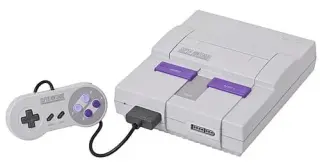
SNES
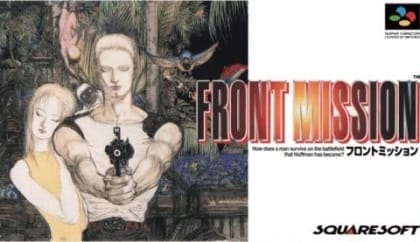
Front Mission
A groundbreaking tactical RPG featuring customizable mechs (Wanzers) in a near-future war scenario. Players control mercenary Royd Clive through a story of political intrigue and corporate warfare across the Huffman Islands. Features deep strategic combat with destructible body parts and equipment customization.
Release Date
January 1, 1995
Players
1
Region
US
ROM Size
2.2 MB
Share this game
Gameplay Systems
Although Front Mission video games venture into multiple genres, each of them contain core elements that are universal to the entire series. In the Front Mission series, players use playable units called wanzers, a term for mecha derived from the German word " Wanderpanzer ", or "walking tank". Wanzers differ from the typical combat unit in that it has four modular parts: body, left arm, right arm, and legs. Each part has a specific function and its own health bar. The legs parts enable movement and evasion, the arm parts are necessary to use hand and shoulder weapons, and the body part maintains the wanzer's operability. In the event the body is destroyed, the wanzer is removed from play completely. Destruction of arm and leg parts does not remove the wanzer from play, but it severely cripples its performance. While the player fights mostly wanzers, vehicles, aircraft, and mobile weapons platforms are also featured. These enemy units generally have only one part, the body, and are much stronger than wanzers themselves. Wanzers can be customized with a variety of parts, computers, auxiliary backpacks, and weapons. The player has full control over customizing their wanzers and can do so as long as its total weight value does not exceed its given power output. To field a wanzer in battle, it must have a complete frame of parts: body, left arm, right arm, and legs. Parts with built-in weapons in the body or arm sections can also be equipped on a wanzer. In most Front Mission titles, computers must also be installed; these improve the accuracy of the weapons equipped on the wanzer and allow for specialized attacks. Auxiliary backpacks and weapons are not mandatory equipment to use wanzers, but are crucial in order to progress through the games. Auxiliary backpacks serve to give a wanzer special features during combat. For example, storage backpacks allow the player to carry extra ammunition or armor repair items. In terms of weapons, there are four classes of weapons: melee weapons, short-range weapons, long-range weapons, and support fire weapons. Melee weapons are hand-to-hand weapons with a tendency to strike the body part of its target. Knuckles, pile bunkers (a fist weapon consisting of a hydraulic spike), and rods are examples of melee weapons. Short-range weapons, such as machine guns, shotguns, and flamethrowers are used at close range and deal damage to all parts of a target. Long-range weapons have a long reach and are ideal for avoiding counterattacks. Sniper rifles, bazookas, and Gatling guns are examples of long-range weapons. Support-fire weapons, such as missiles, grenades, and rockets are indirect fire weapons; they can never be counterattacked and almost always hit their target, but have limited ammunition supply. Lastly, shields can be equipped on wanzers to absorb some of the damage taken from incoming attacks. These are other gameplay features that are commonly seen in multiple Front Mission titles. Arena, introduced in Front Mission , allows the player to participate in special fights to earn monetary rewards or new parts. These fights take place in either individual matches, or team battles. This feature is also present in Front Mission 2 , Front Mission 5: Scars of the War , Front Mission 2089: Border of Madness , and Front Mission: Online . Action Points (AP), introduced in Front Mission 2 , determines the number of actions that can be taken during a Player and Enemy Phase. Every action, such as movement or counterattacks, has a certain AP cost. After one full turn (which is made up of one Player Phase and Enemy Phase) has passed, a set amount of AP is recharged. This feature is also present in Front Mission 3 , Front Mission 4 , and Front Mission 5: Scars of the War . Links, introduced in Front Mission 2 , allows multiple units to assist each other in battles. A linked unit can provide support to other units offensively and defensively. This feature is also present in Front Mission 4 , Front Mission 5: Scars of the War , and Front Mission 2089: Border of Madness . Network, introduced in Front Mission 2 , is a pseudo-Internet that allows players to gain a better understanding of the Front Mission world, its characters, and the storyline through a series of websites. The player can also access online shopping (to purchase new equipment), battle simulations, and check e-mail messages through the Network. This feature is also present in Front Mission 3 . Battle Simulator, introduced in Front Mission 3 , allows the player to participate in VR training exercises. These training exercises can be used to increase the fighting proficiencies of the player's pilots and can be taken as many times as needed. This feature is also present in Front Mission 4 , and Front Mission 5: Scars of the War . Survival Simulator, introduced in Front Mission 5: Scars of the War , is a survival simulation in which the player goes through a set number of floors with one pilot. Along the way, parts and weapons can be collected and brought back for usage in the main game upon the completion of a simulation. This feature is also present in Front Mission 2089-II .
Media Reviews
IGN
4
GameSpot
101
Famitsu
9/10
Edge
6.0/10
Some information sourced from Wikipedia, available under CC BY-SA 3.0.