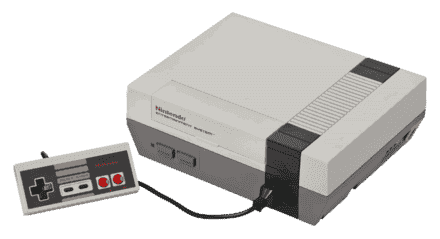
NES
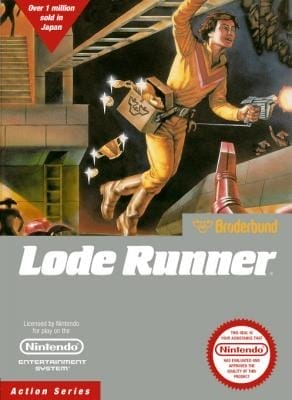
Lode Runner
A classic puzzle-platformer where players dig through destructible terrain to collect gold while avoiding enemies. Features 50 levels with increasing complexity and a built-in level editor for creating custom stages.
Share this game
Gameplay Systems
This section needs additional citations for verification . Please help improve this article by adding citations to reliable sources in this section. Unsourced material may be challenged and removed. ( November 2017 ) ( Learn how and when to remove this message ) The player controls a stick figure who must collect all the gold in a level while avoiding the guards. After collecting all the gold, the player must reach the top of the screen to advance to the next level. There are 150 levels in total, which progressively challenge players' problem-solving abilities or reaction times. Levels have a multi-story, brick platform motif, with ladders and suspended hand-to-hand bars that offer multiple ways to travel. Guards can pick up gold bars by running over them, but any individual guard cannot carry more than one bar at a time. The player can dig holes into floors to temporarily trap guards and may safely walk over them. If a guard is carrying a bar of gold when he falls into a hole, he will drop it and the player can then pick it up. Holes dug by the player fill in after a short delay. A trapped guard who cannot escape a hole before it fills is consumed and immediately respawns in a random location at the top of the level. Unlike guards, the player's character may not climb out of a hole, and will be killed if it fills before he can escape. Floors may contain trapdoors , through which the player and guards will fall, and bedrock , through which the player cannot dig. The player can dig a hole only on adjacent sides and may not dig directly beneath. In order to dig through multiple layers of bricks, the player must create a gap whose width is at least equal to the number of layers. However, exceptions to this rule arise when the player digs from the position of standing on a ladder, or hanging from a hand-to-hand bar, which makes it possible to repeatedly dig and descend one row. This kind of digging is involved in solving many of the levels. The player starts with five lives ; each level completion awards an extra life. If a guard catches the player, one life is subtracted, and the current level restarts. The player's character can fall from arbitrary heights without any injury, but cannot jump . The player can also trap themselves in pits from which the only escape is to abort the level, costing a life. Enemy AI The guards do not always take the shortest path to the player and can move in counterintuitive ways. For example, when the player and a guard are on the same ladder, the guard will sometimes move away. In general, depending on their exact positioning relative to Lode Runner, the guards sometimes appear to be repelled. Mastering the game involves developing the intuition to predict the movement of the guards.
Sales & Commercial Performance
Total Copies Sold
3 million copies
Media Reviews
IGN
64
GameSpot
1996
Game Informer
52
Some information sourced from Wikipedia, available under CC BY-SA 3.0.